

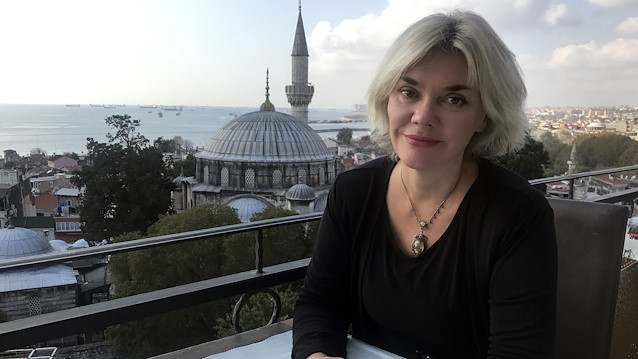
Patricia Leidl
A Canada-based author has said that the Jamal Khashoggi incident highlighted the crisis in Yemen.In an interview to Anadolu Agency, Patricia Leidl, strategist collaborator with the Global Reporting Center, said: “Just over 15 years ago, all member states of the United Nations came together to endorse a new doctrine known as the Responsibility to Protect (R2P). But, it has been never properly utilized. If ever there were a responsibility to protect, Yemen would certainly qualify.”Khashoggi, a Saudi journalist working for The Washington Post, was killed shortly after he entered the Saudi Consulate in Istanbul Oct. 2.Saudi Arabia had offered shifting explanations for Khashoggi's disappearance before suggesting he was killed during a botched operation by rogue agents.
His body has yet to be returned to his family amid reports that it was chemically dissolved.
Leidl, who has authored "The Hillary Doctrine: Sex and American Foreign Policy", drew parallels between Khasshogi's killing, the Yemen crisis, and the global arms deal.
Saudi King Salman bin Abdulaziz on Monday reiterated support for reaching political solutions to the conflicts in Yemen and Syria.In a speech to the Shura Council, a top advisory body, the monarch said the oil-rich kingdom would continue its efforts to resolve regional crises.“Our stand with Yemen was not an option but a duty to support the Yemeni people against the Iran-backed putschist militias,” he said.Yemen has remained wracked by violence since 2014, when Shia Houthi rebels overran much of the country, including capital Sanaa.The conflict escalated in 2015 when Saudi Arabia and its Sunni-Arab allies -- who accuse the Houthis of serving as proxies for Shia Iran -- launched a massive air campaign in Yemen aimed at rolling back Houthi gains.The Saudi king also called for reaching a political solution that help “cruise Syria out of its crisis, push away terrorist groups and allow the repatriation of Syrian refugees.”The king’s speech was his first public comments since the murder of Saudi journalist Jamal Khashoggi last month.Khashoggi, a frequent contributor to The Washington Post, was killed shortly after he entered the Saudi Consulate in Istanbul Oct. 2.Saudi Arabia had offered shifting explanations for Khashoggi's disappearance before suggesting he was killed during a botched rendition operation by rogue agents.So far, 21 people, including security officers, have been arrested in Saudi Arabia in connection with the murder.Top security official shot dead in Yemen’s AdenTurkey says Khashoggi killers may have taken body parts out of countrySaudi Arabia defies US pressure to end Qatar row after Khashoggi killingSaudi account of Khashoggi killing 'unsatisfying'
Saudi king backs political solutions in Yemen, Syria
“Donald Trump himself stated that his government will be unwilling to act against Saudi Arabia precisely because of the arms deal. That is the first time any president of the United States explicitly stated that his government would not intervene because they wanted to protect arms trade.
It is unprecedented and only reveals to what extent U.S. foreign policy has been corrupted by this shadow industry.” She added that other countries also continue to trade arms with Saudi Arabia.“So far as my own country is concerned, and despite an otherwise enlightened foreign policy, Canada’s 12-billion deal to sell light armored vehicles to Saudi Arabia is likely to go ahead.
Germany on Monday imposed a travel ban on 18 Saudi citizens over their suspected involvement in the killing of journalist Jamal Khashoggi.“These individuals are the members of a 15-man team and three others suspected of taking part in this plan,” Christofer Burger, deputy spokesman for the Foreign Ministry, told a news conference in Berlin.He said the decision was taken in close coordination with two other EU partners -- the U.K. and France.Asked whether Saudi Crown Prince Mohammed bin Salman was among the first group of people receiving sanctions, Burger declined to make any comments on the matter.The Washington Post reported last week that the CIA had concluded the Khashoggi’s murder was ordered by the Crown Prince Mohammed bin Salman.Khashoggi, a Saudi journalist working for The Washington Post, was killed shortly after he entered the Saudi Consulate in Istanbul Oct. 2.Saudi Arabia had offered shifting explanations for Khashoggi's disappearance before suggesting he was killed during a botched rendition operation by rogue agents.So far, 21 people, including security officers, have been arrested in Saudi Arabia in connection with the murder.Egyptian woman comes forward as Khashoggi’s secret wifeDahlan ‘cover-up team’ from Lebanon helps hide traces of Khashoggi murderTurkey says Khashoggi killers may have taken body parts out of country
Khashoggi case: Germany slaps travel ban on 18 Saudis
“Prime Minister of Canada cited the 1-billion-dollar price tag to rescind the deal as the reason why.”
Impoverished Yemen has remained wracked by violence since 2014, when Shia Houthi rebels overran much of the country, including capital Sanaa.
The conflict escalated in 2015 when Saudi Arabia and its Sunni-Arab allies -- who accuse the Houthis of serving as proxies for Shia Iran -- launched a massive air campaign in Yemen aimed at rolling back Houthi gains.
The violence has devastated Yemen’s infrastructure, including water and sanitation systems, prompting the UN to describe the situation as “one of the worst humanitarian disasters of modern times”.
Houthi rebels in Yemen said on Monday they were halting drone and missile attacks on Saudi Arabia, the United Arab Emirates and their Yemeni allies, responding to a demand from the United Nations.The Iranian-aligned group, which has been battling the Saudi-backed government for nearly four years, also said it was was ready for a broader ceasefire if the Saudi-led coalition "wants peace".International pressure has mounted on Yemen's warring parties to end the war that has killed more than 10,000 people and pushed the country to the verge of starvation.The move from the Houthi group came after the coalition ordered a halt in its offensive against Yemen's main port city Hodeidah, which has become the focus of the war."We announce our initiative...to halt missile and drone strikes on the countries of aggression," Mohammed Ali al-Houthi, the head of the Houthis' Supreme Revolutionary Committee, said in a statement.The decision was based on discussions with U.N. special envoy Martin Griffiths to show "good faith" and support peace efforts, he said.Griffiths is trying to salvage peace talks after a round in September collapsed when the Houthis did not show up. He hopes to convene talks before the end of the year in Sweden to agree on a framework for peace under a transitional government.Yemen's parties have given "firm assurances" they are committed to attending peace talks, Griffiths told the U.N. Security Council on Friday.Saudi Arabia's King Salman on Monday reiterated the kingdom's support for U.N. efforts to end the war.Tired Of WarYemenis cautiously welcomed the announcement on Monday."We pray that this will be the real beginning of peace in Yemen, we are all tired of this war," said Mona Ibrahim, a teacher in the capital Sanaa, which has been under Houthi control since September 2014."We just want to live like other humans," Mohammed al-Ahdal, a resident of Hodeidah said.The Houthi defence ministry said it would respond to any hostilities from the coalition.Houthi-run Al Masirah TV reported later on Monday that Houthi forces fired a ballistic missile on Saudi-backed forces in the desert of Midi, bordering Saudi Arabia.The Houthis say their missile attacks on Saudi Arabia are in retaliation for air raids on Yemen by the Western-backed coalition, which entered Yemen's war in 2015 to try to restore the Saudi-backed government of President Abd-Rabbu Mansour Hadi.The coalition has carried out thousands of air strikes in the impoverished country that have hit schools, markets and hospitals, killing hundreds of people - though it says it does not target civilians.The Houthis last July unilaterally halted attacks in the Red Sea to support peace efforts, after Riyadh temporarily suspended oil exports through a strategic Red Sea channel following attacks on crude tankers.Western allies including the United States have called for a ceasefire ahead of the renewed U.N. efforts.Western countries have provided arms and intelligence to the Arab states in the alliance, but have shown increasing reservations about the conflict since the murder of U.S.-based Saudi dissident journalist Jamal Khashoggi at the Saudi consulate in Istanbul last month.Top security official shot dead in Yemen’s AdenSaudi Arabia defies US pressure to end Qatar row after Khashoggi killingYemen gov’t says to swap prisoners with Houthi rebelsUN: Yemeni parties to attend peace talks in SwedenClashes stop in Yemeni port city
Yemeni Houthis halt missile attacks on Saudi coalition