


Mihrigul Tursun
Mihrigul Tursun, a 29-year-old Uyghur Muslim, said the torture and abuse at one of the internment camps Chinese authorities use to detain 1.5 million people from religious minorities was so bad she begged for death.
“I thought that I would rather die than go through this torture and begged them to kill me,” she said at the National Press Club in Washington.
After her second arrest in 2017, Tursun said she was interrogated for four consecutive days without sleep, had her hair shaved, was electrocuted and also forced into an intrusive medical examination.
Tursun moved from China to Egypt to study, and met her husband there. She had triplets and returned to China in 2015 to see her family.
The 1.5 million “prisoners,” a million of whom are Uighur Muslims, locked up in China’s “vocational training centers” in Xinjiang are subject to such severe indoctrination and security measures that “some are tortured and die there,” the Bitter Winter online magazine reported on Monday.The report is based on a video published by Bitter Winter on Nov. 26 that delves inside one of the centers in the Yining area of Xinjiang.The video shows a complex with various buildings, each four stories tall. The windows are barred and also have netting. Each exit is monitored by three surveillance cameras. The inside of the buildings are highly reminiscent of typical prisons.“Each room has double iron doors, and the outermost iron door also has guard railing and a keypad lock. Up to 15 people can live in each dorm. Surveying has also revealed that each floor holds 28 dorm rooms and three classrooms,” the Bitter Winter reported. The building shown in the shocking video also reveals a surveillance room. “From the large-screen monitor, it is apparent that 360-degree surveillance cameras are installed in every corner of the building—including not only classrooms, dormitories and corridors, but even washrooms. Every move by the detainees is monitored, 24 hours a day. They are totally deprived of freedom and privacy.”The draconian security measures are used to keep people inside and prevent them from escaping. The building is also littered with propaganda aimed at assimilating those being held.“A slogan is written on the external walls of the buildings, which reads: ‘Heartfelt thanks for the cordial care of the [Chinese Communist] Party’s central committee, with comrade Xi Jinping as the core,’” the Bitter Winter reported. “Various slogans are written on the walls outside of the classrooms, such as: ‘Make a habit of studying Mandarin’ (intended for Uyghurs, who normally do not speak Mandarin but only their own Uyghur language) and ‘Follow the guidance of Xi Jinping’s thought on socialism with Chinese characteristics for a new era, and untiringly strive to achieve the dream of the people of China to bring about a great rejuvenation of the Chinese nation.’”Many refer to China’s Xinjiang Uighur Autonomous Region -- home to many ethnic minority groups, including Turkic Uighur people -- as East Turkestan.They believe that the Uighur are among a number of Turkic tribes that inhabit the region, and consider it to be part of Central Asia, not China. Established under the pretext of “political reeducation” for China’s Muslim population, Beijing has amped up its construction of detention camps in the past three months, expanding them by an additional 700,000 square meters, according to satellite imagery.China’s Muslim incarceration camps have attracted heavy criticism from the international community as Beijing continually denied their existence and repeatedly rejected allegations of abuses against the country’s Uighur minority for years, opting to call them “vocational camps” instead.Xinjiang region is home to around 10 million Uighurs. The Turkic Muslim group which makes up around 45 percent of the population of Xinjiang, has long accused China’s authorities for cultural, religious and economic discrimination.Scholars condemn China for mass detention of Muslim UighursIn rare coordinated move, Western envoys seek meeting on Xinjiang concernsGermany cannot accept China’s camps for Uighur MuslimsChina says world should ignore 'gossip' about XinjiangChina triples spending to expand detention camps for Uighur Muslims
China’s ‘vocational camps’ employ draconian measures, use 360-degree surveillance in washrooms
She was immediately arrested and her children were taken from her. Three months later, she was released only to find that one of her triplets had died and the others had developed health issues.
Two years later, she was arrested again and then released only to be arrested for a third time.
Tursun said she shared a prison cell with 60 other women for three months, during which nine of her cellmates died. The women had to take turns sleeping and even use the bathroom while being watched by surveillance cameras.
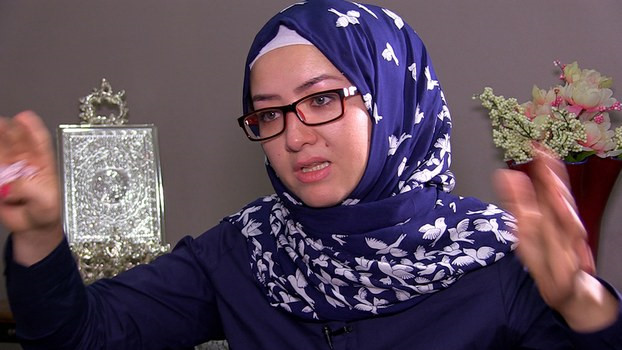
“The authorities put a helmet-like thing on my head, and each time I was electrocuted, my whole body would shake violently and I would feel the pain in my veins,” Tursun said, referring to an incident when she was made to sit a high chair and her legs and arms were shackled.
“I don’t remember the rest. White foam came out of my mouth, and I began to lose consciousness. The last word I heard them saying is that you being a Uighur is a crime,” she added.
Tursun said the facility employees forced the inmates, including herself, to take strange medication, some of which caused them to faint. The inmates were also made to drink a white liquid that caused some women to bleed and others to stop menstruating.
Ultimately Tursun was freed so she could take her children to Egypt but she was directed to return to China. Once she arrived in Egypt, she reached out to the U.S. and has resided in Virginia since September.
Countries must hit China with sanctions over the mass detention of ethnic Uighurs, hundreds of scholars said on Monday, warning that a failure to act would signal acceptance of "psychological torture of innocent civilians".Beijing has in recent months faced an outcry from activists, academics and foreign governments over mass detentions and strict surveillance of the Muslim Uighur minority and other ethnic groups in the restive western region of Xinjiang.In August, a U.N. human rights panel said it had received many credible reports that a million or more Uighurs and other minorities are being held in what resembles a "massive internment camp that is shrouded in secrecy" in the region.Representatives from a group of 278 scholars in various disciplines from dozens of countries called on China at a news briefing in Washington to end its detention policies, and for sanctions directed at key Chinese leaders and security companies linked to the abuses."This situation must be addressed to prevent setting negative future precedents regarding the acceptability of any state's complete repression of a segment of its population, especially on the basis of ethnicity or religion," the group said in a statement.Bangladesh to handle Rohingya resettlement after pollsCountries should expedite asylum requests from Xinjiang's Muslim minorities, as well as "spearhead a movement for U.N. action aimed at investigating this mass internment system and closing the camps", it said.China rejects criticism of its actions in Xinjiang, saying that it protects the religion and culture of minorities, and that its security measures are needed to combat the influence of "extremist" groups that incite violence there.The country's Foreign Minister Wang Yi has said the world should ignore "gossip" about Xinjiang and trust the government.But after initial denials about the detention camps, Chinese officials have said some people guilty of minor offences were being sent to "vocational" training centers, where they are taught work skills and legal knowledge aimed at curbing militancy.Chinese foreign ministry spokesman Geng Shuang said on Tuesday China's Xinjiang policies stemmed entirely from the need to combat terrorism."We resolutely oppose any foreign forces trying to interfere with Xinjiang affairs and China's domestic politics," he said at a regular news briefing in Beijing.Michael Clarke, a Xinjiang expert at Australian National University who signed the statement, told reporters that China sought international respect for its weight in global affairs."The international community needs to demonstrate to Beijing that it will not actually get that while it's doing this to a significant portion of its own citizenry," Clarke said.
Scholars condemn China for mass detention of Muslim Uighurs
Many refer to China’s Xinjiang Uighur Autonomous Region -- home to many ethnic minority groups, including Turkic Uighur people -- as East Turkestan.
They believe that the Uighur are among a number of Turkic tribes that inhabit the region, and consider it to be part of Central Asia, not China.
Established under the pretext of “political reeducation” for China’s Muslim population, Beijing has amped up its construction of detention camps in the past three months, expanding them by an additional 700,000 square meters, according to satellite imagery.
China’s Muslim incarceration camps have attracted heavy criticism from the international community as Beijing continually denied their existence and repeatedly rejected allegations of abuses against the country’s Uighur minority for years, opting to call them “vocational camps” instead.
Xinjiang region is home to around 10 million Uighurs. The Turkic Muslim group which makes up around 45 percent of the population of Xinjiang, has long accused China’s authorities for cultural, religious and economic discrimination.
A group of 15 Western ambassadors in Beijing, spearheaded by Canada, are seeking a meeting with the top official in China's restive, heavily Muslim Xinjiang region for an explanation of alleged rights abuses against ethnic Uighurs.The envoys are making their request in a letter to Chen Quanguo, Xinjiang's Communist Party boss, according to a copy of a draft letter seen by Reuters.The move represents unusually broad, coordinated action by a group of countries over a human rights issue in China, and illustrates the mounting backlash Beijing is facing over its crackdown in the western region.Trudeau says Canada to work with China on eventual free trade dealBeijing has faced an outcry from activists, academics, foreign governments and U.N. rights experts over mass detentions and strict surveillance of the mostly Muslim Uighur minority and other Muslim groups who call Xinjiang home.In August, a United Nations human rights panel said it had received many credible reports that a million or more Uighurs in China are being held in what resembles a "massive internment camp that is shrouded in secrecy".China says it is not enforcing arbitrary detention and political re-education, but rather some citizens guilty of minor offences were being sent to vocational centres to provide employment opportunities.Hundreds in US march in solidarity for UyghursBeijing bristles at criticism of its human rights situation, espousing a policy of non-interference in the affairs of other countries. China's top diplomat said on Tuesday the world should ignore "gossip" about Xinjiang and trust authorities there.It was not clear if the letter had been sent yet or if it contents could be revised. One diplomatic source said it was being passed around for more countries to potentially sign.Several other diplomats familiar with the letter would only confirm its existence and refused to discuss it further, citing its sensitivity. All of the diplomats declined to be identified.Many foreign governments have refrained from speaking out over the Xinjiang situation, with diplomats saying countries are fearful of angering China, an increasingly weighty diplomatic player thanks to its economic heft and initiatives such as the Belt and Road infrastructure programme.Germany cannot accept China’s camps for Uighur Muslims'WE ARE DEEPLY TROUBLED'In the draft letter addressed directly to Chen, who outranks the region's ethnic Uighur governor Shohrat Zakir, the ambassadors said they were highly concerned by the U.N. findings on Xinjiang."We are deeply troubled by reports of the treatment of ethnic minorities, in particular individuals of Uyghur ethnicity, in the Xinjiang Uyghur Autonomous Region," the draft reads, using an alternate spelling for Uighur."In order to better understand the situation, we request a meeting with you at your earliest convenience to discuss these concerns."China says world should ignore 'gossip' about XinjiangThe letter is copied to China's Foreign Ministry, the Ministry of Public Security and the Communist Party's international department.It is not possible to directly contact any senior Chinese leader for comment.The Xinjiang government, Ministry of Public Security, the party's international department and party's spokesman's office did not respond to requests for comment.Chinese Foreign Ministry spokeswoman Hua Chunying said she had not seen the letter, and that ambassadors were welcome to Xinjiang but if "they want to go with the intention of pressuring the Xinjiang government, then this is definitely problematic".Muslims in Xinjiang face repression: German parliament"As ambassadors, their role should firstly be to positively promote the mutual understanding, trust and cooperation between the country where they are stationed and the one they are sent from, and not to gossip, making powerless demands of the country they are stationed in and doing things that interfere in that country's internal affairs," Hua told a daily news briefing."We welcome well-intentioned attempts to understand the situation. Xinjiang is an open region. But we will firmly oppose ill-intentioned and biased attempts to interfere in the affairs of our local governments, or rashly criticise China over its internal affairs," she added.China has said Xinjiang faces a serious threat from Islamist militants and separatists who plot attacks and stir up tensions with the ethnic Han Chinese majority.The letter carries the names of 15 Western ambassadors, including the Canadian, British, French, Swiss, European Union, German, Dutch and Australian envoys. The other countries' ambassadors names in the letter are Ireland, Sweden, Belgium, Norway, Estonia, Finland and Denmark.Security spending soars in China's troubled Xinjiang region: reportFour diplomats familiar with the letter and its contents said Canada had taken the lead in its drafting.Canada's Foreign Ministry, in a statement sent to Reuters, did not comment directly on the letter but expressed deep concern over the reports of detention and mass surveillance of Uighurs and other Muslims in Xinjiang."The Minister of Foreign Affairs raised the situation faced by the Uyghurs directly with China's Foreign Minister at the UN General Assembly. Canada regularly raises concerns about Xinjiang with Chinese authorities both publicly and privately, bilaterally and multilaterally, and will continue to do so."The EU, British, German, Swedish, Swiss, Belgian, Dutch, Finnish and Norwegian embassies declined to comment on the letter.The Australian Department of Foreign Affairs and Trade said the government was concerned about the situation in Xinjiang and officials had conveyed these concerns to China on a number of occasions.The Irish, Danish, French and Estonian embassies did not respond to requests for comment.The United States is not represented on the letter, although non-U.S. diplomats say the country has been deeply involved in advocacy on the Xinjiang issue."We remain alarmed that since April 2017 the Chinese government has detained an estimated 800,000 to possibly more than 2 million Uighurs, Kazaks and other Muslims in internment camps for political re-education," a U.S. embassy spokesman said, responding to a question regarding the letter."The United States will continue to call on China to end these counterproductive policies and free all those arbitrarily detained. We are committed to promoting accountability for those who commit human rights violations and abuses, including by considering targeted measures against Xinjiang officials."The United States has said it is considering sanctions against Chen, other officials and Chinese companies linked to allegations of rights abuses in Xinjiang. 
In rare coordinated move, Western envoys seek meeting on Xinjiang concerns
Hundreds of protesters took to the streets Tuesday to participate in a rally for Uyghurs and raise awareness about the occupation of East Turkestan.Demonstrators wearing prison jumpsuits to resemble Uyghurs imprisoned by Chinese authorities marched in the front, chanting "free our brothers, free our sisters."At the U.S. Capitol building, crowds waved their U.S. and East Turkestan flags as they held signs calling for "freedom and independence for East Turkestan."Video: US Protesters denounce Chinese persecution of Uyghur Muslims"I come from China, but the name of my country is East Turkestan. I am not Chinese, but I am a Muslim," said protester Mihirgul Tursun.Tursun told Anadolu Agency she was imprisoned in China after returning home from her studies in Egypt in 2015.At the airport in China, she said she was asked what she did in Egypt, why she wore a hijab and whether she was an Islamist."East Turkestan is not a part of China. China is occupying our country, our Muslims just because we pray, because we say 'Salaam Alaykum,'” said Tursun, “They outlaw going to the masjid, reading Quran, wearing hijab and eating anything that is halal."Our country is facing a lot of oppression. May the rest of the Muslims help us their prayers," Tursun added.While the demonstration was comprised of mostly Uyghurs, some American Muslims also joined in support.Prominent Islamic scholar and head of the non-profit Yaqeen Institute for Islamic Research, Omar Suleiman, urged support for the Uyghur cause."To those who have your relatives that are still over there, just know that your brothers and sisters here also are for you [God willing]," Suleiman told the crowd."And we'll make sure that every single person in this building who talks about religious freedom, who talks about dignity, who talks about safety, does not get away with omitting your cause," Suleiman added, referring to Congress. "They know that the cause of the Uyghurs is the greatest violation of religious freedom in the entire world."Many refer to China's Xinjiang Uyghur Autonomous Region -- home to many ethnic minorities, including the Turkic Uyghur people -- as East Turkestan.They believe Uyghurs are among a number of Turkic tribes that inhabit the region, and consider it to be a part of Central Asia, not China.Uyghurs, a Turkic ethnic group that make up 45 percent of the population of Xinjiang, accuse China of carrying out repressive policies that restrain their religious, commercial and cultural activities.
Hundreds in US march in solidarity for Uyghurs
Germany cannot accept China’s “re-education” camps for Uighur Muslims, said the country’s Foreign Minister Heiko Maas on Tuesday. Many refer to China’s Xinjiang Uighur Autonomous Region -- home to many ethnic minority groups, including Turkic Uighur people -- as East Turkestan.They believe that the Uighur are among a number of Turkic tribes that inhabit the region, and consider it to be part of Central Asia, not China.China says world should ignore 'gossip' about XinjiangEstablished under the pretext of “political reeducation” for China’s Muslim population, Beijing has amped up its construction of detention camps in the past three months, expanding them by an additional 700,000 square meters, according to satellite imagery.China’s Muslim incarceration camps have attracted heavy criticism from the international community as Beijing continually denied their existence and repeatedly rejected allegations of abuses against the country’s Uighur minority for years, opting to call them “vocational camps” instead.Xinjiang region is home to around 10 million Uighurs. The Turkic Muslim group which makes up around 45 percent of the population of Xinjiang, has long accused China’s authorities for cultural, religious and economic discrimination.German FM to raise Uighur concerns on China visitWest calls on China to close Uighur detention camps
Germany cannot accept China’s camps for Uighur Muslims
Spending on security-related construction tripled in 2017 in China's far western region of Xinjiang, where Beijing is accused of detaining as many as one million ethnic Uighurs and other Muslims, an academic analysis of government expenditure found.Beijing says its "vocational training centres" in Xinjiang camps teach employment skills and legal knowledge aimed at curbing religious extremism.The report published on Monday by U.S. think-tank the Jamestown Foundation examined government budget data and found spending on security-related construction in Xinjiang rose last year by nearly 20 billion yuan ($2.90 billion), or 213 percent."Xinjiang's budget figures do not reflect increased spending on vocational education ... as the region ramped up camp construction; nor do they reflect an increase in criminal cases handled by courts and prosecutors," said the report's author, Adrian Zenz, an anthropologist at the European School of Culture and Theology in Germany.Activists urge deep scrutiny of China at UN rights gathering this week"Rather, they reflect patterns of spending consistent with the construction and operation of highly secure political re-education camps designed to imprison hundreds of thousands of Uyghurs with minimal due process."It also found that despite the purported large "vocational training" campaign, employment outcomes had not markedly improved, according to Xinjiang's own official employment figures.Whatever training the facilities do provide, Zenz said, it appeared it was not administered or paid for by the vocational education system.The Xinjiang government and the State Council Information Office, which doubles as the Communist Party's spokesman's office, did not immediately respond to requests for comment.On Tuesday, foreign ministry spokeswoman Hua Chunying said she did not personally know how much Xinjiang's security expenditure was.Speaking at a daily news briefing, she asked whether Jamestown had also looked into how much money the Xinjiang local government had spent "developing the economy and improving lives".Reports of mass detentions and strict surveillance of ethnic Uighurs and other Muslims have prompted the United States to consider sanctions against officials and companies linked to accusations of human rights abuses.After initial blanket denials, Chinese officials said in recent weeks they were not enforcing arbitrary detention and political re-education across a network of secret camps, but rather that some citizens guilty of "minor offences" were sent to vocational centres to provide employment opportunities.While prison expenditure doubled between 2016 and 2017, spending on prosecution on criminal suspects was largely flat, Zenz said, indicating it was likely that few of the so-called criminals involved only in minor offences were put on formal trial.China's record will be examined by the U.N. Human Rights Council on Tuesday, the first time since 2013, in a regular review expected to focus on its treatment of ethnic minorities, especially Uighurs and Tibetans. 
Security spending soars in China's troubled Xinjiang region: report