

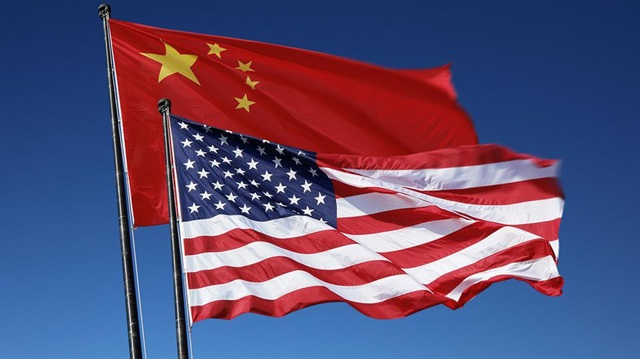
File photo
China on Tuesday condemned measures targeting it in a new U.S. defence act, saying it would comprehensively assess aspects that beef up the role of a panel tasked with reviewing foreign investment proposals.
China's complaints about the act come as the world's two biggest economies engage in an increasingly bitter fight over trade, levying tariffs on each others' products.
U.S. President Donald Trump signed a $716-billion defence policy act on Monday that authorises military spending and waters down controls on U.S. government contracts with China's ZTE Corp and Huawei Technologies Co Ltd .
The National Defense Authorization Act, or NDAA, strengthens the Committee on Foreign Investment in the United States (CFIUS), which reviews proposals to determine if they threaten national security. That measure was seen as targeting China.
Anti-China forces are behind criticism of policies in the far western region of Xinjiang, the Chinese foreign ministry said on Tuesday, after a U.N. panel aired accusations that a million ethnic Uighurs may be held in internment camps there.China has said Xinjiang faces a serious threat from terrorists and separatists who plot attacks and stir up tension between the mostly Muslim Uighur minority who call the region home and the ethnic Han Chinese majority.During the past two years, authorities have dramatically stepped up security and surveillance there, likened by critics to near martial law conditions, with armed police checkpoints, reeducation centres, and mass DNA collection.Members of a United Nations human panel reviewing China's rights record have said they received credible reports that 1 million ethnic Uighurs are held in what resembles a "massive internment camp that is shrouded in secrecy".The "ulterior motives" of anti-China forces were behind the "unfounded" slandering of the country's anti-terrorism measures, Foreign Ministry spokesman Lu Kang said in a statement, however."Any defamatory rumours are futile," Lu said, adding that the situation in Xinjiang was stable with communities of all ethnicities getting along harmoniously, and economic development enjoying good momentum."People of all ethnic groups in Xinjiang cherish the current situation of living and working in peace and happiness."China has never officially confirmed the existence of detention centres in Xinjiang, but its treatment of Uighurs, as well as accounts of its use of relatives in China as leverage to silence a vocal diaspora, have spurred an international outcry.China officially guarantees freedom of religion, but in recent years officials nervous about the possibility of radicalisation and violence have tightened controls in heavily Muslim areas.China's policy of "Sinification" of religion has increasingly alarmed many in other Muslim groups, who fear the government is widening strict curbs in Xinjiang to additional Muslim areas, such as the region of Ningxia and Gansu province.In the crackdown, the government has banned religious education for young people in mosques, ordered that the call to prayer over loudspeakers be silenced in some places, and sought to stamp out what it sees as Arab elements in mosques.China has prevented 'great tragedy' in Xinjiang: state-run paperUN says it has credible reports China holds million Uighurs in secret campsUN: China holds million Uighurs in secret camps
China blames 'ulterior motives' for criticism of its Xinjiang policies
China's Commerce Ministry said it had noted the inclusion of CFIUS in the act and would "comprehensively assess the contents", paying close attention to the impact on Chinese firms.
"The U.S. side should objectively and fairly treat Chinese investors, and avoid CFIUS becoming an obstacle to investment cooperation between Chinese and U.S. firms," the ministry said in a statement.
Chinese and U.S. companies seek greater cooperation on investment, it added, urging the two countries' governments to heed the voices of their companies, and provide a good environment and stable expectations.
Monday's legislation also calls "long-term strategic competition with China" a top priority for the United States, which should improve the defence capabilities of self-ruled Taiwan, claimed by China as a wayward province.
Chinese officials have been mostly measured and moderate in their response to U.S. President Donald Trump's ratcheting up of a trade war with Beijing in recent weeks through his announcement of a series of punitive tariffs. They have generally avoided adding to tensions, allowing the Communist Party's official media to make the most bellicose comments.But the mood on the streets of Beijing and Shanghai is a little less accepting. Reuters talked to a cross section of 50 people, mainly from the two cities, about how concerned they are about the trade war, what they think Beijing's response would be, and whether they think Chinese people should boycott American products in retaliation.The interviews showed there is no palpable sense of crisis or panic yet. There is division and confusion over how China should respond to Trump, with some arguing that Beijing should strike back at American interests but others saying they didn’t know what could be done.Alaska seafood industry braces for China tariff painTurks sprint to support national currency after Erdoğan callChinese media keep up drumbeat of criticism of USBut perhaps most worrying for American businesses selling in China, a significant minority of the people interviewed – 14, or 28 percent - want to stop buying American products now, and some say they are already boycotting anything made in the U.S. Others said they would continue to buy American but that could change in the future.If that was representative of the whole of China – and words were turned into action - it might start to put a dent in sales of Apple's iPhones, Disney's movies, Starbucks' drinks and General Motors' cars, among other American products – and that's without any boycott being organised by the government or activists.A decade after China basked in the patriotic glory of an inspirational opening ceremony for the Beijing Olympics, nationalist sentiment is rarely far below the surface.The straw poll's sample is very small and clearly not scientific. The interviews were also conducted in a country where people are often guarded and may well not let foreign media know their real views. Any individual's comments deemed inappropriate – criticism of Xi would fall into this category – could lead to trouble with the authorities.But the views expressed in the 50 interviews are more than the basis for idle curiosity.Here are the results of the straw poll:-Asked whether they were worried about the trade war, only 11 of the 50 (22 percent) said they were, and 39 (or 78 percent) said they weren't concerned.-Asked what Beijing should do in response to Trump's punitive tariffs, 19 (or 38 percent) said that it should strike back hard. The rest came up with various responses, including a refocus on development of the domestic economy, building other export markets, while 8 (or 16 percent) said they had no idea what the government should do.-Asked whether they would stop buying U.S. products, 14 said they would, 31 said they wouldn't (some indicated their views could change if the trade war intensifies), and five didn't have a view.Here are some of the comments from those interviewed:"Of course I'm concerned. It's a clash between the largest and second-largest economy," said Shanghai stockbroker Cai Qing, 40. "None of the relevant parties were fully prepared for the trade war. Policies were rushed, including U.S. policies," he added."To put it bluntly, Americans have always been so arrogant - they make everyone their manufacturer so they can reap the economic fruit," said Qu Xinjun, who works in the steel industry in Shanghai. "Trump is waging a psychological war with China. He was trying to intimidate China. From a psychological standpoint, we should not worry about the trade war, but rather focus on domestic development," he said. "We should trust our country and the leadership and trust that we can win the war.""China has to hit back, which could show its great power status. China has to win this match," said Beijing interior decorator Zhang Shiyou, 56.China has other markets it can look to, and President Xi Jinping's landmark proposal to build a new Silk Road, called the Belt and Road initiative, he said."We Chinese should not buy Apple phones. Like the saying 'Buy the nation's products, love China', buying domestic products will boost our own industries.""A lot of American goods are actually made in China," said Wei Shaochuan, 26, the founder of a tech start-up in China's central Henan province, was interviewed on WeChat."But if, after a period of time, the trade war really incites a sense of hatred against the United States, then I will not watch American movies, not listen to American music, not recommend Disney to friends, and start writing social media posts saying that Americans are not good, in order to counter American cultural products," he said."I'm a strong supporter of Chinese products. I'm a firm opponent of any American product, especially after reading the news," said Zhao Guoxin, 61, a store owner in Beijing. "The other day I went to this American shop and I told them I won't buy one single thing, and I made them very awkward. To be honest I do think America is pretty obnoxious," he said."To be honest, importing from the U.S. isn't our sole route," said Wang Yangqing, a Beijing nurse who said she was in her 20s. "We could also import from European countries. For girls, we use some American skin care products. If tariffs keep rising, I may shift to products from other places such as Japan or Korea.""China should strike back properly," said Xu Dong, 25, a student in Beijing. "But I won't stop buying their products. Some enterprises like Apple in fact bring in tax revenues and employment. It's a brand that is doing good to China," he said,"For me it [the trade war] is great!" said Zhu Tao, 34, a ship catering manager in Beijing. "That's because I receive my salary in U.S. dollars and since the U.S.-China trade war started the U.S. dollar has kept increasing in value compared to the yuan. So I think it has really helped me. It's great!"
Chinese to boycott US products if trade war intensifies
In a separate statement, China's foreign ministry said the United States passed the act despite China's strong objections and it was dissatisfied with the "negative content related to China".
China urges the United States to abandon Cold War thinking and correctly and objectively view relations, and not implement the act's negative clauses about China, so as to avoid harming cooperation, the ministry added.
Taiwan said it thanked the United States for its consistent support.
Taiwan would "continue to actively coordinate with the U.S. government to stably deepen the security partnership between Taiwan and the United States on a mutually beneficial basis", Taiwan's foreign ministry said.
The United States has no formal ties with Taiwan but is the island's strongest ally and sole foreign arms supplier.
Taiwan President Tsai Ing-wen is visiting the United States this month, stopping off first in Los Angeles and then in Houston on her way to and from Paraguay and Belize.
China has complained to Washington about the visits.