

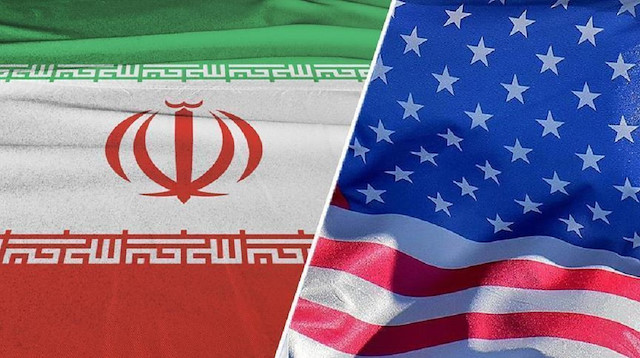
US resumes all pre-nuclear deal sanctions on Iran
The U.S. snapped back all of the sanctions it lifted on Iran following a historic pact world powers struck with the Islamic Republic.
Announced by Secretary of State Mike Pompeo and Treasury Secretary Steven Mnuchin announced last week, the sanctions which cover Iran's energy, shipbuilding, shipping and financial sectors took effect Monday.
They are the second batch the U.S. administration reinstated since President Donald Trump unilaterally pulled out of the nuclear deal in May despite objections from close allies in Europe.
The U.S. is seeking to "alter" Iranian behavior with the sanctions, and has been leaking out a stream of 12 demands it wants to see Iran agree to in exchange for re-lifting the economic penalties.
Eight countries who have significantly curtailed their imports of Iranian oil have been granted temporary waivers to allow them to continue importing Iranian oil after the penalties take effect.
Two of the countries have agreed to reduce imports to zero while six others "will import at greatly reduced levels," Pompeo said.
The U.S. expects to have reduced Iranian oil exports by more than 1 million barrels even before Monday's tranche of economic penalties, which the U.S. has long warned were incoming.
In all, 700 Iranian entities will be added to sanctions lists on Monday, according to Mnuchin.
More than half, or about 400, will have had their designations lifted as part of the 2015 Joint Comprehensive Plan of Action while roughly 300 will be new designations.
All of the other signatories -- China, the European Union, France, Germany, Iran, Russia and the United Kingdom -- have remained in the deal despite the U.S. action.
The accord provided Iran with billions of dollars in relief from international sanctions in exchange for sweeping curbs on and inspections of its nuclear program.
Iranians chanting "Death to America" rallied on Sunday to mark both the anniversary of the seizure of the U.S. Embassy during the 1979 Islamic Revolution and the imminent reimposition of U.S. sanctions on Iran's key oil sector.Thousands of students in the government-organised rally in the capital Tehran, broadcast live by state television, burned the Stars and Stripes, an effigy of Uncle Sam and pictures of President Donald Trump outside the leafy downtown compound that once housed the U.S. mission.Hardline students stormed the embassy on Nov. 4, 1979 soon after the fall of the U.S.-backed Shah, and 52 Americans were held hostage there for 444 days. The two countries have been enemies, on opposite sides of Middle East conflict, ever since.Video: Iranians rally in Tehran to mark 39th anniv. of US Embassy takeoverIranian state media said millions turned out for rallies in most cities and towns around the country, swearing allegiance to the clerical establishment and its hardline top authority, Supreme Leader Ayatollah Ali Khamenei. The turnout figure could not be independently confirmed by Reuters.Rallies replete with "Death to America" chants are staged on the embassy takeover anniversary every year. But U.S.-Iranian rancour is especially strong this time round following Trump's decision in May to withdraw the United States from world powers' 2015 nuclear deal with Iran and reimpose sanctions on Tehran.Iran seeks European assurances as US oil sanctions loomIran's Khamenei says the world opposes Trump's decisionsThe deal brought about the lifting of most international financial and economic sanctions on Iran in return for Tehran curbing its disputed nuclear activity under U.N. surveillance.The restoration of U.S. sanctions on Monday targeting Iran's oil sales and banking sectors is part of a wider effort by Trump to force Tehran to halt its nuclear and ballistic missile programmes outright as well as support for proxy forces in conflicts across the Middle East.The top commander of Iran's elite Revolutionary Guards, Major General Mohammad Ali Jafari, said at the Tehran rally that Iran would resist and defeat a U.S. "psychological war" and the return of U.S. sanctions, meant to cripple the Islamic Republic's oil exports and financial institutions."America has launched an economic and psychological war as a last resort ... But America's plots and its plans for sanctions will be defeated through continued resistance," said Jafari.In a speech on Saturday, Khamenei said Trump's policies faced opposition around the world. "America's goal has been to re-establish the domination it had (before 1979) but it has failed. America has been defeated by the Islamic Republic over the past 40 years," he said.Guards chief says Iran will resist, defeat US sanctions
Iranian marchers chant 'Death to America' on eve of US oil sanctions
The top commander of Iran’s Revolutionary Guards, Major General Mohammad Ali Jafari, said on Sunday Iran would resist and defeat a U.S. “psychological war” and sanctions against its vital oil sector.“America has launched an economic and psychological war as a last resort ... But America’s plots and its plans for sanctions will be defeated through continued resistance,” Jafari said at a rally marking the 1979 seizure of the U.S. Embassy in Tehran, which was broadcast live on state television.UAE blames Iran's 'aggressive policies' for US sanctionsIran seeks European assurances as US oil sanctions loomIran's Khamenei says the world opposes Trump's decisions
Guards chief says Iran will resist, defeat US sanctions
Iranians fear an even more painful squeeze on living costs after additional U.S. sanctions take effect on Monday, from businesses struggling to buy raw materials to the sick and elderly unable to afford life-saving medicines.The United States will reapply curbs to the country's vital petroleum and banking sectors on Monday in an effort to rein in its arch foe's nuclear, missile and regional activities.Iran's clerical rulers have played down the U.S. move, but many ordinary Iranians appear apprehensive."All the prices are going higher every day ... I cannot imagine what will happen after 13 Aban (Nov. 4). I am scared. I am worried. I am desperate," said elementary school teacher Pejman Sarafnejad, 43, a father of three in Tehran."I cannot even buy rice to feed my children or pay my rent."The daily struggle to make ends meet has been getting harder for months: The economy was battered by the reimposition of a first raft of U.S. curbs in August after Washington's pullout from a nuclear deal between Tehran and global powers in May.Foreign businesses of all types, ranging from oil companies, trading houses to shipping, have stopped doing business with Iran for fear of incurring U.S. penalties.A Tehran Grand bazaar grocery shop owner said: "I am very nervous because already there is shortage of some goods in the market and the rial has lost so much value."What will happen after the reimposition of new sanctions?"Iran's leadership says Tehran will not succumb to pressure to halt its missile programmes or to change its regional policy."Political Slogans"Yet while some Iranians back their leaders' defiance, others are fearful that the economy, weakened by years of sanctions, mismanagement and corruption, may collapse when the U.S. puts more pressure on the world's Number 3 crude exporter."Statements by government officials that ... the sanctions (will) have no impact are political slogans," said Washington-based lawyer Farhad Alavi, who focuses on U.S. trade regulation and sanctions."The fact is that these restrictions significantly increase transaction costs for Iranians."Since the reimposition of the first round of curbs in August, prices of bread, cooking oil and other staples have soared and the rial national currency has fallen sharply.EU, Germany, UK, France deeply regret Iran sanctionsRussian oil producer Zarubezhneft quits Iran projects due to sanctionsRice, one of the staples of Iran's diet, has more than tripled in price since last year because of the rial's fall.Ordinary Iranians fear cuts in Iran's oil sales could be the ultimate hammer blow to the economy, since energy exports are still the country's main source of earnings.Iranian leaders hope sanctions waivers granted to eight buyers of Iranian crude, combined with rising oil prices, will compensate for a reduction oil export volumes.But even without the new measures due on Monday, Iranian businessmen have been finding it harder to cope.Some 70 percent of small factories, businesses and workshops have already started to shut down in the past months due to lack of raw materials and hard currency, according to Iranian media.Life Grows Harder "I had to close my business. Those European companies that were racing to ink a deal with me last year, now refuse to return my calls," said a businessman in Tehran, who declined to be named.Mohammad Reza Sadoughi says ordinary people will bear the brunt of the sanctions, in terms of medicines for the sick such as cancer patients and food shortages and currency problems."My father has cancer, and with sanctions, the cancer-treatment medicine that his life depends on will only be available in the black market for a higher price," said the 38-year-old government employee in the northern city of Sari.The U.S. sanctions permits trade in humanitarian goods such as food and pharmaceuticals. Yet measures imposed on banks and trade restrictions will make life hard for Iranian patients."At the end of the day, it's the Iranian people with their aspiration to lead a good life who are suffering due to lack of good sense from their own regime who are not ready to compromise with the world power (U.S.)," said Dubai-based businessman Aftab Hasan, a member of the Iranian Business Council in Dubai.However analysts say that economic grievances are unlikely to revive anti-government unrest such as the demonstrations in December that turned into anti-government rallies."I don't care about politics. I don't care who is responsible for our problems. I don't want a regime change. I just want to live peacefully with my family in my country," said housewife Fariba Shakouri, 51, in the central city of Yazd.UAE blames Iran's 'aggressive policies' for US sanctionsIran seeks European assurances as US oil sanctions loomTurkey expects to know on Monday if has waiver for Iran sanctions
Struggling to cope, Iranians fear more misery from US sanctions