

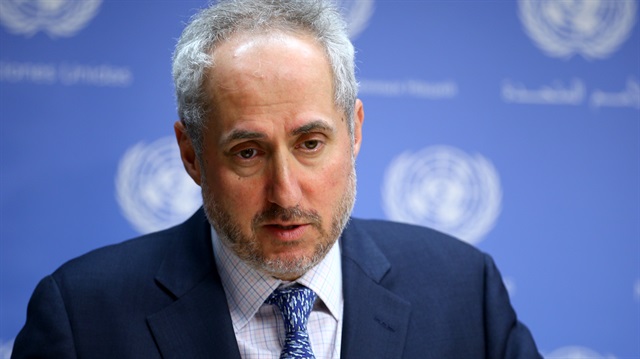
Stephen Dujarric
The UN on Friday announced a $50 million response plan for disaster relief efforts in Indonesia.
For the next three months, the UN will work with the Indonesian government to provide technical assistance to help 191,000 victims in the aftermath of the earthquake and tsunami that wreaked havoc in the country.
The plan was announced by Stephen Dujarric, spokesman for the UN Secretary-General, during a news briefing.
On Sept. 28, a powerful 7.4-magnitude earthquake struck Sulawesi Island that triggered a tsunami, towering up to 10 feet (3 meters) high, shaking the island.
The National Disaster Management Agency (BNPB) estimates the death toll at 1,571, while the UN estimates more than 2,500 injuries, according to Dujarric.
A week after a massive tsunami struck Indonesia, the U.N. disaster risk agency said on Friday Asia-Pacific governments must do more to empower coastal communities to protect themselves against the threat of earthquakes and tsunamis.One week ago, a 7.5 magnitude quake and tsunami caused devastation on Indonesia's Sulawesi island, killing more than 1,500 people and leaving thousands more homeless."Localisation is a key message here - making sure that community leaders themselves are empowered," said Loretta Hieber Girardet, the regional chief of the U.N.'s disaster risk agency."The communities themselves, and every layer of community, really needs to be engaged," she told the Thomson Reuters Foundation.Indonesia has suffered more deaths from tsunamis than any other country, according to the United Nations, and the Sulawesi disaster is the sixth fatal tsunami to strike the country since the 2004 Indian Ocean tsunami.Indonesia continues relief efforts post-quake, tsunamiLast month, Indonesia was one of 24 countries bordering the Indian Ocean that took part in large-scale tsunami exercises that simulated two magnitude 9.3 earthquakes.The biennial drills, which involved an estimated 150,000 people according to U.N. officials, focused on involving coastal communities more in tsunami planning.But the Sulawesi tsunami was "atypical" and could not have been simulated, said Girardet, of the U.N. International Strategy for Disaster Reduction (UNISDR) in Bangkok.The latest quake was probably triggered by an underwater landslide, rather than a violent, vertical land motion that displaces a high volume of sea water and is most common in earthquakes in the region, she said.Bodies pile up as Indonesia suffers from devastating effects of quake, tsunamiThe narrow shape of the bay where the tsunami hit also helped the wave gather in intensity and focus on the coastline, she said, adding that communities were ill-prepared.Preparedness measures include identifying infrastructure most at risk from disasters, retrofitting buildings, constructing emergency shelters and ensuring escape routes are well-marked, disaster experts said.It should be mandatory for all infrastructure projects to be screened to ensure they are equipped to handle disasters and are then maintained, said Arghya Sinha Roy, a disaster risk specialist at the Asian Development Bank in Manila.Galeri: Indonesians gather for Friday prayers despite devastating quake, tsunami"Simple things can be done at the local level to make sure that at least life-loss is reduced dramatically - and that's very much possible," he said.All disaster planning must be inclusive and include groups in society who are more vulnerable or unable to evacuate, said Girardet, like the disabled or pregnant women."In the long run, the amount of money that would have been spent on prevention is just a drop in a bucket compared to what the response is going to cost," she said. 
After Indonesia quake, empowering coastal communities will save lives: UN
A week after a major earthquake brought devastation to Indonesia's Sulawesi island, Ichsan Hidayat told how the bodies of his sister and her 43-day-old daughter were found under a sea of mud and debris, the mother clutching her baby to her chest.Hidayat was not on Sulawesi last Friday when the 7.5 magnitude earthquake struck, triggering a phenomenon called soil liquefaction, which turns the ground into a roiling quagmire.The neighbourhood of Petobo, in the south of the city of Palu, where his sister, Husnul Hidayat, lived with her daughter, Aisah, was wiped out.Rescuers who recovered the bodies told Hidayat his sister was found holding Aisah close.After Indonesia quake, empowering coastal communities will save lives: UN"Today, I prayed that they are in a better place. They deserve better,” Hidayat told Reuters as he left Friday prayers at a mosque in the centre of Palu, 1,500 km (930 miles) northeast of Indonesia's capital, Jakarta.Worshippers knelt to pray on red carpets put down outside the mosque as the building is unsafe due to quake damage.Indonesia has the world's biggest Muslim population but also pockets of Christians, including on Sulawesi, and other religions.The official death toll from the quake and the tsunami it triggered stands at 1,571, but it will certainly rise.Video: Drone footage shows devastation in quake hit Petobo VillageMost of the dead have been found in Palu. Figures for more remote areas, some still cut off by destroyed roads and landslides, are only trickling in, if at all.No one knows how many people were dragged to their deaths when the ground under Petobo and nearby areas south of Palu, dissolved so violently.The national disaster agency says 1,700 homes in one neighbourhood alone were swallowed up and hundreds of people killed.Hasnah, 44, also a resident of Petobo, has trouble remembering all of the relatives she's trying to find in the tangled expanse of mud and debris.Galeri: Indonesians gather for Friday prayers despite devastating quake, tsunami"More than half of my family are gone," Hasnah said as she sobbed. "I can’t even count how many. Two of my children are gone, my cousins, my sister, my brother in law and their children. All gone."Homes were sucked into the earth, torn apart and shunted hundreds of metres by the churning mud."The earth was like a blender, blending everything in its way," said Hasnah, who like many Indonesians goes by only one name.'THEY LIED'Hasnah said she has enough food and water but she's furious that a search and rescue operation in her area only began on Thursday."They said they would come with the heavy machines but they didn’t," she said. "They lied."Sick of waiting for help, villagers themselves have been searching, Hasnah said."We’ve marked the possible bodies with sticks. You can see a foot sticking out, but there's no one here to dig them out."Rescue workers retrieved several bodies later on Friday.As the sun set, a mass prayer ceremony was held by Palu's seafront that was scoured by the tsunami."We pray for the ones who have died and for those yet to be found," the imam said. "Allahu Akbar," or God is Greatest, responded the congregation.The first signs of recovery are evident in Palu. Electricity has been restored and some shops and banks have reopened and aid and fuel are arriving.Vice President Jusuf Kalla, visiting the disaster zone, said recovery would be completed in two years, beginning with a two-month emergency response phase when everyone who lost their house would get temporary shelter.Doctors have been flocking to help from other parts of Indonesia.The Budi Agung hospital has 134 beds with about 20 more set up in a tent outside, all full. A hospital ship is also due to arrive.Doctors said many patients have been at high risk of infection because they were buried in mud.Rescue workers are pushing into outlying districts cut off for days. Villagers rushed a Red Cross helicopter that landed at Sirenja village near the quake's epicentre, about 75 km (45 miles) north of Palu, to drop off supplies.Some quake damage was evident but the coast did not appear to have been battered by the tsunami, a Reuters photographer said.Sulawesi is one of the archipelago nation's five main islands, and like the others, is exposed to frequent earthquakes and tsunami.In 2004, a quake off Sumatra island triggered a tsunami across the Indian Ocean that killed 226,000 people in 13 countries, including more than 120,000 in Indonesia.
Bodies of mother clutching baby found as Indonesia quake toll rises above 1,500
Earlier this week, the UN said it was allocating $15 million to assist victims in the aftermath.
However, the plan published by the UN is a more concrete effort to support the government in coordinating relief efforts and distributing humanitarian aid.
The UN Resident Coordinator in Indonesia Anita Nirody noted some areas, such as Palu and Donggala, are cut off because of landslides and infrastructure damage, which has created access and transport problems for relief efforts.
Nirody said the new plan "provide[s], not only immediate relief items, but also the logistical support needed to provide aid to those in need."
According to the Indonesian National Board for Disaster Management (BNPB), the death toll from the quake and tsunami has risen to 1,558, with 113 missing.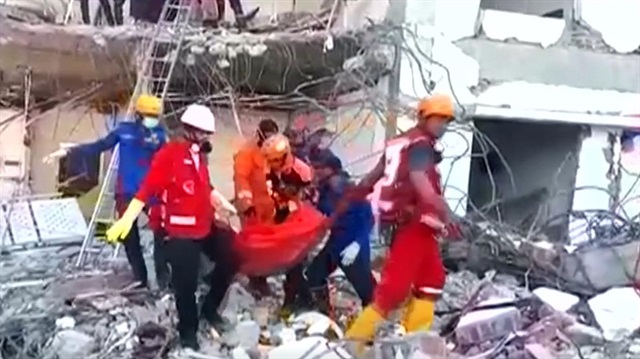
Indonesian search and rescue team removes body from hospital in Palu