

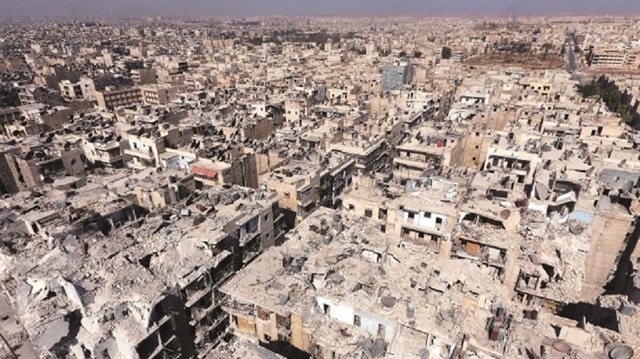
National Coalition for Syrian Revolution and Opposition Forces member says Syria problem can only be overcome through guarantor countries.
Claims that Aleppo, Syria’s second largest city, among other central cities, will be under Turkey’s control have arisen. Before Syria was ravaged by war, Aleppo hosted a population of 5.5 million people, but 75 percent of the city was emptied in 2013 after the opposition left. Once under Turkey’s control, Aleppo will be rebuilt and over three million Syrian refugees who were forced to flee to Europe will be able to return to their hometown as control is delivered jointly to the Turkish Armed Forces (TAF) and Free Syrian Army (FSA) alliance.
Ankara and Moscow are communicating
Turkish and Russian officials are discussing the Aleppo matter.
“Great political and military progress has been made regarding Turkish control of Hama, Aleppo and Idlib. The return of more than three million civilians from Turkey and Europe to Aleppo will begin with the withdrawal of regime forces and Shiite militias from the region,” National Coalition for Syrian Revolution and Opposition Forces member Fuat Aliko told Yeni Şafak daily.
The head of U.S. Central Command (CENTCOM) on Thursday said training for a joint Turkish-American patrol on the frontline of the northern Syrian city of Manbij will soon start."As part of the diplomatic road map, we will soon begin the necessary training to conduct joint combined patrols along portions of the demarcation line in this extremely complex environment," said Gen. Joseph Votel, referring to the Manbij roadmap.Video: Training for joint Turkey-US patrol to start: USThe roadmap which was announced last month after a meeting between Turkish Foreign Minister Mevlut Cavusoglu and his U.S. counterpart Mike Pompeo, focuses on the withdrawal of the PKK-affiliated YPG terror group from Manbij and stability in the region.The Turkish army on Wednesday conducted its 16th round of patrols in the city as part of the deal with the U.S.Turkish army conducts 16th round of patrols in ManbijIn a written statement, the Turkish General Staff announced forces from both countries coordinated patrols in the region between areas liberated by Turkey's Operation Euphrates Shield and Manbij. The first patrols began June 18.Giving details via a teleconference call to reporters at the Pentagon, Votel said the U.S. continues coordinated patrols with Turkey to ensure long-term stability in the city and to implement a diplomatically agreed arrangement that addresses mutual security interests.Turkish airstrikes ‘neutralize’ five terroristsReports of PYD/YPG withdrawal from Manbij dismissedIn a response to a question whether he was advised about any U.S.-Russian agreements and cooperation on Syria as a result of a summit this week between President Donald Trump and Russian President Vladimir Putin, Votel said CENTCOM had not received new guidance as a result of what happened in Finland.He noted that current laws prohibit coordinating, synchronizing and collaborating with Russian forces – a move that needs approval from Congress."I have not asked for that at this point," he noted, adding that the U.S. continues communication and deconfliction with Russian commanders to ensure safety of American troops and compliance with U.S. international obligations.Turning to Iran’s presence in Syria, Votel said the U.S. does not have a mission that is directly focused on Iran and the only intention the U.S. has right now is to defeat Daesh.When asked whether CENTCOM supports the rapprochement between the YPG/PKK which uses the name of SDF, and the Syrian regime, he said the U.S. does not encourage the group to engage with the regime."But, of course, we do recognize the pragmatic reality that plays out on the ground. That is a fact of life in this particular area," he added.In its more than 30-year terror campaign against Turkey, the PKK has taken some 40,000 lives, including those of women and children. The PYD/YPG is its Syrian branch.Should the Manbij model prove a success, Turkey will push for a similar arrangement in eastern Syria.Turkey has said the presence of terror forces near its border constitutes a threat and has launched military operations and other efforts to rid the region of terrorists.
Training for joint Turkey-US patrol to start: US
Following the evacuation of the Fua and Keferya villages, which are connected to Idlib, a “Sunni corridor” map including Hama, Aleppo and Idlib will crystalize, Aliko added.
From the second half of 2018, the U.S. and PKK will administer the east, Turkey and the FSA will administer central areas and Russia and the Asaad regime will administer the south and western areas, Aliko stated.
Fuat Aliko
Three separate areas
“Lattakia, Tartus, Homs, Damascus and Deir ez-Zor will be controlled by the Assad regime and Russia. Al-Hasakah, Raqqa and the Deir ez-Zor countryside will be delivered to the U.S.-PKK alliance. The central areas which will mostly be inhabited by Sunni Muslims – Hama, Idlib and Aleppo – will be under Turkey’s control. Negotiations between governments are ongoing. Al-Iys, Rashidin, al-Bab and Han Asal are already surrounded by the TAF and FSA. The upcoming period will be one of diplomacy and politics as opposed to military moves. The multidimensional process that includes Turkey also includes regional and global actors,” Aliko said.
The evacuation of civilians from the Shia-majority villages of Fuah and Kafriya in Syria's northwestern Idlib province is now underway after a deal was reached between Iran and Syrian armed opposition groups.According to Anadolu Agency correspondents based in the region, evacuations began Wednesday evening with 12 ambulances ferrying injured people from both villages, followed by dozens of buses carrying civilian residents.Under the terms of the agreement, the evacuations will coincide with the release of opposition fighters captured earlier by the Assad regime.Bodies of 1,236 civilians found in three mass graves in RaqqaOpposition sources told Anadolu Agency that the deal -- struck with Iranian negotiators on Tuesday -- called for the evacuation of 6,900 people from both villages in return for the release of 1,500 detained opposition fighters.Syria has only just begun to emerge from a devastating conflict that began in 2011 when the Assad regime cracked down on demonstrators with unexpected ferocity.PKK documents reveal $600 million revenueTurkey warns against repeating SW scenario in Syria’s Idlib
Civilians evacuated from Shia villages in Syria’s Idlib
A new era
“The presence of Shiite militia in areas controlled by the Assad regime and Russia is an international problem. The PKK, which is listed as a terrorist organization by many groups, is positioned to the east of the Euphrates and this is also an issue. A new era may be initiated with Turkish control of Aleppo. This is an important step to protecting Syria’s territorial integrity. Parallel to the map which is terror-free and stipulates the presence of legitimate forces on the ground, there are hopes for political, military and economic solutions. The operations in Damascus, Homs and Daraa as well the realization of the control areas should be seen as clear mediations,” Aliko added.
Assad regime is not powerful enough
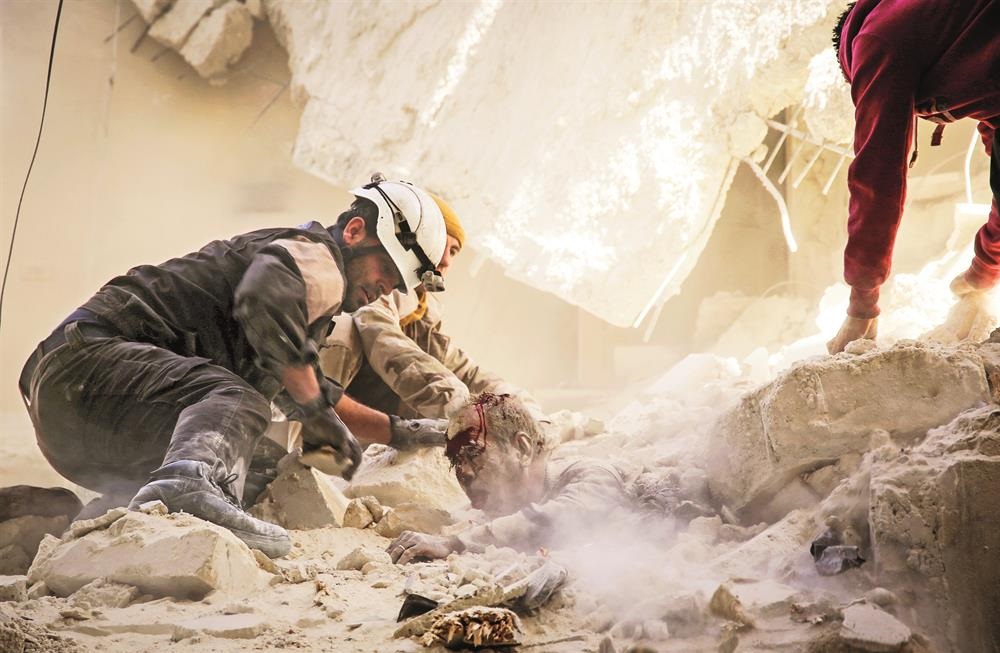
“Turkey’s initiative in Aleppo, the rebuilding of the city, the revival of industry and trade as well as the return of over 3 million Syrians to their homeland is backed by many European and Arab states. In Aleppo, Hama and Idlib, infrastructure elements such as industrial facilities, houses, city infrastructure, electricity and water were almost completely destroyed. The Syrian regime will not remedy this problem and will not be able revive Idlib and Hama, and especially not Aleppo. There is no chance of the Assad regime receiving international support either. This problem can only be overcome with a strong country like Turkey's guarantor status and responsibility. Russia, Damascus and Iran are also aware of this situation,” Aliko said.
Ankara warned on Thursday that it does not want the devastating scenario unfolding in Syria’s southwest to be repeated in the northwestern province of Idlib, according to the Turkish Foreign Ministry. “We do not want the same scenario in Syria's southwest to be experienced in Idlib,” a statement issued by the Turkish Foreign Ministry said.The statement went on to “strongly condemn” the regime attacks targeting de-escalation zones in southern Syria. Last month, regime forces launched a wide-ranging military operation -- supported by Russian air power – in Daraa, leading the regime and its allies to establish control over most of the country's southernmost border with Jordan in line with a cease-fire deal between Russia and armed opposition groups.The fighting has led to a major displacement crisis, with an estimated 350,000 civilians fleeing Daraa in recent days towards areas near the Jordanian border.Following peace talks held last year in Kazakh capital Astana, Daraa was designated a “de-escalation zone” in which acts of aggression are expressly prohibited. Syria has only just begun to emerge from a devastating conflict that began in 2011 when the Assad regime cracked down on demonstrators with unexpected ferocity.Turkish army conducts 16th round of patrols in ManbijSyrian opposition, regime allies to exchange hostagesSyrian regime barrel bomb attack on school kills 10 civilians in Quneitra
Turkey warns against repeating SW scenario in Syria’s Idlib
The Turkish army on Wednesday conducted its 16th round of patrols in the northern Syrian city of Manbij as part of a deal with the U.S. to rid the area of terror group YPG/PKK.In a written statement, Turkish General Staff said the forces of both countries coordinated patrols in the region between areas liberated by Turkey's Operation Euphrates Shield and Manbij.The first patrols by Turkish and U.S. troops in the region began on June 18.Turkish business body to open branch in SyriaErdoğan, Trump emphasise importance of Manbij roadmapThe Manbij deal between Turkey and the U.S. focuses on the withdrawal of the PKK-affiliated YPG terror group from the city in order to stabilize the region.In its more than 30-year terror campaign against Turkey, the PKK has taken some 40,000 lives, including those of women and children. The YPG/PKK is its Syrian branch.Should the Manbij model prove a success, Turkey will push for a similar arrangement in eastern Syria.Turkey has said the presence of terror forces near its border constitutes a threat and has launched military operations and other efforts to rid the region of terrorists.
Turkish army conducts 16th round of patrols in Manbij
Bashar al-Assad’s regime and opposition forces have made another deal to evacuate thousands of civilians and fighters from two besieged districts in northwest Syria, according to opposition sources on Tuesday.The agreement hammered out between the two sides calls for the evacuation of civilians from Kefraya and Al-Fuaa districts of Idlib.Both Kefraya and Al-Fuaa districts remain surrounded by opposition forces.Under the new deal, a total of 6,900 people will be evacuated, while the Assad regime will release 1,500 civilians and fighters.Syrian regime barrel bomb attack on school kills 10 civilians in QuneitraSyrian civilians approach Israeli frontier fence in Golan HeightsLast year, many prisoners in al-Yarmouk refugee camp, Madaya and al-Zabadani, as well as in the regime’s prisons, were freed as part of a deal to evacuate the Shias in Kefraya and Al-Fuaa.The two Shia-majority districts will be completely evacuated should new evacuation takes place.Notably, Idlib falls within a network of de-escalation zones -- endorsed by Turkey, Russia and Iran -- in which acts of aggression are expressly prohibited.Syria has only just begun to emerge from a devastating conflict that began in early 2011 when the Assad regime cracked down on demonstrators with unexpected ferocity.
Syrian opposition, regime allies to exchange hostages