

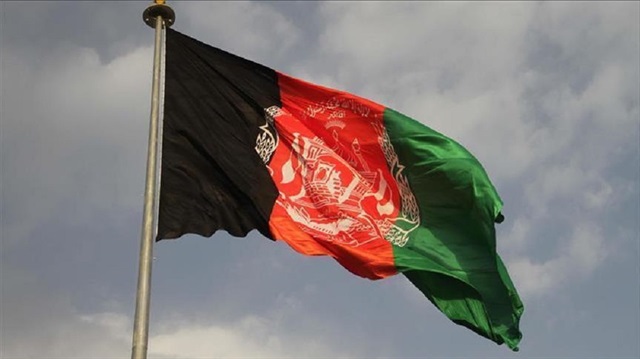
Taliban have repeatedly rejected offers to hold peace talks or support the polls
The Taliban on Monday directed Afghans to boycott upcoming parliamentary elections and demanded a complete withdrawal of foreign forces as the only solution to end the 17-year-old war as they ramped up attacks in strategic provinces.
The statement from the hardline Islamic militant group coincided with the visit of top U.S. envoy Zalmay Khalilzad, who has been appointed to lead peace efforts with the Taliban.
Khalilzad met President Ashraf Ghani in Kabul to strategise ways to hold Afghan-led peace talks with the Taliban, whose 1996-2001 rule was ended by U.S.-led troops.
"Peace is a holy process, and the U.S. government and people are united with the Afghan government and people in this process," Khalilzad was quoted by Ghani's office in a statement as saying.
Khalilzad, an Afghan-born former U.S. ambassador to Afghanistan and Iraq, joined the U.S. State Department team in September.
He is scheduled to visit Pakistan, the United Arab Emirates, Saudi Arabia and Qatar this week as he seeks to bring the Taliban to the negotiating table.
But the Taliban, who are fighting to expel foreign forces, topple the government and restore their version of hardline Islamic law, have repeatedly rejected offers to hold peace talks or support the polls.
Heavily armed Taliban fighters destroyed bridges near the central city of Ghazni on Saturday, closing the main highway between the capital Kabul and southern Afghanistan, officials said.Sporadic clashes erupted between Afghan soldiers and Taliban insurgents who were trying to gain control over parts of Ghazni province nearly two months after being pushed back from the city by U.S.-backed Afghan forces, officials added.Mohammad Arif Noori, the governor’s spokesman in Ghazni, said fighting was ongoing and the Afghan army had deployed helicopters to prevent the militants from entering the city centre."We are fully prepared to attack them. This time the province will not fall into the hands of the Taliban," Noori said.Three women, one child killed following air raid in AfghanistanFive militants were killed as they were planting bombs on three bridges on the Kabul-Kandahar highway, Noori added.Residents of Qarabagh district, 55 km (35 miles) south of Ghazni city, said the militants had set up checkpoints and did not allow vehicles to pass through several residential areas.The attack on Ghazni was a show of strength for the Taliban, underscoring how volatile the security situation remains two weeks before the parliamentary elections.Pakistani religious leaders to work for Afghan peacePolling has already been called off in Ghazni province after the Taliban overran it in August and besieged the city for five days.That confrontation killed 150 Afghan security forces and 95 civilians dead, as well as hundreds of Taliban fighters, said officials then.President Ashraf Ghani's Western-backed government pledged $20 million for relief and reconstruction of Ghazni after security forces defeated the Taliban fighters in that battle. Afghan government rejects proposals to privatise war
Afghan forces, Taliban battle for control of highway in Ghazni province
Pakistan's key religious leaders have assured an Afghan government-sponsored peace council that they will do their part to help end Afghanistan’s decades-long conflict."We assured the Afghan delegation that we are ready to play a role in bringing peace to Afghanistan," Maulana Sami-ul-Haq, head of Jamiat Ulema-e-Islam, told Anadolu Agency by phone Thursday.A seven-member delegation of the Afghan High Peace Council headed by Maulvi Attaullah Lodin met with Maulana Sami-ul-Haq in Islamabad and sought his help in restoring peace to the country.Haq suggested that the Afghan delegation sit with the Taliban and pave the way for removing mistrust and holding direct peace talks. But the Afghan delegation asked Haq to play a role and convince the Taliban to hold direct talks with the Afghan government.Haq is also head of “Darul Uloom Haqqania”, a religious seminary in the town of Akora Khattak in northwestern Khyber Pakhtunkhwa province, and is believed to have influence on the Afghan Taliban as many of their key leaders have studied there."I offered my madrassa Haqqania [as a venue] so the Afghan peace council delegation could sit down with the Taliban for face-to-face talks," said Haq, adding he will extend the same offer to the Taliban.Delegation meets with JI chiefThe Afghan delegation also met with Siraj ul Haq, the head of the country's mainstream religious-political party Jamaat-e-Islami (JI), and sought his support in restoring peace in Afghanistan. "We believe that peace in Afghanistan is essential for the peace of the whole region and we always stand with our Afghan brothers and support the sovereignty, stability, peace and progress of Afghanistan," Siraj ul Haq told Anadolu Agency.He urged all Afghan groups to work together to bring peace to their country and compel foreign forces to leave.Taliban reactionTaliban spokesman Zabihullah Mujahid declined to comment on the Afghan peace council delegation’s meetings with Pakistani religious leaders.However, in a statement issued on Sept. 29, Mujahid asked Afghan and Pakistani religious scholars to refrain from participating in conferences on the war in Afghanistan in Islamabad and Kabul."We call on all sincere scholars to boycott these conferences and not become victims of American strategies and intelligence plots," he said in the statement.On Sept. 15, during Pakistani Foreign Minister Shah Mehmood Qureshi’s visit to Kabul, the two countries agreed to hold conferences of religious scholars in Islamabad and Kabul to bring the Taliban to the negotiating table.Pakistan had brokered the first round of direct talks between the fragile Afghan government and Taliban in Islamabad in July 2015. The process broke down when the Taliban announced the death of their long-time leader Mullah Omar, triggering a bitter power struggle within the group.Chances for a resumption of the stalled process dimmed further after Mullah Omar’s successor, Mullah Mansour, was killed in a U.S. drone strike in 2016 in Pakistan near the Afghan border.Since then, several attempts have been made with little success to resume the stalled peace process by a four-nation group comprising Pakistan, Afghanistan, the U.S. and China.
Pakistani religious leaders to work for Afghan peace
The Oct. 20 vote, seen by international partners as a dry run for presidential elections next year, has been hampered by chaotic preparations, allegations of fraud and ever-present fears of militant violence.
Zabihullah Mujahid, the Taliban’s main spokesman, said the United States was using the elections for the sole purpose of legitimising their presence and authority.
"People are given a deceptive feeling of having free right casting their votes for the malicious purpose of minimising their resentment against the foreign occupation," he said.
With less than two weeks to go before the long-delayed elections, the Taliban and Islamic State have ramped up attacks across the country.
The fighting has underlined the struggle security forces face as the insurgents have steadily extended their control over the countryside even though they have been unable to take and hold a major city.
"The real solution of the ongoing Afghan crisis lies in the complete withdrawal of all foreign occupying forces and the restoration of a pure Islamic sovereignty," said Mujahid.
Western diplomats have said the fighting raises questions about the viability of the U.S. strategy to end the war, which for the past year has focused on forcing the militants, largely with more air strikes, to the negotiating table.
For Afghan teacher Sakena Yacoobi her students are her driving force.Known for her courage and relentless struggle to educate young girls at a time when it was prohibited by the Taliban, Yacoobi was chosen as Educator of the Year by the TRT World Citizen iniative.She is the founder and Executive Director of the Afghan Institute of Learning (AIL), a women-led non-governmental organization which serves around 350,000 people yearly. "When they [children] smile and they are happy that gives me joy so that is my motivation," she said in an interview with Anadolu Agency."The core of my program is education because I really believe that education gives power, empowers women, education gives a status to women, education broadens their life cycle," she said.Yacoobi said that a good education will also enable children to be good leaders and good citizens in the future as Afghanistan suffered from ignorance and a large uneducated population."The country will progress and they [children] also change and transform their lives and as a result they will be a role model for the future generation," she added.Taliban kill at least ten police in central Afghanistan, officials sayStanding tall against TalibanDuring the Taliban rule in the 90s Yacoobi set up secret schools where she educated girls.She had left a comfortable job in the U.S., where she initially went to get a master's degree in public health and then lived as a refugee after Russia invaded Afghanistan.Fondly called "the mother of education", Yacoobi was nominated for the Nobel Peace Prize. She also won Qatar Foundation's WISE Prize for Education in 2015.Speaking about an encounter with the Taliban, she said that one day a group of armed men raided her school."When they [Taliban] said to me 'you are educating, that's not good' I told them that Islam said to educate women, Islam did not say to not educate women," she added.Stating that she knew that she risked getting killed for her work, Yacoobi said it was her faith and belief that God protected her.In her 27-year mission, she said she had become an "old lady" but the youth in Afghanistan was filled with hope despite an ongoing war."Constantly I work with the young generation to really encourage them to be patient and really bring peace to Afghanistan because war is not going to be a solution, bring peace and the only way that we could have peace in Afghanistan is our young generations," she said."Until peace does not come to Afghanistan we will suffer all the time," she added.US strategy in Afghanistan has failed: Former FM'Never give up'Speaking about the challenges which are still existing in the country, Yacoobi said that the main issue is security."Also another challenge is that there are areas where no school is available," she added.Stating that the lack of education leads to false perceptions on educating women, Yacoobi said that access to education -- especially in rural areas – could change this.With a spark of hope in her eye, Yacoobi called on young women and men saying that it is important to "put a big mark on humanity to reach out for others and stand up for each other, work in teamwork and work in unity" to be successful in life."My message to young men and young women is to be strong against all odds. Do not give up, work really hard and be honest and also appreciate your culture, your religion and your country," she added.
Afghan teacher encourages children to never give up
At least 10 policemen were killed in clashes with Taliban fighters in the central Afghan province of Wardak, officials said on Sunday, amid fighting to wrest control of arterial highways a day after Taliban fighters blew up bridges.The Taliban set fire to a government building in Wardak's Sayeed Abad district and killed the district police chief along with nine other policemen on Saturday night, a senior police official said.Repeated assaults on strategically important provinces, such as Wardak and nearby Ghazni, have been a show of strength for the Taliban, underscoring how volatile security remains in Afghanistan two weeks before nationwide parliamentary elections.Abdul Rahman Mangal, a spokesman for the Wardak governor's office, said the Taliban raided some civilian houses after killing 10 policemen, destroyed newly built checkpoints and cut power to some parts of the city.Government forces counter-attacked to stop the insurgents from approaching the city, Mangal said.Video: Taliban kill at least ten police in central AfghanistanA statement from the Taliban's main spokesman, Zabihullah Mujahid, said the insurgents had taken the centre of Sayeed Abad and all surrounding security checkpoints, killing numerous members of the security forces and seizing weapons, ammunition and vehicles.Mohammad Arif Noori, a spokesman for Ghazni's governor, said one soldier was killed by Taliban fighters as they tried to gain control over parts of the province nearly two months after being pushed back from the city by U.S.-backed Afghan forces.The Taliban attacked Ghazni, a strategically important centre straddling the main highway linking Kabul with Afghanistan's south, in August. It was the largest tactical operation launched by the Taliban since they overran the northern city of Kunduz in 2015.That confrontation killed 150 members of Afghanistan's security forces and 95 civilians, as well as hundreds of Taliban fighters.Afghan forces, Taliban battle for control of highway in Ghazni provinceThree women, one child killed following air raid in Afghanistan
Taliban kill at least ten police in central Afghanistan, officials say
The new U.S. strategy toward Afghanistan and South Asia has failed and there is still instability in Afghanistan, said the former Afghan FM.Rangin Dadfar Spanta, who once served as the national security advisor of former Afghan President Hamid Karzai, spoke about the current security situation in the country to Anadolu Agency.“The government's control of important regions in the country has ended. We can say that the U.S. strategy was defeated,” Spanta said. “The U.S. president’s [Donald Trump] strategy hasn’t left a positive impact on the security situation in the country, and there is still instability in Afghanistan."Spanta went onto say that it was important for the Afghan government to expand the regions it controlled and implement the rule of law in these regions, but there were even more problems now compared to past years.Touching on the claims of nine U.S. bases in Afghanistan, he said: “The situation of military bases is based on agreements signed between Washington and Kabul. These bases were given to the use of the U.S. So, both Afghanistan and the U.S. should adhere to their obligations.”He said the essence of the matter was that Washington did not stick to its commitments to Afghanistan. “For this reason, we need to review the security agreement with Washington for a better implementation of the agreement and the fulfillment of U.S. promises.”In 2014, Kabul signed the Bilateral Security Agreement (BSA) with Washington aimed to handle its presence after the end of its combat mission that same year.Recently, Afghanistan has been considering a review of the BSA over the U.S.’s alleged failure to head off rising violence and a spate of Taliban attacks.- Peace talks between Afghanistan and TalibanSpanta said peace talks between Afghanistan and the Taliban were not possible.“Both the Kabul government and Afghan High Peace Council confessed [this] a few days earlier,” he said, adding that it was foreign powers like the U.S., Russia and the Central Asia countries, who established a dialogue with the Taliban.“The Afghans, despite being the owner of the land, didn’t take part in the peace talks,” he said.He also said that Zalmay Khalilzad, the new U.S. special envoy for Afghanistan, could play a more important role in talks between Afghanistan and the Taliban than the former diplomats, who did not know the country well enough.Also mentioning the matters of dispute between Afghanistan and Pakistan, he reminded Turkey was playing a mediator role between the two countries.“Considering Turkey’s friendly and brotherly relations with the two countries, I believe that Turkey will play a very positive and valuable mediator role in the future,” he said.'France destroyed cultural backbone of others'
US strategy in Afghanistan has failed: Former FM