

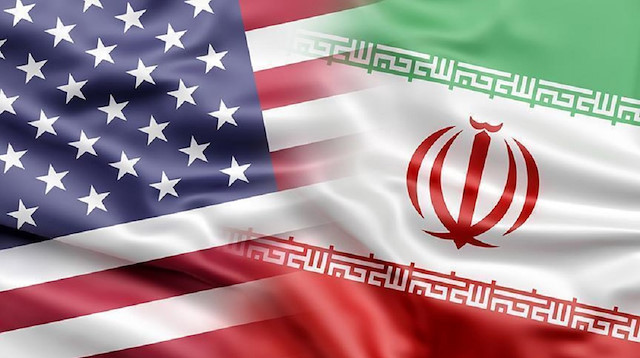
Second wave of US sanctions on Iran starts Monday
The U.S. will reimpose on Monday more sanctions lifted under a 2015 nuclear pact world powers struck with Iran.
The new wave of sanctions, the second since August, will target Iran's energy, shipbuilding, shipping, and financial sectors.
The U.S. has been trickling out a list of 12 demands Iran must meet if it wants to see sanctions lifted ahead of their reimposition on Monday.
In all, eight countries will receive temporary waivers to allow them to continue importing Iranian oil after the penalties take effect.
The European Union is not one of the recipients, according to Pompeo who said those who receive waivers "have made important moves towards getting to zero crude oil importation."
Two of the countries have agreed to reduce imports to zero while six others "will import at greatly reduced levels," according to the U.S. announcement on Friday.
“These negotiations are still ongoing,” said US Secretary of State Mike Pompeo.
The U.S. expects to have reduced Iranian oil exports by more than 1 million barrels even before Monday's tranche of economic penalties.
In all, 700 Iranian entities will be added to sanctions lists on Monday, according to Treasury Secretary Steven Mnuchin.
The EU, Germany, Britain and France said on Friday in a joint statement that they “deeply regret the further re-imposition of sanctions by the United States".The statement said: “We deeply regret the further re-imposition of sanctions by the United States, due to the latter’s withdrawal from the Joint Comprehensive Plan of Action (JCPoA).”It came shortly after the U.S. announced it is reimposing all sanctions lifted under a 2015 nuclear pact world powers struck with Iran.The new wave of sanctions reimpositions, the second since August, will target Iran's energy, shipbuilding, shipping, and financial sectors.The statement termed the nuclear pact as “a key element of the global nuclear non-proliferation architecture and of multilateral diplomacy, endorsed unanimously by the UN Security Council through Resolution 2231"."It is crucial for the security of Europe, the region, and the entire world,” it said.The countries aim to "protect European economic operators engaged in legitimate business with Iran, in accordance with EU law and with UN Security Council resolution 2231.""As parties to the JCPoA, we have committed to work on, inter alia, the preservation and maintenance of effective financial channels with Iran, and the continuation of Iran’s export of oil and gas."Iran has no concerns over reimposition of new US sanctions: ministry officialIranian planes refused fuel in TurkeyUS oil sanctions on Iran threaten 'paralyzed' economyIran says report of US oil waivers shows market needs Iranian crude
EU, Germany, UK, France deeply regret Iran sanctions
Iran said on Friday that it had no concerns over the reimposition of new U.S. sanctions on the country's vital oil and financial sectors, expected to be announced by Washington on Nov. 4."America will not be able to carry out any measure against our great and brave nation ... We have the knowledge and the capability to manage the country's economic affairs," Iran's Foreign Ministry spokesman Bahram Qasemi told state TV. Russian oil producer Zarubezhneft quits Iran projects due to sanctionsUS oil sanctions on Iran threaten 'paralyzed' economyIran says report of US oil waivers shows market needs Iranian crudeUS grants eight countries Iran sanctions waivers
Iran has no concerns over reimposition of new US sanctions: ministry official
The United States on Friday removed two top Turkish officials from the Global Magnitsky Act sanctions list, according to the Treasury Department website.The United States had imposed sanctions on the officials, Justice Minister Abdulhamit Gül and Interior Minister Süleyman Soylu, in August over Turkey's imprisonment of American pastor Andrew Brunson.Brunson was released in October and has since returned to the United States.The Turkish Foreign Ministry said it had lifted sanctions imposed against U.S. Secretary of Homeland Security Kirstjen Nielsen and Attorney General Jeff Sessions within the framework of reciprocity.The ministry said in a statement released minutes after the U.S. move that the sanctions on Nielsen and Sessions, which include a travel ban into the country and freezing of assets in Turkey, had been lifted in response to the U.S. move.Turkish President Recep Tayyip Erdoğan and his U.S. counterpart Donald Trump had discussed improving frosty relations between Washington and Ankara during a call between the two leaders, the Turkish presidency said on Thursday.Turkey's Erdoğan, Trump talk bilateral, regional issues
Turkey, US lift tit-for-tat sanctions
More than half, or about 400, will have had their designations lifted as part of the 2015 Joint Comprehensive Plan of Action while roughly 300 will be new designations.
U.S. President Donald Trump unilaterally withdrew Washington from the pact in May despite objections from close allies in Europe.
All of the other signatories -- China, the European Union, France, Germany, Iran, Russia, and the United Kingdom -- have remained in the deal despite the U.S. action.
The accord provided Iran with billions of dollars in relief from international sanctions in exchange for sweeping curbs on and inspections of its nuclear program.
On Friday, the EU, Germany, Britain and France said in a joint statement that they “deeply regret the further reimposition of sanctions by the United States".
On late Friday, Turkey's Energy and Natural Resources Minister Fatih Donmez said they have information that the U.S. will grant Turkey a waiver to continue importing oil from Iran after sanctions, but they don’t have all the details yet.
The United Arab Emirates' minister of state for foreign affairs, Anwar Gargash, said on Saturday that Iran's "aggressive policies" were "largely responsible" for the reimposition of U.S. sanctions on Tehran.Washington will on Monday reintroduce far-reaching sanctions on Iran's vital oil sales and banking sectors to try to force the Islamic Republic into negotiations to scrap its nuclear energy and ballistic missile programmes and end its support for proxies in conflicts across the Middle East.Iran's top leader was earlier reported as saying that U.S. President Donald Trump's policies face opposition across the world as Washington prepared to reimpose sanctions on Iran's vital oil-exporting and financial sectors.Iran has no concerns over reimposition of new US sanctions: ministry officialIranian planes refused fuel in TurkeyUS oil sanctions on Iran threaten 'paralyzed' economy
UAE blames Iran's 'aggressive policies' for US sanctions
Iran called on Saturday for European assurances of support in the face of Washington's intent to reimpose sanctions on vital Iranian oil sales to force Tehran to curb its nuclear, missile and regional activities.Foreign Minister Mohammad Javad Zarif spoke by telephone with the European Union's foreign policy chief, Federica Mogherini, and his counterparts from Germany, Sweden and Denmark about European measures to counter the U.S. sanctions, the Iranian state news agency IRNA reported."Mogherini and the European ministers ... highlighted the importance of the finance ministers' commitment to Europe's financial mechanism to save the Iran nuclear deal and said the mechanism will be operational in the coming days," IRNA said.Washington will reapply far-reaching sanctions on Iran's petroleum and banking sectors starting on Monday.Diplomats told Reuters last week that the new EU mechanism to facilitate payments for Iranian exports should be legally in place by Nov. 4, when the next phase of U.S. sanctions hit, but will not be operational until early next year.The EU, France, Germany and Britain, said in a joint statement on Friday they regretted U.S. President Donald Trump's decision to restore sanctions on Iran, the world's No. 3 oil ezporter."Our aim is to protect European economic actors who have legitimate commercial exchanges with Iran, in line with European legislation and the United Nations' Security Council resolution 2231," Mogherini and the foreign ministers and finance ministers of the three countries said in their statement.The three biggest European powers are co-signatories, along with Russia and China, to an international 2015 deal with Iran that reined in its nuclear work in exchange for the lifting of most international sanctions on Tehran.With the sanctions clampdown, Trump is seeking to push Iran into stricter curbs on its nuclear programme and a halt to its missile development activity and support for proxy forces in Yemen, Syria, Lebanon and elsewhere in the Middle East.Trump denounced the nuclear deal, signed before he took office, as flawed in Iran's favour and withdrew Washington from the pact in May.Meanwhile, Iranian state television reported that the Islamci Republic had started production of the locally-designed Kowsar fighter plane for use in its air force. Iran has no concerns over reimposition of new US sanctions: ministry officialIranian planes refused fuel in TurkeyUS oil sanctions on Iran threaten 'paralyzed' economyIran says report of US oil waivers shows market needs Iranian crude
Iran seeks European assurances as US oil sanctions loom
Iran's top leader said on Saturday U.S. President Donald Trump's policies face opposition across the world as Washington prepared to reimpose sanctions on Iran's vital oil-exporting and financial sectors, state television reported.Ayatollah Ali Khamenei also said Iran's arch-adversary the United States had failed to reassert its domination over Iran since the country's 1979 Islamic Revolution that toppled the U.S.-backed Shah."The world opposes every decision made by Trump," Iranian state television quoted Khamenei as saying during a meeting with thousands of students."America's goal has been to re-establish the domination it had (before 1979) but it has failed. America has been defeated by the Islamic Republic over the past 40 years."Iran seeks European assurances as US oil sanctions loomWashington will on Monday reintroduce far-reaching sanctions on Iran's vital oil sales and banking sectors to try to force the Islamic Republic into negotiations to scrap its nuclear energy and ballistic missile programmes and end its support for proxies in conflicts across the Middle East.However, the Trump administration said on Friday that eight importing countries would temporarily be allowed to keep buying Iranian oil when sanctions come back into effect. Iran is the world's No. 3 oil exporter.Turkey said on Saturday that Ankara had received initial indications from Washington that it would be granted a waiver, but is awaiting clarification on Monday.Most international sanctions on Iran were lifted in early 2016 under a deal Iran signed with world powers the year before under which it curbed its uranium enrichment programme, widely seen abroad as a disguised effort to develop an atomic bomb.Iran starts mass-producing local fighter jetIranian Foreign Minister Mohammed Javad Zarif spoke by telephone with the European Union's foreign policy chief, Federica Mogherini, and his counterparts from Germany, Sweden and Denmark about European measures to counter the U.S. sanctions, the Iranian state news agency IRNA reported."Mogherini and the European ministers ... highlighted the importance of the finance ministers' commitment to Europe's financial mechanism to save the Iran nuclear deal and said the mechanism will be operational in the coming days," IRNA said.Diplomats told Reuters last week that the new EU mechanism to facilitate payments for Iranian exports should be legally in place by Nov. 4, when the next phase of U.S. sanctions hit, but will not be operational until early next year.The EU, France, Germany and Britain - all co-signatories, along with Russia and China, to the nuclear deal with Iran - said in a joint statement on Friday they regretted Trump's decision to restore sanctions on Iran.With the sanctions clampdown, Trump is seeking to push Iran to end uranium enrichment outright, and halt its ballistic missile development and support for proxy forces in Yemen, Syria, Lebanon and elsewhere in the Middle East."Iran ... will not permit the Trump regime, which has made American foreign policy devoid of any principles, to reach its illegitimate goals," the Iranian Foreign Ministry said in a statement carried by IRNA.Trump denounced the nuclear deal, approved by his predecessor Barack Obama, as flawed in Iran's favour and withdrew Washington from the pact in May.
Iran's Khamenei says the world opposes Trump's decisions