

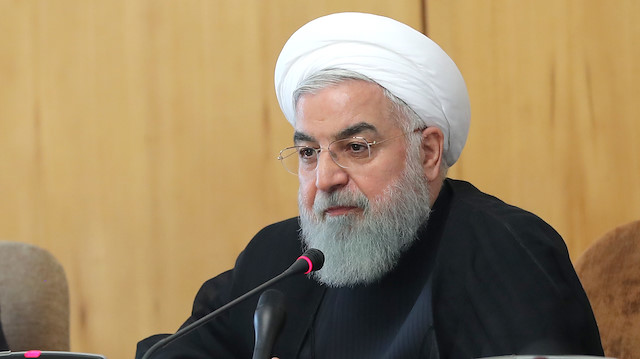
Iranian President Hassan Rouhani
Iran will sell its oil and break sanctions reimposed by the United States on its vital energy and banking sectors, Iranian President Hassan Rouhani told economists at a meeting broadcast live on state television on Monday.
"America wanted to cut to zero Iran's oil sales ... but we will continue to sell our oil ... to break sanctions," Rouhani said.
The United States said on Friday it will temporarily allow eight importers to keep buying Iranian oil when it re-imposes sanctions on Monday aimed at forcing Tehran to curb its nuclear, missile and regional activities.
China, India, South Korea, Japan and Turkey - all top importers of Iranian oil - are among eight countries expected to be given temporary exemptions from the sanctions to ensure crude oil prices are not destabilised.
The U.S. snapped back all of the sanctions it lifted on Iran following a historic pact world powers struck with the Islamic Republic. Announced by Secretary of State Mike Pompeo and Treasury Secretary Steven Mnuchin announced last week, the sanctions which cover Iran's energy, shipbuilding, shipping and financial sectors took effect Monday.They are the second batch the U.S. administration reinstated since President Donald Trump unilaterally pulled out of the nuclear deal in May despite objections from close allies in Europe.The U.S. is seeking to "alter" Iranian behavior with the sanctions, and has been leaking out a stream of 12 demands it wants to see Iran agree to in exchange for re-lifting the economic penalties.Eight countries who have significantly curtailed their imports of Iranian oil have been granted temporary waivers to allow them to continue importing Iranian oil after the penalties take effect. Two of the countries have agreed to reduce imports to zero while six others "will import at greatly reduced levels," Pompeo said.The U.S. expects to have reduced Iranian oil exports by more than 1 million barrels even before Monday's tranche of economic penalties, which the U.S. has long warned were incoming.In all, 700 Iranian entities will be added to sanctions lists on Monday, according to Mnuchin.More than half, or about 400, will have had their designations lifted as part of the 2015 Joint Comprehensive Plan of Action while roughly 300 will be new designations.All of the other signatories -- China, the European Union, France, Germany, Iran, Russia and the United Kingdom -- have remained in the deal despite the U.S. action.The accord provided Iran with billions of dollars in relief from international sanctions in exchange for sweeping curbs on and inspections of its nuclear program.Iranian marchers chant 'Death to America' on eve of US oil sanctionsGuards chief says Iran will resist, defeat US sanctionsStruggling to cope, Iranians fear more misery from US sanctions
US resumes all pre-nuclear deal sanctions on Iran
The restoration of sanctions is part of a wider effort by U.S. President Donald Trump to force Iran to curb its nuclear and missile programs as well as its support for proxy forces in Yemen, Syria, Lebanon and other parts of the Middle East.
"Today the enemy (the United States) is targeting our economy ... the main target of sanctions is our people," Rouhani said.
In May, Trump exited Iran's 2015 nuclear deal with six powers and Washington reimposed first round of sanctions on Iran in August.
The deal saw most international financial and economic sanctions on Iran lifted in return for Tehran curbing its disputed nuclear activity under U.N. surveillance.
U.S. Secretary of State Mike Pompeo said on Sunday the penalties set to return on Monday "are the toughest sanctions ever put in place on the Islamic Republic of Iran."
However, Iran's clerical rulers have dismissed concerns about the impact of sanctions on the country's economy.
"This is an economic war against Iran but ... America should learn that it can not use the language of force against Iran ... We are prepared to resist any pressure," Rouhani said.
To keep the deal alive, the remaining parties to the Iran nuclear deal are trying to maintain trade with Tehran despite scepticism this is possible despite U.S. sanctions to choke off Iranian oil sales.