

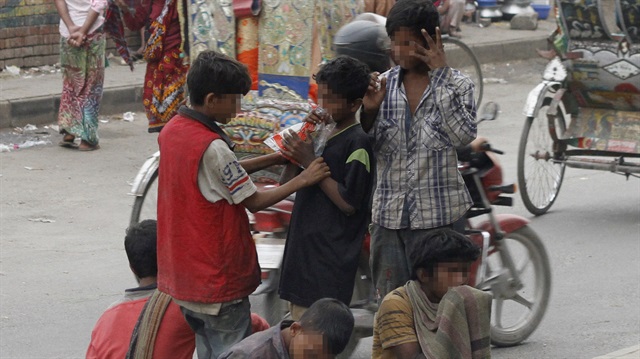
Drug use among Bangladeshi children at alarming level
Bangladesh police arrested Riazul Islam as he was walking home from his in-laws' house. At 3:15 a.m., he was shot dead in a sandy field beside a set of railroad tracks north of Dhaka.
Police say he was killed in a gunfight with other drug dealers, and they recovered 20 kg of marijuana from the site. His parents say the officers extorted money from them and then killed him.
"I knew my son was in police custody. All of a sudden my son was dead. I couldn't believe it. The police took money and they still killed him," said his mother, Rina Begum.
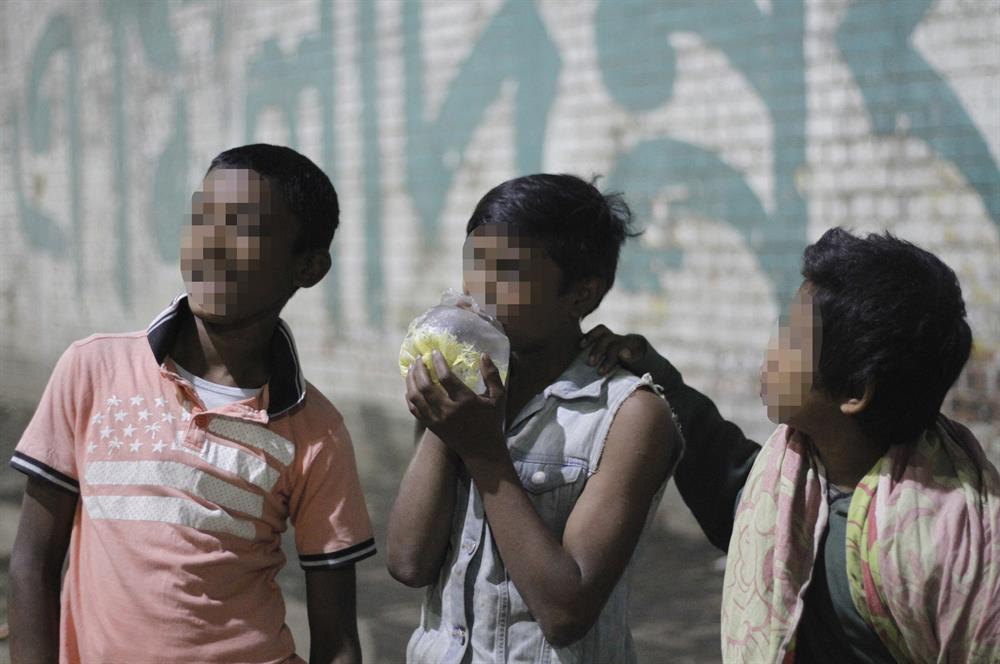
Bangladesh is the newest frontline in state-backed drug crackdowns in Asia, and Islam is one of more than 200 people shot dead by police in Bangladesh since May, when Prime Minister Sheikh Hasina announced the campaign.
Bangladesh's cabinet on Monday will consider capital punishment for traffic accident deaths, a law ministry official said, as thousands of students held protests for a ninth day over the deaths of two teenagers by a speeding bus in Dhaka.Tens of thousands of angry school and colleges students have been demanding changes to Bangladesh's transport laws, paralysing the crowded capital of 18 million, after the two teenagers were killed when a privately operated bus ran over a group of students on July 29."In this amendment it has been proposed to award the highest level of punishment if it is killing by an accident," said the law ministry official, who has been briefed on the matter but declined to be named ahead of a decision.Bangladesh cracks down on dangerous driving after protestsThe current punishment is a maximum jail term of three years. Using the death penalty for road accidents is rare anywhere in the world. Bangladesh's transport authority listed punishments given in different countries that ranged from 14 years in the U.K. in extreme cases to two years in India.Sheikh Shafi, a student of a polytechnic institute in Dhaka who lost his brother in a road accident in 2015, said one of the problems was that bus drivers are not paid fixed monthly salaries instead only earn commissions based on the number of passengers, forcing them to work long hours."Our demand is that the owners must appoint them and they will work a maximum of 10 hours. The commission based system must be eliminated," said Shafi, who was injured while protesting on Saturday.Student road safety protests engulf capital: BangladeshAmid the ongoing protests, an official vehicle carrying the U.S. ambassador to Bangladesh was attacked by a group of armed men on Sunday, some on motorcycles, the embassy said in a statement. There were no injuries but two vehicles were damaged.The embassy has condemned the "brutal attacks and violence" against the students protesters by security forces, a charge the government denies.Police said they did not have an immediate explanation as to why the U.S. ambassador came under attack.
Bangladesh considers capital punishment for driving deaths
Critics say the crackdown reflects Hasina's increasingly authoritarian rule ahead of a general election, due by December. That was also shown in its response to recent student demonstrations over road traffic deaths, including the use of rubber bullets and the arrest of a prominent photographer.
Hasina emphasised that the police and intelligence agencies would now tackle the drug problem in the same tough way they had countered violent extremism in recent years.
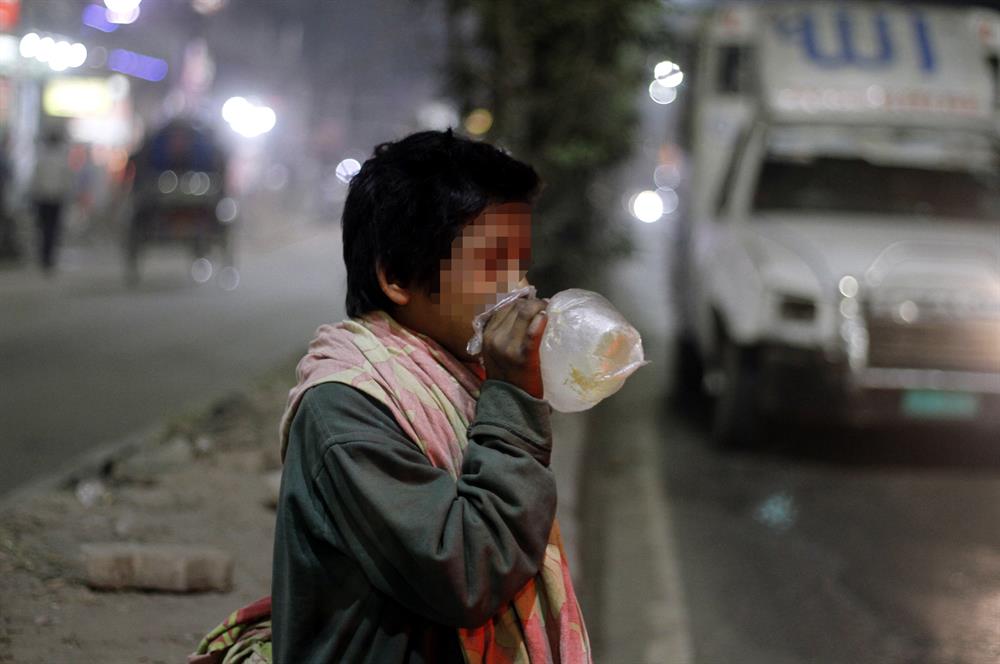
Such campaigns can be popular with voters as has been shown by President Rodrigo Duterte's bloody drug war in the Philippines.
Hasina's office did not respond to questions about whether the drugs campaign was a populist ploy.
Bangladesh Foreign Minister AH Mahmood Ali on Saturday visited Myanmar’s restive Rakhine state, where security forces have been accused of committing crimes against humanity on the minority Rohingya Muslim community.A high-profile delegation led by Bangladesh Foreign Minister AH Mahmood Ali has toured transit camps as well as newly-built houses in the resettlement areas for the returnees, said Win Myat Aye, Myanmar’s minister of social welfare, relief and resettlement.Since Aug. 25, 2017, more than 750,000 refugees, mostly children and women, have fled Myanmar and crossed into Bangladesh after Myanmar forces launched a crackdown on the minority Muslim community, according to Amnesty International.At least 9,400 Rohingya were killed in Rakhine from Aug. 25 to Sept. 24 last year, according to Doctors Without Borders.In a report published recently, the humanitarian group said the deaths of 71.7 percent or 6,700 Rohingya were caused by violence. They include 730 children below the age of 5.“The delegation visited the area as they wanted to see themselves what we had prepared for the returnees,” said the minister, who was accompanying the visiting delegation.The delegation began four-day visit to Myanmar on Thursday to discuss matters on Rohingya repatriation with Myanmar government.According to a press release issued by Bangladesh’s Foreign Ministry, the visiting foreign minister emphasized on the need for accelerating efforts for conductive environment in the Rakhine state and building houses and villages for the returnees.The Rohingya, described by the UN as the world's most persecuted people, have faced heightened fears of attack since dozens were killed in communal violence in 2012.The UN documented mass gang rapes, killings -- including of infants and young children -- brutal beatings, and disappearances committed by security personnel.In a report, UN investigators said such violations may have constituted crimes against humanity.On Friday, the Bangladeshi foreign minister met with Kyaw Tint Swe, minister of Myanmar’s State Counselor Office in Nay Pyi Taw.After the meeting, Myanmar and Bangladeshi officials said in a joint press release that they agreed on several points including establishing reception centers and transit camps in both countries, combating terrorism, drug-trafficking in border areas as well as repatriation of displaced persons residing along the border between the two neighbors.
Bangladeshi delegation visits Myanmar’s Rakhine state
MOUNTING DEATH TOLL
The bodies appeared rapidly after Hasina's pronouncement. And, just like the Philippines, the killings appeared to follow a script: suspects died in "gunfights", typically at night, and weapons and drugs were found nearby.
In more than a third of the 211 killings recorded by Dhaka-based human rights group Odhikar since mid-May, the suspects were arrested before they were killed.
The police are overseen by Home Minister Asaduzzaman Khan, who denied the police were executing suspects.
Khurshid Alam says he pulls 17-hour shifts three days a week driving a private bus in Dhaka, where tens of thousands of students held angry protests for over a week demanding an end to rash driving that killed two teenagers late last month.Prime Minister Sheik Hasina's government has moved swiftly to defuse the protests that were threatening to spiral, with an eye on general elections due by the end of the year. On Monday, the cabinet approved raising the maximum jail time for rash driving deaths to five years from three.Overworked and underpaid drivers like Alam are often blamed for Bangladesh's high traffic casualty rate - road accidents kill or injure at least five people an hour in the country - and the resentment against them has been aggravated by the deaths of the two students last Friday.Most bus drivers do not get paid monthly salaries but earn commissions based on the number of passengers picked, leading them to race each other for passengers.The two students were killed when the driver of a bus speeding to pick up passengers ahead of other buses in a congested part of Dhaka lost control and ploughed into the bus stop, a court heard this week.The crowded capital of 18 million has been paralysed by angry students since then, although the protests have now tapered off. Police have fired tear gas and used water cannon to disperse protesters, as students, many in their school uniforms, stopped vehicles, demanding to check drivers' licences and their vehicles' roadworthiness."I start driving at 6 am and continue up to 11 pm," said a bearded Alam, 45, as he got ready for a trip on his green and ash bus with a cracked windshield, in a city teeming with scuffed up buses and beaten-up, used cars.Alam said he had reported the cracked windshield to the bus owner, but it was yet to be replaced.He said he works for three days a week, making up to 1,200 taka ($14) a day. A bus driver on contract with the Delhi Transport Corporation in neighbouring India earns as much as three times that."If we get a monthly salary then we can drive without any tension. We always have to keep thinking about our earnings," Alam said.As he stepped on the accelerator, a cycle-rickshaw with two passengers suddenly appeared in front of the bus, forcing him to hard-brake.SAFETY COSTS"We are working to bring discipline in the streets," said Khondaker Enayet Ullah, secretary general of the Bangladesh Road Transport Owners Association."It's true that shortage of drivers often compels us to hire unskilled drivers. But we are asking the transport owners not to appoint anyone without proper licenses from now on."About 4,000 people were killed in driving deaths in Bangladesh in 2017 and 2,350 in the first seven months of this year, according to data compiled by the Accident Research Institute at the Bangladesh University of Engineering and Technology.Many protesters have demanded the government tighten transport regulations, including by setting limits on the hours worked by drivers and providing a minimum monthly salary.But Abul Qasem, who owns the Tusher Transport Company in Dhaka that has 10 buses, said implementing those suggestions would mean higher fares that customers in the price-sensitive country would not readily agree to."If the government asks us to fix eight hours duty a day, we will follow it. In that case, fares will increase because then there will be at least two shifts a day," said Qasem. "That will anger passengers. Will the government then subsidise us?"The drivers say they also want the government to install more traffic lights and build dedicated lanes for pedestrians, instead of putting all the blame on drivers."Everybody has a guardian to take care of their interests but we don't," said bus driver Alam.US demands probe into attack on envoy’s convoy in DhakaBangladesh considers capital punishment for driving deathsBangladesh cracks down on dangerous driving after protests
Overworked, underpaid: Bangladesh bus drivers say accidents not entirely their fault
"Our law enforcement people don't kill, they don't execute anyone. It is impossible. If they do so they will be fired at that moment," he told Reuters. "It is not a lawless country."
After Islam was arrested, according to the police report, officers took the "top terror" of the neighbourhood to the field beside the railroad tracks to draw in and arrest other drug dealers. The other dealers "sensed" the officers' presence and began firing randomly, and "to save life and government property", the officers fired back.
"Roni was shot and fell down. He died on the spot," according to the report, which said two officers were wounded.
Islam's autopsy report, read to Reuters by a hospital official, noted that a single bullet entered his head near his left ear and exited near his right. Each of the two officers were treated for small areas of tenderness and swelling on one of their hands, according to records at another hospital.
None of the six witnesses in the police report saw Islam die, they told Reuters.
The U.S. has called on Bangladeshi authorities to take legal action against those involved in carrying out an attack on its envoy’s convoy in the capital Dhaka, local media reported on Tuesday.The demand was made in a diplomatic letter sent by the U.S. Embassy in Dhaka to the Foreign Ministry of Bangladesh on Monday evening, reported Prothom Alo, a local daily.University and high school students in Dhaka have been protesting for safer roads and justice for their two peers who were killed in an accident in Dhakaon July 29.On Saturday, the U.S. envoy’s convoy came under attack from a group of armed adults. Ambassador Marcia Bernicat and her security team left the area unharmed following the attack but two security vehicles were damaged, a statement by the U.S. Embassy said.Meanwhile, EU Heads of Mission in Dhaka also expressed concern over the violent clashes in Dhaka.“We expect all sides to remain calm and to respect the right to peaceful protest. Incidents of unlawful or disproportionate violence or action against protestors, journalists or others need to stop; those that happened must be investigated and perpetrators held to account,” the statement by the mission said.Police and ruling party men filed cases against top opposition Bangladesh Nationalist Party (BNP) leaders for allegedly provoking student protest.Besides, some 1,200 unknown people were also sued for alleged attack on the party office of ruling Awami League on Saturday, reports local daily The Daily Star.US convoy attacked, 50 injured in protests in BangladeshBangladesh considers capital punishment for driving deaths
US demands probe into attack on envoy’s convoy in Dhaka
One of the six, handyman Mohammad Bappy, who lives at the edge of the field where Islam was shot, snapped photos of Islam's dead body. One of the pictures shows blood on the ground beneath Islam’s head.
"There was no gun," he said. "If there had been a gunfight we would have heard lots of firing from two sides. That didn't happen."
Kamal Hossain, the officer in charge of the operation, said drug use leads to crime and arrests don't work.
"They come out on bail and they do the same thing, selling and using drugs," he said. "Every drug dealer should be killed. Then drugs can be controlled."
The Turkish state aid agency has donated life-saving medical devices and equipment to a hospital in southwestern Bangladesh, the agency said on Monday.The donations include an ECG, operating table, dental unit, ophthalmoscope, phototherapy machine, microscope, CTG machine, anesthesia machine, biochemistry analysis machine, autoclave, ultrasound and laparoscopy, said a Turkish Cooperation and Coordination Agency (TIKA) statement.Around half a million people are treated each year at Jessore State Hospital, which received the donations, the statement added.It also said the hospital has a 250-bed capacity as well as 50 doctors and 160 nurses on staff.Activist photographer detained by police: BangladeshUS convoy attacked, 50 injured in protests in BangladeshBangladesh considers capital punishment for driving deaths
Turkey gives Bangladesh life-saving medical equipment
LITTLE DATA
The U.N. High Commissioner for Human Rights, U.S. ambassador to Bangladesh and the European Union have all expressed concern about the killings of drug suspects in Bangladesh.
After a government official in the southern city of Teknaf was gunned down by Rapid Action Battalion police in May, the state-funded National Human Rights Commission sent a letter to the ministry in charge of the police to remind it of human rights.
But Hasina pressed on.
"Drugs destroy a country, a nation and a family," she told parliament in June. "We will continue the drive, no matter who says what."
Most of the killings took place in May, when there were 129 as the campaign began, but then dropped to 38 in June before picking up to 44 in July.
After criticizing government treatment of protesting students, a famed Bangladeshi photographer and social activist has been detained by police, officials confirmed on Monday.Abdul Baten, the additional commissioner of the Dhaka Metropolitan Police, told reporters that a Detective Branch team had picked up Shahidul Alam, the founder of the Drik Picture Library, from his Dhaka home on Sunday night, and he is now being questioned over his comments on ongoing student protests.Shaleh Ahmed, one of Alam’s colleagues, also told Anadolu Agency that plainclothes Detective Branch police officers forcibly took Alam away from his home around 10:30 p.m. on Sunday.Bangladesh cracks down on dangerous driving after protestsLast week Alam gave an interview to Al Jazeera English criticizing the government's handling of the protests over traffic safety, which were triggered by the death of two students in an accident late last month.Local newspaper The Daily Star reported that on Saturday Alam was assaulted by “ruling party” men while filming an attack on protesting students in the capital.“I was attacked a little while ago near City College because I was taking a video of Chhatra League [ruling party’s student branch] shouting 'Joy Bangla' and slightly before that attacking students,” Alam said in a video on his Facebook page which went viral, the report added.Bangladesh considers capital punishment for driving deaths “Shahidul Alam must be immediately and unconditionally released,” said Omar Waraich, Amnesty International’s deputy South Asia director.“There is no justification whatsoever for detaining anyone for solely peacefully expressing their views. His arrest marks a dangerous escalation of a crackdown by the government that has seen the police and vigilantes unleash violence against student protesters.”An Associated Press (AP) photographer in Dhaka, who asked not to be named due to security concerns, told Anadolu Agency that reporters come under frequent attack on the job.Student road safety protests engulf capital: BangladeshHe said on Sunday journalists taking pictures during an attack on protesters were themselves assaulted by unidentified youth, leaving five or six badly injured.Policemen on the scene did nothing to stop the attack, he added.In the last two days of the ongoing student protests, at least 200 people, including 12 journalists, came under attack by ruling Awami League members in Dhaka, reported local daily Prothom Alo.Weighing in on the volatile situation, UN Resident Coordinator in Bangladesh Mia Seppo said in a statement: “We are deeply concerned about the reports of violence and call on all for calm. The concerns expressed by youth about road safety are legitimate and a solution is needed for a mega city like Dhaka.”
Activist photographer detained by police: Bangladesh
Drugs have long been a concern for the Bangladesh government, which bans consumption of alcohol by Muslims, who make up the vast majority of the population.
But it's not clear how much drug use has grown or even how many people use drugs. Asked for figures, Bangladesh's narcotics deputy intelligence chief said there were none.
"We have no government statistics or non-government statistics about users," Nazrul Islam Sikder said, adding: "But we guess 7 to 8 million."
Drug seizures data from the Department of Narcotics Control suggests the drug trade has grown, but much of the increase happened three years ago, long before Hasina launched the crackdown. The data shows a dramatic increase in methamphetamine or "yaba" pill seizures beginning in 2015.
No one believes the official accounts of the killings, said Rashid Alam, a 50-year-old manager of a garment factory near the field where Islam was shot, but he is more concerned about the scourge of drugs use for communities.
"We understand he is a drug dealer and the police shot him," he said. "That kind of death is okay. Good job, really."
Critics of Hasina say the crackdown is meant to show voters she is responding to popular concerns and to strike fear in political opponents ahead of the election. According to media reports, some of those killed were activists of the opposition Bangladesh National Party.
For Ashrafuzzaman Zaman, liaison officer of the Hong Kong-based Asian Human Rights Commission, the politics of the drug crackdown are clear.
"You kill 200 people and you make 150 million afraid: today or tomorrow you can also be one of them. That is the message the government is giving to the people," he said.
Hasina's office did not respond to the allegations from her critics.
But Home Minister Khan denied the campaign was a cover to target opposition politicians, and said no drug offender is treated differently from another.
"His identity is only as a criminal," he said. "Even if he has a link with the ruling party, he will not be spared."