

File photo
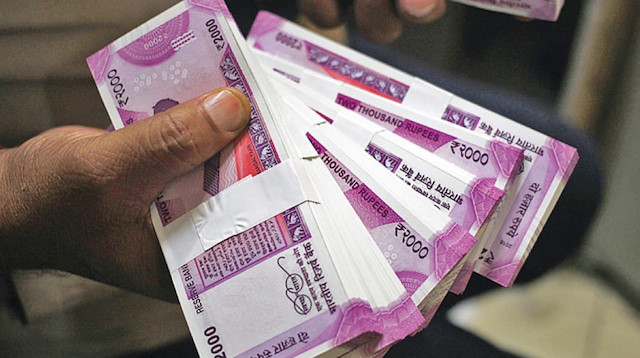
India aims to sign an initial agreement with Iran this month to settle all their oil trade in rupees through India's UCO Bank, two Indian government sources said.
"We have to do some paper work. It should be signed as early as possible. We are aiming for this month," one of the sources said.
India, which got a waiver from the latest tougher U.S. sanctions against Tehran on Monday, used a similar mechanism in the previous round of sanctions but settled only 45 percent of the payments in rupees.
Russian Foreign Minister Sergei Lavrov said on Tuesday that U.S. sanctions on Iran were not legitimate, in Moscow's first official comment since Washington restored sanctions on Tehran.Lavrov said Moscow, itself a target of separate U.S. sanctions, expected there would be ways to pursue economic cooperation with Iran despite the reimposition of sanctions on Monday on the country's oil, banking and transport sectors.Speaking in Madrid, Lavrov said Washington had used "unacceptable methods" to pressure operators of the SWIFT global financial network into cutting off Iranian banks.Russia and its European partners were looking for ways to maintain economic ties with Tehran, he said after meeting his Spanish counterpart Josep Borrell, but provided no details.Tehran said on Tuesday it had so far been able to sell as much oil as it needs despite U.S. pressure, but urged European countries that oppose the sanctions to do more to shield Iran.Turkey, Iran may trade in local currencies: ExpertsTurkey will not abide by US sanctions on Iran, Erdoğan saysTehran able to sell as much oil as it needs despite US pressure: Iran's VPOil markets are stable: Kuwait oil minister
Russia's Lavrov says US sanctions against Iran are not legitimate
Iran used the funds to import goods from India, a move that had helped boost India's exports to Tehran.
Paying for Iranian oil in rupees will also strengthen the Indian currency against the U.S. dollar.
Indian refiners will make payments in rupees for purchases of Iranian oil made since September, one of the sources said. Iran grants a 60 day credit period to Indian refiners.
The sources also said the U.S. wants India to restrict its monthly purchases of Iranian oil to 1.25 million tonnes, or 9 million barrels, during the waiver period from November.
The U.S. re-imposition of sanctions on Iran has raised discussion of conducting trade in local currencies with Turkey.Washington announced new sanctions on Monday targeting Iran's energy and financial sectors along with its shipping industry.More than 700 individuals, entities, aircraft, and vessels were blacklisted, including 50 Iranian banks and their domestic and foreign subsidiaries.Turkey will not abide by US sanctions on Iran, Erdoğan saysThe U.S. government granted China, Greece, India, Turkey, Italy, Japan, South Korea and Taiwan a 180-day waiver for importing Iranian oil, which eased worries of supply reduction in the global markets after the sanctions went into effect.Mehmet Koc, domestic policies coordinator of the Center for Iranian Studies in Ankara, said although Turkey is not a party of the sanctions, the move may pose problems for bilateral trade ties of the two countries.Stating that oil and gas trade are conducted in dollars, Koc said Turkey will continue to import Iranian oil and gas."Turkey is among eight nations granted temporary waivers from the sanctions but at this point payment in dollars will not be possible," Koc said.Iran able to sell as much oil as it needs despite US pressure: VPHe recalled that talks regarding trade in local currencies between Turkey and Iran still continue.Speaking about sanctions on the Iranian financial sector, Koc said: "There is no solution left for Iran except trading in the Turkish lira. At least it will need to use lira while obtaining basic needs from Turkey."Head of Turkish-Iranian Industrialists and Businessmen Association (TISIAD) Perihan Fatih said the more sanctions on Iran increase the more Turkey's importance for Iran rises."Many European countries can be reluctant to trade with Iran therefore they may do that via agencies in Turkey," Fatih said.Trump wary of sanctions effect on oil pricesFatih noted that introducing regulations for trading in local currencies would be beneficial and advantageous for Turkish and Iranian business circles.In 2017, bilateral trade volume between two countries totaled at $10.7 billion, up nearly 11 percent year-on-year.In the first 9 months of this year the trade volume was at $7.5 billion.The country's main exports groups consist of gold, steel profile, automotive supply products, fibreboard, land transportation vehicles to Iran while it purchases raw petroleum materials, natural gas, plastics in primary forms, metals other than iron and organic chemicals from Iran.
Turkey, Iran may trade in local currencies: Experts
The United States re-imposed sanctions on Monday to choke Iran's oil and shipping industries, while temporarily allowing top customers such as China and India to keep buying crude from the Islamic Republic.
India's oil ministry was not immediately available to comment.
Indian Oil Corp, India's top refiner, and Mangalore Refinery and Petrochemicals Ltd placed an order on Tuesday with National Iranian Oil Co to buy a total of 9 million barrels of oil in December, industry sources said.
IOC would buy 6 million barrels of Iranian oil, while MRPL would import 3 million barrels, the sources added.
Spokesmen for MRPL and IOC declined to comment.
Iran has been able to sell as much oil as it needs despite U.S. pressure, Iranian Vice President Eshaq Jahangiri was quoted as saying on Tuesday.The United States on Monday restored sanctions targeting Iran’s oil, banking and transport sectors and threatened more action to stop what Washington called its "outlaw" policies, steps Tehran called economic warfare and vowed to defy.The measures are part of a wider effort by U.S. President Donald Trump to curb Tehran’s missile and nuclear programmes and diminish the Islamic Republic’s influence in the Middle East, notably its support for proxies in Syria, Yemen and Lebanon.Oil markets are stable: Kuwait oil ministerTrump’s moves target Iran’s main source of revenue - its oil exports - as well as its financial sector, essentially making 50 Iranian banks and their subsidiaries off limits to foreign banks on pain of losing access to the U.S. financial system."The Americans constantly said they would reduce the sale of Iran’s oil to zero but I have to say that so far, we have been able to sell our required amounts of oil," the Tasnim news agency quoted Jahangiri as saying."The Americans, with the help of propaganda, don't see the realities."Turkish FM says dangerous to isolate IranJahangiri said he had spoken to a handful of managers from companies on the U.S. sanctions list and that some had already formulated plans on how to deal with the measures.Jahangiri also said officials should be open with the Iranian public about the difficulties that may lie ahead, according to the Islamic Republic News Agency (IRNA)."It is our duty to keep some of the worries to ourselves,” IRNA quoted Jahangiri as saying. "But there shouldn’t be an issue that is hidden from the people. This is the people’s right."US waiver allows China to buy 360,000 bpd of Iran oil for 180 daysTrump wary of sanctions effect on oil prices
Tehran able to sell as much oil as it needs despite US pressure: Iran's VP