

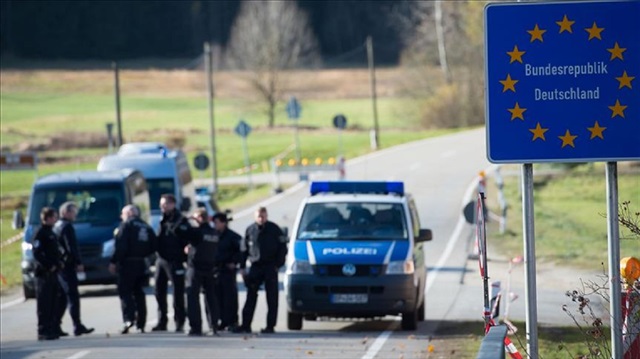
File photo
A European Union committee on Wednesday proposed to issue “humanitarian visas” to promote regular migration and prevent deaths on migration routes to the EU countries.
“EU countries should be able to issue humanitarian visas at embassies and consulates abroad, so people seeking protection can access Europe without risking their life,” said the European Parliament in a statement after a meeting of the Civil Liberties Committee.
The committee agreed to ask the European Commission to submit by March 31, 2019, a legislative proposal for the visa.
“Despite numerous announcements and requests for safe and legal pathways for asylum-seekers into Europe, the EU lacks a harmonized framework of protected entry procedures,” the statement added.
Austria may follow the United States and Hungary in backing out of a United Nations agreement on migration, its government said on Wednesday, citing concern about its sovereignty and potential restrictions on its freedom to act.The Global Compact for Safe, Orderly and Regular Migration was approved in July by all 193 U.N. member nations except the United States, which backed out last year.Hungary's right-wing government led by Prime Minister Viktor Orban, an immigration hard-liner, has said it will not sign the final document at a ceremony in December. Poland, which has also clashed with Brussels by resisting national quotas for asylum seekers, is considering taking the same step."We view some of the points in this agreement very critically. We will therefore do everything to maintain the sovereignty of our country and ensure that we as the Republic of Austria can decide for ourselves on migration issues," Chancellor Sebastian Kurz told a news conference.Turkish agency provides jobs to Afghans returning homeKurz led his conservatives to victory in last year's parliamentary election by pledging to prevent any repeat of the European migration crisis that began in 2015, when Austria took in more than 1 percent of its population in asylum seekers.Kurz went into government with the anti-Islam Freedom Party and together they have agreed to restrict immigrants' access to welfare payments as part of an agenda that is also heavy on law and order.Speaking after a weekly cabinet meeting, Kurz and his vice chancellor, the Freedom Party leader Heinz-Christian Strache declined to say specifically which points they were concerned about other than that they affect countries taking in migrants."We are in close contact with states like Switzerland and we in the government will determine a concrete course of action in the coming weeks," Kurz said, adding that Denmark was another country with similar concerns.The Swiss government, however, said in a statement on Wednesday that its own analysis had found that the U.N. pact "corresponds with Switzerland's interests in migration".It described the accord, which aims to set standards for safe and orderly migration, as politically rather than legally binding. Austria said it was examining the extent to which the agreement is binding. "It cannot ... be that any formulations are adopted that could perhaps or possibly be interpreted to mean that migration can be a human right. That can and must not be the case," Strache told the news conference. 
Austria has concerns about UN migration pact, might back out
Around 90 percent people granted international protection reached the EU countries through irregular means, the European Parliament said.
Each applicant should go through a security screening before the visa is issued, it was proposed.
Juan Fernando Lopez Aguilar said: “The vote today is a limited step, but nonetheless a very important political signal to the EU Commission.
“We need to do more to help those human beings in need, as there are currently clearly not enough legal and safe pathways to the EU for those seeking international protection,” Aguilar added.
If the proposal is adopted by the full house in the November plenary session, the commission will have to give a reasoned reply to the parliament’s request, the statement added.