

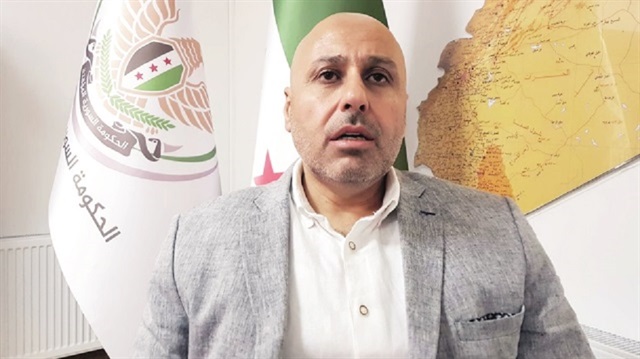
Yasser Farhan, a member of the political committee of the National Coalition for Syrian Revolutionary and Opposition Forces .
Yasser Farhan, a member of the political committee of the National Coalition for Syrian Revolutionary and Opposition Forces who was also present at the Astana talks, told Yeni Şafak daily in an exclusive interview that the Assad regime was trying to sabotage the Tehran summit with the help of the United States.
“Secret meetings between the U.S. and the Assad regime can be summarized as negotiations to guarantee the PKK’s pirate structure. The regime wants to sabotage the Idlib process with the help of the U.S. The attacks that started before the Sept. 7 summit were a clear provocation. Assad’s aim is to forge the new constitution without including the opposition in the process. This is why he is trying to end our presence on the field. Our requests have been clear since the first Astana talks. These are: de-escalation zones, stability, the release of captives, a new constitution and a free election,” Farhan said.
The Syrian regime has recently announced plans to launch a major military offensive in Idlib, which is controlled by various armed opposition groups.
The leaders of Russia, Turkey and Iran are due to meet on Friday in Iran and are expected to discuss the situation in northwestern Syria. Turkey, which backs the opposition against Assad, has said an offensive on Idlib would be disastrous. Ankara is sheltering 3.5 million Syrian refugees.
Turkish President Recep Tayyip Erdoğan on Friday departed from Ankara's Esenboğa Airport to attend a trilateral meeting on Syria in the Iranian capital Tehran.During a trilateral summit, Erdogan, Russian President Vladimir Putin and Iran’s Hassan Rouhani will discuss joint efforts as part of the Astana process and political efforts for finding a lasting solution to the Syrian conflict.The first tripartite summit was held in Russia’s Black Sea resort of Sochi on Nov. 22 to discuss progress made in the Astana peace talks and changes in de-escalation zones across Syria.The second trilateral meeting was hosted by Erdogan in April in the Turkish capital Ankara.Erdogan is accompanied by Turkish National Defense Minister Hulusi Akar, Treasury and Finance Minister Berat Albayrak and Presidency Communications Director Fahrettin Altun.Video: Turkish president heads to Iran for trilateral summitTop Turkish, Iranian diplomats meet in TehranSyria's Idlib residents concerned about new attacksEight European UN members back Turkey on Idlib effort
Turkish president heads to Iran for trilateral summit
Assad constantly violates international laws
“We presented a list of 65,000 arrested people to the regime. A decision was reached to release these people in stages, however, one year later, not one captive was freed. We also know that in the span of the seven-year war, 450,000 people were unofficially arrested and a great number of them were killed by torture. An international committee was formed and decisions were made. However, Assad continues to disregard all international laws,” he added.
U.S. and allies only offer conditional protection
While the United States and its allies have warned of a bloodbath in Idlib, they have made clear they would only intervene should they deem that chemical weapons have been used.
“The U.S. and its allies have stated that they will strike Syria if the regime uses chemical weapons in Syria. So will these massacres be legitimate if chemical weapons aren’t used?” Farhan said.
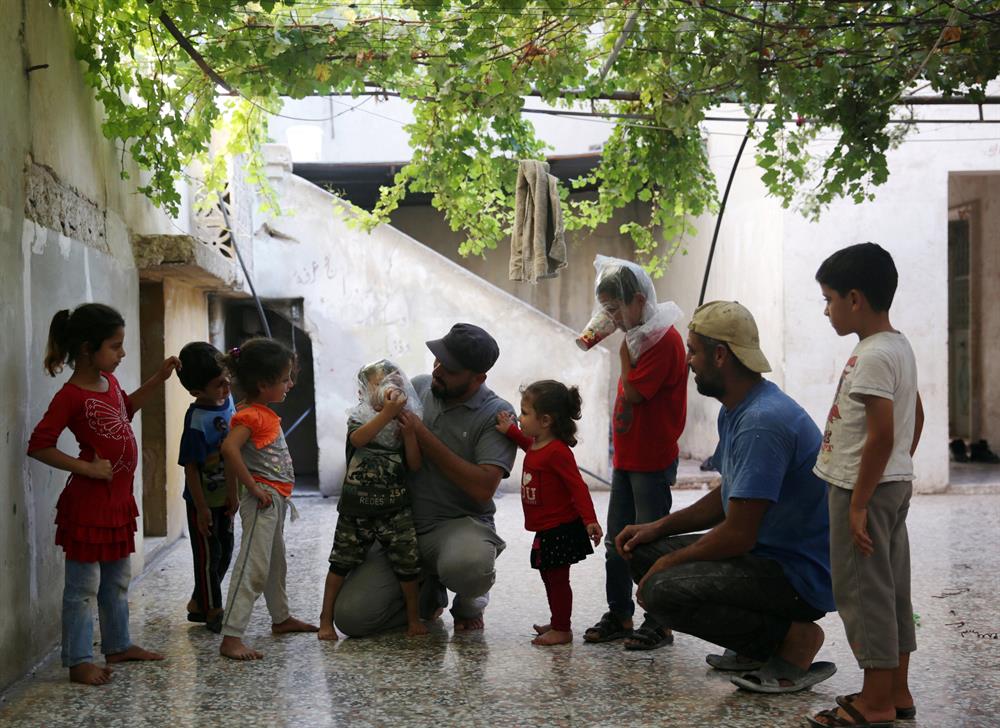
Children of Idlib roam streets with makeshift gas mask
In preparation for a chemical attack, the children of Idlib have started to make improvised gas masks. They poked holes in the bottom of paper cups stuck to the bottom of plastic bags. Some of the children also help their fathers during practice drills. They spend their time in makeshift shelters in underground caves in order to protect themselves from air raids by Russia and the Syrian regime.
U.S. prioritizes the PKK and Israel
“The U.S.’s unofficial priorities is for the PKK to gain legitimacy in Syria, the reduction of Iranian presence in Syria to protect Israel, and the weakening of the regime’s air and land forces. Idlib is just an excuse. The regime and U.S. officials held two meetings in Damascus and Aleppo. The main item on the agenda of these meetings was to provide the PKK constitutional protection. MP and Intelligence Chief Ali Memlük met with a U.S. delegation in Damascus on behalf of Assad. Regime undersecretaries met with the Americans in Aleppo,” Farhan said.
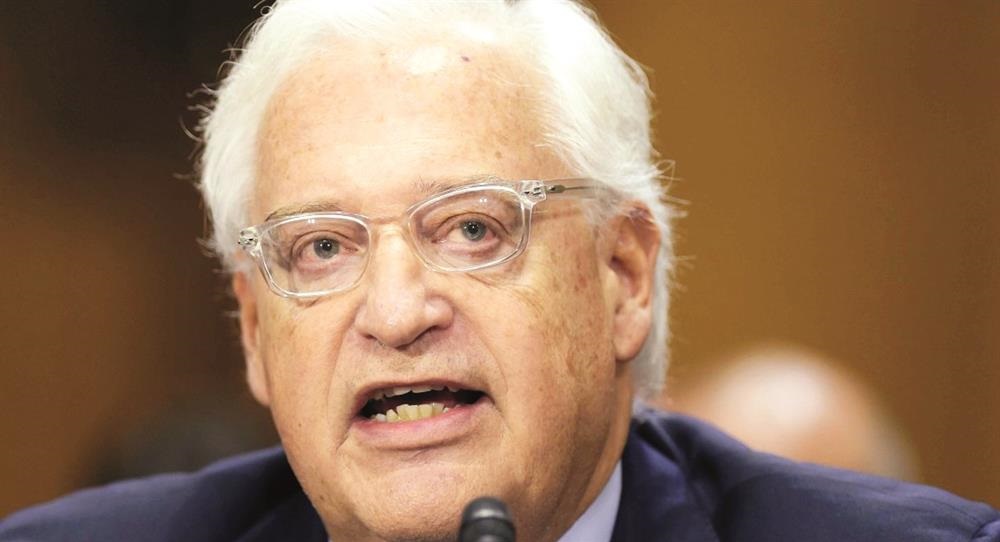
U.S. delivered Golan Heights to Israel
The U.S. ambassador to Israel said in remarks published on Thursday that he expected Israel to keep the Golan Heights in perpetuity, in an apparent nod towards its claim of sovereignty over the strategic plateau captured from Syria in a 1967 war.
Foreign governments, including the United States, do not recognize Israel's claim and President Donald Trump's national security adviser has said Washington's policy is unchanged.
However, U.S. Ambassador David Friedman suggested that Israel was there to stay and said it was possible the United States would consider recognizing Israeli sovereignty over the Golan Heights in the future.
The U.S. ambassador to Israel said in remarks published on Thursday he expected Israel to keep the Golan Heights in perpetuity, in an apparent nod towards its claim of sovereignty over the strategic plateau captured from Syria in a 1967 war.Foreign governments, including the United States, do not recognise Israel's claim and President Donald Trump's national security adviser has said Washington's policy is unchanged.However, U.S. ambassador David Friedman suggested Israel was there to stay and said it was possible the United States would consider recognising Israeli sovereignty over the Golan Heights in the future."I personally cannot imagine a situation in which the Golan Heights will be returned to Syria. I frankly cannot imagine a situation in which the Golan Heights is not part of Israel forever," he told the right-wing Israel Hayom newspaper.Friedman said there was "no one more undeserving of this prize" - control of the Golan Heights - than Syrian President Bashar al-Assad.Since early in Trump's term, Israel has lobbied for formal U.S. endorsement of its control of the Golan. Trump has recognised Jerusalem as Israel's capital, breaking with other world powers, but national security adviser John Bolton said last month a similar Golan move was not under discussion.In the past year and a half, Trump has twice ordered U.S.-led air strikes against targets in Syria in response to what Washington called the Assad government's use of chemical weapons against civilians."Relinquishing the high ground of the Golan Heights could put Israel at a great security disadvantage," Friedman said.The Golan Heights form a buffer between Israel and Syria of about 1,200 square km (460 square miles).Israel captured most of it from Syria in the 1967 Middle East war. Israel annexed the territory in 1981, a move not recognised internationally.Once willing to consider returning the Golan for peace with Syria, the Israelis have argued in recent years that the civil war in Syria and the presence there of an Iranian garrison backing Damascus show they need to keep it.Interviewed by Reuters last month, Bolton said: "Obviously we understand the Israeli claim that it has annexed the Golan Heights - we understand their position - but there’s no change in the U.S. position for now."Responding to those remarks, Israeli Prime Minister Benjamin Netanyahu said there "no way" he would give up to trying to win U.S. recognition.Asked, in light of Bolton's comments, whether it was possible the Trump administration would consider at a future date recognising Israeli sovereignty, Friedman said: "Yes, that's definitely possible. It definitely could happen." 
US envoy sees Israel keeping Golan Heights forever
"I personally cannot imagine a situation in which the Golan Heights will be returned to Syria. I frankly cannot imagine a situation in which the Golan Heights is not part of Israel forever," he told the right-wing Israel Hayom newspaper.
Friedman said there was "no one more undeserving of this prize" - control of the Golan Heights - than Syrian President Bashar al-Assad.
The Golan Heights form a buffer between Israel and Syria of about 1,200 square kilometers (460 square miles). Israel captured most of it from Syria in the 1967 Middle East war. Israel annexed the territory in 1981, a move not recognized internationally.
Turkish Foreign Minister Mevlüt Çavuşoğlu and his Iranian counterpart Javad Zarif on Thursday met in capital Tehran."Visiting Tehran on the occasion of #Turkey-#Iran-#RussianFederation trilateral summit on Syria to be held tomorrow with the participation of President @RT_Erdogan. We had a meeting with Foreign Minister Javad Zarif upon our arrival," Çavuşoğlu said on Twitter.Visiting Tehran on the occasion of #Turkey-#Iran-#RussianFederation trilateral summit on Syria to be held tomorrow with the participation of President @RT_Erdogan. We had a meeting with Foreign Minister Javad Zarif upon our arrival. pic.twitter.com/ucjFsFmc9TA trilateral summit will be held in Tehran, where Presidents Recep Tayyip Erdogan, Vladimir Putin and Hassan Rouhani will discuss Syria.Turkey, Russia and Iran are guarantor countries of de-escalation zones in Syria.The first tripartite summit was held in Russia’s Black Sea resort of Sochi on Nov. 22 to discuss progress made in the Astana peace talks and changes in de-escalation zones across Syria.The second trilateral meeting was hosted by Erdogan in April in the Turkish capital Ankara.Syria's Idlib residents concerned about new attacksErdoğan to visit Iran for Syria summit
Top Turkish, Iranian diplomats meet in Tehran
Syria’s civil defense agency White Helmets, who have saved the lives of tens of thousands of civilians in Bashar al-Assad regime and its supporter’s attacks, continue to be a significant support to the Syrian people despite disinformation spread by the Assad regime.The White Helmets, consisting of more than 3,000 Syrians from various occupations, was established in 2013.The teams of the civil defense agency, which was nominated for the 2016 Nobel Peace Prize, carry out search and rescue efforts, while giving municipality services to the people at the same time.They also inform the people in the region about the mines, improvised explosives and clearance of unexploded bombs.Until now, they have rescued at least 115,000 civilians from the debris of regime and its supporter’s bombardments.The White Helmets, who work devotedly to save the lives of Syrian people, have lost 255 workers until today.They also include 230 volunteer female workers.In 2013, the White Helmets teams were trained by Turkey’s Search and Rescue Association, AKUT.The civil defense agency, which has proved the regime and its supporters’ attacks and crimes, have been exposed to their smear campaign recently.“We’ve proved their crimes, and we are targeted”Speaking to Anadolu Agency, White Helmets’ director Raed Saleh said that their only aim in Syria was to help civilians and they had no connection with any military or political institutions since its establishment.Saleh said they had been targeted for documenting the crimes of the Assad regime and its supporters with evidence.“Regime and its supporters, who fear and refrain from our presence in Syria, have started to launch systematic smear campaigns on media,” he said, adding that they used this way to make the evidences proving their crimes unreliable, but they failed.“They sometimes related us with members of a radical organization and sometimes with Western and international intelligence. And this shows that they have no proof in their hands,” Saleh said.- “We will continue to stand with victim against hangman”The agency’s director Saleh said: “We are the Syrian youth; we are in service of Syrian people. We will continue to stand with the victim against the hangman [Assad]."Reminding that they carry out joint works with local councils in the regions, he said: “We are also involved in the provision of services such as road repair, fire fighting, electricity and water.“Our efforts are appreciated by the international society.”He said their primary aim was to help civilians.Saleh also added that they re-started their efforts in Syria’s northwestern Afrin province, which has been cleared of YPG/PKK terrorists with Turkey’s Operation Olive Branch.He said they are conducting joint efforts with Turkey’s Disaster and Emergency Management Authority (AFAD) and Turkish Red Crescent (Kizilay) teams.In addition to the areas under the control of the opposition groups in northern Syria, the White Helmets serve civilians in the regions of Turkey’s anti-terror operations Euphrates Shield and Olive Branch.Syria has only just begun to emerge from a devastating civil war that began in 2011. Since then, hundreds of thousands of people have been killed in the conflict and millions more displaced, according to the UN.Syria's Idlib residents concerned about new attacksUS imposes sanctions on supporters of Syrian regimeEight European UN members back Turkey on Idlib effortChemical weapons 'being prepared' in Syria: US envoy'White Helmets saved 115,000 lives in Syria'
White Helmets: Syria's savior angels
Millions of residents in Syria's northwestern Idlib province, the final stronghold of Syrian oppositions, are concerned about Bashar al-Assad's possible attack on the city.The expected ground attack is feared to trigger a mass exodus of refugees fleeing towards the Turkish border and European countries.The following is a list of frequently asked questions regarding the ongoing calamity in Idlib:Erdoğan says Idlib assault would be ‘a grave massacre’Where is Idlib?Located near the Turkish border city of Hatay, Syria's northwestern Idlib province is home to more than 3 million Syrians, many of whom fled from other cities following attacks by regime forces.Idlib shares 130 kilometers (82 miles) borderline with Turkey and is bordered by Syrian province of Aleppo to the east; Aleppo's Afrin district to the northeast; Hama province to the south and Lattakia province to the northwest.The rebel-controlled town has been under heavy air bombardment since October 2015 when Russia began to actively take part in the civil war.How many civilians are living in Idlib?Idlib has been hosting the highest number of refugees, roughly 1.3 million, as it is a city bordering Turkey and is relatively safe since the beginning of the war. Along with 2.4 million permanent residents, administrative records show that Idlib currently houses nearly 4 million civilians within its borders.After attacks by the Assad regime and the forced migration, the population in the city has increased to nearly 4 million, including 2.4 million residents.Could a large migration wave occur?It is feared that a possible military campaign towards Idlib might trigger a wave of migration containing hundreds of thousands of people. Turkey, the EU and United Nations have announced in statements that a possible operation on Idlib might give birth to a fresh rush of migration.In addition, Stephane Dujarric, the UN Secretary-General's spokesman, Wednesday said: "All parties are responsible for the protection of the civilians, under the international laws. I hope everything will be done to prevent a greater humanitarian plight."4- Where does the Assad regime prepare?With the aim of seizing the Idlib region, the regime has been sending military equipment to the frontlines near rural Latakia and northern Hama for more than two months. The Assad regime maintains the preparations, which has paced up recently, in Abu al-Duhur Airport, Skayiybiye of northern Hama, Silimfe regions in Latakia and line extending to Idlib.5- What does Idlib mean for Syria?Idlib, addressed as the "deadlock" of the civil war that has been ongoing for more than seven years, has importance in various aspects as a result of its location.The M5 highway, which goes through the city, connects Turkey, Syria and Jordan. As for the Syria perspective, Idlib is like a door that opens to Mediterranean whilst neighboring Latakia, Hama and Aleppo. Given that it is right next to Latakia, where Russia's Khmeimim Air Base is located and which is regarded as the "fortress" of Assad regime, contributes to Idlib's strategic value.Roughly 1,500 trucks carrying humanitarian aid per month crosses Bab al-Hawa Border Crossing in Idlib, making the city a key factor for war-weary civilians desperate for help. Besides, some 4,500 commercial trucks pass by the border crossing.6- Why is Idlib important for Turkey's border security?Idlib shares a borderline of some 130 kilometers with Turkey. Turkey is most worried that a conflict leads to a new wave of migration. Turkey currently hosts more than 3.5 million Syrians and works for a cease-fire maintenance in Idlib.On the other hand, the Turkish Armed Forces have established 12 observation points within Idlib's de-escalation zones boundary, adding to the cities' significance. The fact that there are various armed groups in Idlib and they might try to infiltrate into Turkey in case of an operation should be kept in mind.7- What does Turkey do in Idlib?Following a consensus reached within the frame of the Astana Agreement, Turkey, in October 2017, entered Idlib to establish the cease-fire observation points within the boundary of the de-escalation zone areas.As part of the deal, Turkish troops have presence only in the observation points of Idlib.8- What is the Turkish impact on the solution?As the civil war has been continuing for more than seven years, Turkey has been one of the most important peace actors. Sharing more than 900 kilometers of borders, Turkish influence on the region increases. Turkey still defends that the issue should be tackled through negotiation, as it said the same before the public demands were repressed violently by the Assad regime.It has been stated that a solution excluding Turkey, which protects the life and property safety of the civilians and support the legitimate opposition both on field and diplomacy, will lead to a regional disaster.With its stance on the solution, Turkey plays an effective role in eradicating the terror groups in Syria and represents the democratic and safety rights of the millions of Syrians, who are anticipated to continue living in Syria.Turkey supports that the opposition and regime find a common political point.9- Which groups are dominant in Idlib?Idlib is currently divided between the opposition and Hayat Tahrir al-Sham, an armed anti-regime group. In May, 14 opposition groups fighting against the Assad regime united under the banner of "National Liberation Front". Faylaq al-Sham, Nasr Army, Free Idlib Army, 1st Beach Division, 2nd Beach Division, 1st Firqah, Distinguished Army, Shuda al-Islam Dareyya, Al-Hurriyah Brigade, 23rd Firqah, Syrian Liberation Front, Jaish al-Ahrar and Shukuru Sham have formed the largest military establishment against the regime, containing more than 70 thousand fighters.Hayat Tahrir al-Sham is the other dominant force in Idlib.After the Nusra Front, which was on the UN terrorism list, dissolved in early 2017, some 25,000 fighters formed Hayat Tahrir al-Sham. Despite that many of its components left the group, it still controls Bab al-Hawa Border Crossing.A couple of other Nusra Front members formed another group called Hurra Seddin. According to Russians, terror groups are dominant in the region, however, the field reports tell the opposite.Idlib is of huge importance as it is the only city under opposition control in Syria. As for the strategic window, it neighbors Turkey in northwest and is next to Aleppo in south, Aleppo's Afrin district in northeast, Hama in south and Latakia in northwest.For the Syrian opposition, it is like a "last castle". Also, the biggest armed groups fighting against the Assad regime are located in Idlib.10- What is the international actors' position on Idlib?Some western countries, headed by the U.S., France and the U.K for the past weeks, exchanged words with Russia on the Idlib issue.These three countries, in a joint statement on Aug. 21, said that they were "gravely concerned over reports of a military offensive by the Syrian regime against civilians and civilian infrastructure in Idlib." All of them reiterated condemnation of the use of chemical weapons by the Assad regime.John Bolton, Assistant to U.S. President Donald Trump for National Security Affairs, also warned that they would "strongly" respond if the regime used chemical or biological weapons in Idlib.On top of that, Russian media claimed the military opposition and White Helmet (Civil Defense) would collaborate with Western countries to perform a chemical attack.The Russian Foreign Minister Sergey Lavrov said the U.S. planned for a provocation in Idlib to "protect the Nusra Front and assure the permanency of the turbulent situation in the region."The Russian administration, making consecutive statements regarding Idlib, increased its military presence in the Mediterranean. Having sent warships to Latakia and Tartus, Russia will launch a drill in the Mediterranean expected to be the biggest of the modern history, which is viewed as an intimidation to the U.S. block.As the crisis escalates, concerns rise on the safety of the civilians in the region.The Syrian regime has recently announced plans to launch a major military offensive to the area, which is controlled by various armed opposition groups.On Tuesday, the UN’s humanitarian chief Mark Lowcock warned such an offensive would lead to the "worst humanitarian catastrophe in the 21st century".Turkish President Recep Tayyip Erdogan, Russian President Vladimir Putin, and Iranian President Hassan Rouhani are scheduled to meet in Tehran on Friday for a trilateral summit on Syria.Iran speaker hopes agreement on Idlib will be clinched at Tehran summitOver 8,000 PKK terrorists to join Idlib offensive: FSA commanderTurkey condemned Russia's Idlib attack: FMIdlib offensive could trigger new wave of migration to Europe, Turkey US takes advantage of Idlib crisis to increase support for PKK/YPG in SyriaAssad regime shells Syria's Idlib
Syria's Idlib residents concerned about new attacks
Chemical weapons are being prepared by the Syrian regime, which is set to launch an offensive on the northwestern province of Idlib, U.S. special representative for Syria James Jeffrey said Thursday.The situation in Idlib is "very dangerous" with "lots of evidence that chemical weapons are being prepared," Jeffrey told reporters in Washington.On Aug. 21, the U.S., UK and France vowed to respond appropriately to any further use of chemical weapons by Syria.Jeffrey said any offensive by Syrian and Russian forces in the region would be a "reckless escalation".The Syrian regime has recently announced plans to launch a major military offensive in the area, which is controlled by various armed opposition groups.Russian warplanes on Tuesday pounded civilian and opposition targets in Idlib.Jeffrey said Syrian leader Bashar al-Assad "has no future as a ruler" but it was not Washington's business to get rid of him.The U.S. will remain in Syria until Daesh is defeated, which Jeffrey said would take a while. He added that U.S. President Donald Trump was "on board" with the commitment to remain in Syria to defeat the terror group.Warplanes strike Syria's opposition-held Idlib regionFrench army chief: ready to strike Syria if chemical weapons usedIf Syria is to be divided, so will Turkey, says KaragülErdoğan to visit Iran for Syria summitKremlin says keen on Syria talks with Turkey, France, Germany
Chemical weapons 'being prepared' in Syria: US envoy