

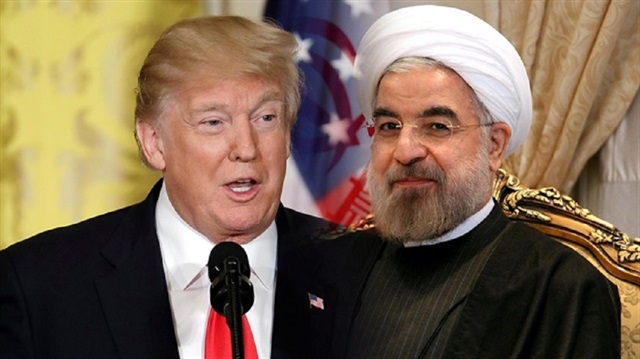
File photo
The first round of the U.S. pre-nuclear deal sanctions on Iran, largely targeting the country’s banking sector, went into effect on Tuesday.
The economic penalties, which will be rigorously enforced, officially went into effect at one minute after midnight Washington time (0401GMT) Tuesday morning.
Iranian Foreign Minister Javad Zarif on Monday decried the re-imposition of U.S. sanctions, which are set to go into force on Tuesday.“US is waging the propaganda that it is in touch with Iran’s people and [Israeli Prime Minister Benjamin] Netanyahu writes tweets and sheds crocodile tears every day,” Zarif said in statements cited by Iran’s ISNA news agency.“You claim that you have connection with Iranian people but the first sanction that you re-imposed against Iran was related to airplane sales; airplanes that would have been used in favor of Iranian people,” he said.The top Iranian diplomat said U.S. economic sanctions and threats would not force Iran to change its policies.“Yes, we have been passing through a very critical period of time and U.S. sanctions and extortion may cause some problems,” Zarif said. “But the world is talking about an isolated U.S., not a lonely Iran.”Earlier Monday, U.S. Secretary of State Mike Pompeo said Washington will enforce sanctions against Iran.In May, Trump withdrew the U.S. from a nuclear deal, which was signed in 2015 between Iran and the P5 1 group of nations (the five permanent members of the UN Security Council plus Germany).The nuclear deal places restrictions on Iran’s nuclear program in exchange for billions of dollars in sanctions relief.Last week, U.S. President Donald Trump said that he was ready to hold talks with his Iranian counterpart Hassan Rouhani without preconditions.Saudi agrees to admit Iran diplomat to head office in kingdomIran's Revolutionary Guards says it held Gulf war games this week
Iran FM slams US sanctions
The sanctions target Tehran's acquisition of U.S. dollars, precious metals trade, transactions related to Iran's rial, activities related to Iran's sovereign debt, and the country's automotive sector.
1 million Iranians may lose jobs
Iran's Minister of Labor and Social Affairs Ali Rabiei has said that around 1 million Iranians may lose their jobs due to the sanctions.
U.S. President Donald Trump and his allies in the Middle East have become isolated by their hostile policies towards Tehran, Iranian Foreign Minister Mohammad Javad Zarif said on Monday, state TV reported."Today, Trump, (Saudi Crown Prince Mohammad) Bin Salman and (Israeli Prime Minister Benjamin) Netanyahu have become the symbol of mistrust in the world," Zarif was quoted as saying."Their oppressive policies and violent measures have made them isolated... The world has distanced itself from their hostile policies against Iran."A first round of U.S. sanctions against Iran, lifted under the 2015 international deal over its nuclear programme, are due to be reinstated on Tuesday.They will cover Iran’s purchases of dollars, its trade in gold and precious metals and its automotive sector.Defying US, EU vows to protect legal trade with IranUnder the deal between Tehran and world powers, most international sanctions imposed on Iran were lifted in 2016 in return for Tehran curbing its nuclear programme.Saying the deal had failed to address Iran’s ballistic missile programme, its nuclear activities beyond 2025 and its role in regional wars, Trump withdrew from it in May in a move that Israel - which Iran refuses to recognise - and Saudi Arabia welcomed.Trump's trade 'extortion' won't work: Chinese state mediaIsrael supported the imminent resumption of U.S. sanctions.They "will compel the Iranians to decide between meeting the demands of the United States ... or risking the regime’s collapse and fall. The first option is good, the second excellent,” Israeli Intelligence Minister Israel Katz said on Twitter.Shi’ite Iran has also been at loggerheads for decades with Sunni Muslim Saudi Arabia, fighting a long-running proxy war in the Middle East and beyond that has influenced conflicts in Iraq, Syria, Lebanon and Yemen.US to enforce sanctions against Iran: Pompeo"These three countries want to create psychological tension against Iran ... We will overcome this period of hardship," Zarif said.Despite efforts by Russia, China and Europe to salvage the deal, the Trump administration is pushing countries to cut all imports of Iranian oil from November, when the United States reimposes sanctions Iran’s oil and shipping industries.Fear of sanctions and economic hardship have led to sporadic protests in several cities in Iran in the past days, with ordinary Iranians chanting slogans against Iranian leaders. 
Iran says Trump, regional allies isolated over Tehran policy
The actions follow President Donald Trump's decision May 8 to withdraw the U.S. from the 2015 Joint Comprehensive Plan of Action (JCPOA) that world powers, including the U.S, struck with Iran. The agreement placed unprecedented curbs on Iran's nuclear program, subjecting it to a rigorous inspection regime in exchange for billions of dollars in relief from international sanctions.
A second wave of sanctions is set to take effect Nov. 5, targeting Iran's port operators, petroleum-related transactions, and Iran's shipping sector and central bank.