

File photo
The United States voiced grave concern Wednesday over an operation planned by Turkey in northeastern Syria against the YPG/PKK terror organization.
President Recep Tayyip Erdoğan said earlier that an offensive east of the Euphrates River is imminent and Turkey will launch it "within a matter of days" to clear the region of the terrorist group.
Turkey has long criticized U.S. cooperation with the YPG/PKK against Daesh, pointing out that the YPG is the Syrian branch of the PKK.
"Unilateral military action into northeast Syria by any party, particularly as U.S. personnel may be present or in the vicinity, is of grave concern," said Pentagon Spokesman Cmdr. Sean Robertson. "We would find any such actions unacceptable."
He said "coordination and consultation between the U.S. and Turkey is the only approach to address issues of security concern in this area."
The chairman of the U.S. Joint Chiefs of Staff, General Joseph Dunford, claimed that the U.S.-led coalition needed to train about 40,000 members of the Syrian Democratic Forces (SDF) in order to bring stability to eastern Syria, despite the fact that the SDF is made up of PKK/YPG terrorists.Evaluating the recent developments in the region, former head of department in Turkey’s National Defense Ministry Fahri Erenel, who is also a retired brigadier general, spoke exclusively to Yeni Şafak daily and said, “Actually, the number of SDF terrorists that will be trained by the U.S. forces in Syria is 70,000. Why do they arm 70,000 terrorists? Because the greatest aim of them in the region is to preserve instability and even increase it.”“They’re not leaving any time soon,” U.S General Dunford had said in his statements.“The U.S protects the borders of a ‘Kurdish state,’ which is considered to be established in southern Turkey. This is their last trump card. If they fail in this, they will leave the region,” Erenel continued.The PYD and its military YPG wing are Syrian branches of the Kurdistan Workers’ Party (PKK), which has waged war against Turkey for more than 30 years.US always uses the same terror leverage“The U.S has been using the same tactic—terror--as a trump card for 50 years. They are doing the same today as well. But this time, there is Turkey, Iraq, Russia, Iran and Syria on the opposite side. None of these countries want any instability. The U.S. claims that it supports Syria's territorial integrity, but actually it divides Syria,” Erenel said.Syria has been locked in a vicious civil war since early 2011, when the Assad regime cracked down on pro-democracy protests with unexpected ferocity. Hundreds of thousands of civilians have been killed or displaced in the conflict, mainly by regime airstrikes targeting opposition-held areas.‘PKK follows the same policy in east Syria as Israel does in Palestine’“Altering the region’s demographic structure” Underlining Pentagon’s efforts to change the social structure of the region he said, “They are forcing some Arab tribes to leave the region and deploying Kurds there. If there is a local election here in the future, they’re following such a path to spur the results in their favor.”He also said that Washington is in effort to provoke some Arab tribes against Turkey.‘US, PKK are after Daesh’s gold reserves in Syria’Observation posts Stressing the U.S.’s main aim to monitor Turkish territory from the observation posts that are being established along the northern Syrian border under the pretext of averting terror threats, “No one can guarantee that those observation posts’ operational rights will not be delivered to the PKK terrorists.” Erenel said.The U.S. has established an observation post in Syria’s Tal Abyad about 2 kilometers away from the Turkish border on a hill, which has a clear view of Turkish soil.U.S. Defense Secretary Jim Mattis said on Nov. 21 that the United States was setting up observation posts to avert terror threats.“We are going to track any threat that we can spot going up into Turkey. That means we will be talking to Turkey’s military across the border,”Mattis said.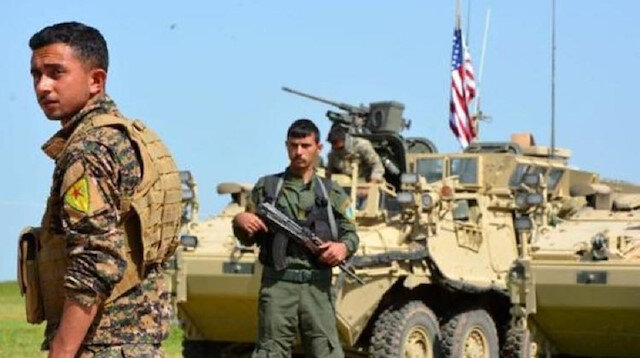
‘US seeks to remain in Syria by training 70,000 PKK terrorists’
The U.S. military is committed to working closely with the Turkish military to boost cooperation and coordination, said Robertson, adding "uncoordinated military operations" will undermine that shared interest.
The commander praised Turkey as a "NATO ally" for more than six decades and "a key partner" in the international fight against Daesh.
"We have solemn obligations to one another's security. We are fully committed to Turkey's border security," he said.
Robertson said the U.S.-led coalition is working closely with the YPG/PKK-led SDF group, which he said is "in the midst of offensive operations against ISIS in the Middle Euphrates River Valley," using another name for Daesh.
"The SDF remains a committed partner against ISIS and we remain committed to working with them to ensure ISIS's enduring defeat," he said.
A possible mission east of the Euphrates, which Turkey’s leadership has been suggesting for months, would follow two successful cross-border Turkish operations into Syria since 2016 – Operation Euphrates Shield and Operation Olive Branch – both meant to eradicate the presence of YPG/PKK and Daesh terrorists near Turkey’s borders.
In its more than 30-year terror campaign against Turkey, the PKK -- listed as a terrorist organization by Turkey, the U.S. and the EU -- has been responsible for the deaths of some 40,000 people, including women and children. The YPG is its Syrian branch.
The U.S. and the Kurdistan Workers’ Party (PKK) are after Daesh’s seven-ton gold reserves in Syria as they prepare to seize the terror group’s stronghold in eastern Syria, according to a former senior Daesh member. Speaking exclusively to Yeni Şafak daily, former Daesh finance responsible Abu Zeid al-Ambari revealed the true intentions of the U.S. and PKK as they prepare to attack the final Daesh stronghold in Syria.Abu Zeid also pointed that Daesh has 17 tons of silver in the besieged city of Hajin in Deir Ezzor, noting that Daesh had 13 tons of gold in its coffers in mid-2016. “Only seven people knew where the gold was hidden; two were killed, one went missing; and now the U.S. and PKK are trying to seize the gold,” said Abu Zeid.‘PKK follows the same policy in east Syria as Israel does in Palestine’Daesh coinage “Upon seizing Mosul and Raqqa, the terror group’s so-called finance ministry created a ‘gold pool.’ Abu Bakir [al-Baghdadi] and Abu Ali gave the orders. They laid the infrastructure to funnel all the gold from Daesh-occupied cities to this pool. A special delegation was created for this purpose, and in 2015 they began to press gold and silver coins and put them into circulation,” revealed Abu Zeid. “The terror group secured a large income from oil, cereal and trade activities, turning it into gold. Large amounts of gold were brought from Mosul, Talafar, Deir Ezzor, Aleppo and Raqqa to this ‘gold pool.’ Between mid-2015 and 2016, Daesh had 2.5 tons of gold in its coffers, which enabled it to press its own money,” he continued. ‘Turkish op in the east of the Euphrates is PKK’s worst nightmare’A bribe of three tons of gold “Some of the terror group’s henchmen, who fled the cities of Mosul and Raqqa after they fell, bribed the Peshmerga, U.S. soldiers and intelligence services in exchange for allowing them to be smuggled out of the region. The wheels of this cycle of bribery are still running to this day. In 2017, the Peshmerga received gold from senior Daesh terrorist Abdulsamad Sejeri, who they promised they’d give an ID and passport so he can be smuggled out of Iraq. Instead, they ended up executing him after seizing large amounts of gold from the man who had been tasked with overseeing the finances of Daesh.”Daesh has lost almost all the territory in Iraq and Syria where it once declared a caliphate, including its two main cities of Mosul and Raqqa last year.US seeks to spy on Turkey from observation posts along Syrian borderBuried in the desert Former Daesh terrorist Abu Zeid revealed the fate of the gold amassed by the terror group. “After the fall of Raqqa, Daesh transferred the gold in its procession to the city of al-Mayadeen. Later, after the latter also fell, they moved their reserves in Syria to the Badiyat al-Sham desert. The same was also done in Iraq where the gold was hidden in the desert region of Tikrit where no force was able to enter. For now the U.S. and PKK hope to find the gold reserves in the Hajeen region of Deir Ezzor, however, the terror group had taken all the gold and silver from urban centers under its control,” concluded Abu Zeid.The U.S.-led coalition is supporting the Syrian Democratic Forces (SDF), which is predominantly made up of PKK/YPG terrorists, in assaulting the last Daesh territory in eastern Syria near the Iraqi border.The PKK is listed as a terrorist organization by Turkey, the European Union and the United States. The PKK has been conducting armed violence in the southeastern part of Turkey since 1984. More than 40,000 people, mostly civilians, have been killed in the three-decade long conflict.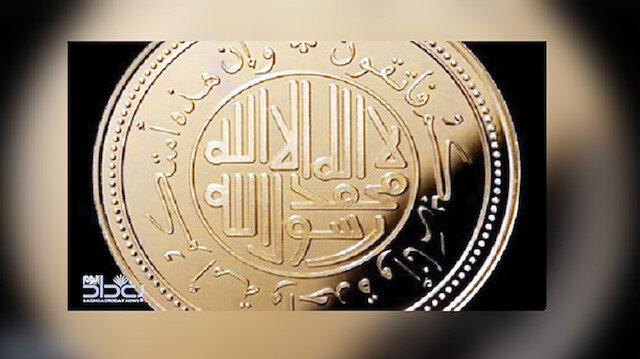
‘US, PKK are after Daesh’s gold reserves in Syria’