

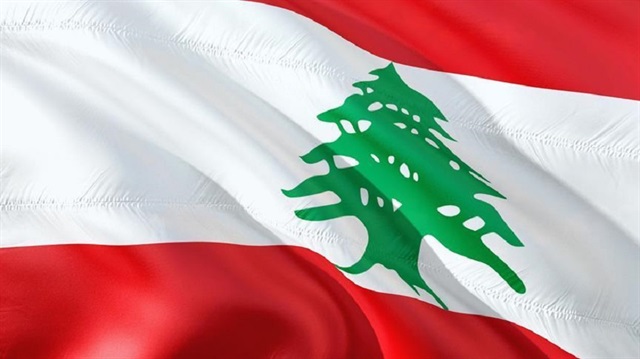
File photo
The Turkish Embassy in Lebanon on Wednesday thanked the Lebanese people for launching solidarity campaigns for the Turkish lira, which has recently lost ground against the dollar amid a raft of newly-imposed U.S. sanctions.
“We thank the brotherly and friendly people of Lebanon for launching campaigns…in support of Turkey against the economic attacks the country is facing,” the embassy said in a statement.
Merchants in several Lebanese cities, including capital Beirut, have launched campaigns to support the Turkish economy, offering discounts to customers who make purchases in Turkish lira.
The use of installments for credit card shopping and loans in Turkey will be governed by new regulations under a decree published in the Official Gazette on Wednesday.The term of installment payments for credit cards cannot exceed 12 months for purchases of goods and services, says the decree.For electronic appliances, the period is three months, as well as six months for expenditures on computers, travel, logistics, and accommodation, and nine months for spending on health, social services, and taxes.Banking watchdog puts new limits on FX swapsIn addition, purchases of telecommunications, alcoholic beverages, cosmetics, food, meals, fuel, jewelry, office equipment, gift cards, and expenses abroad cannot be split into installments.According to the Official Gazette, vehicle loans can last no longer than 48 months, consumer loans 36 months, and computer/cellphone loans six months.The regulation enters into force on Sept. 1 and is carried out by Turkey's Banking Regulation and Supervision Agency's (BDDK).On Aug. 2, the BDDK released draft proposals to support financial stability and macroeconomic equilibrium in Turkey.Turkey raises tariffs on US-origin productsThe proposals aim to encourage conscious consumption and cautious borrowing, the agency said.Mehmet Ali Akben, head of the BDDK, told Anadolu Agency: "The proposals aim to bring down inflation, the current deficit, imports and household indebtedness."
Turkey limits installment plans for credit cards, loans
Turkey-U.S. are currently experiencing rocky relations since Washington imposed sanctions on Turkey’s interior and justice ministers last week after Ankara refused to release an American pastor who faces terrorism-related charges in Turkey.
Last Friday, U.S. President Donald Trump doubled tariffs on aluminum and steel imports from Turkey.
A Turkish court on Wednesday rejected the second appeal to release U.S. Pastor Andrew Craig Brunson.Brunson’s lawyer, Ismail Cem Halavurt, said a higher court was yet to rule on the appeal.Halavurt lodged the second appeal document to court on Tuesday, asking for the pastor to be released from house arrest and have his travel ban lifted.Turkey raises tariffs on US-origin productsThe appeal was rejected by the 2nd Penal Court in İzmir, and referred to a higher court.Recently, the court had allowed Brunson to be moved from jail and placed him under house arrest in view of his "health problems".Brunson's charges include spying for the PKK -- listed as a terrorist group by both the U.S. and Turkey -- and the Fetullah Terrorist Organization (FETÖ), the group behind the defeated coup attempt in Turkey of July 2016.US dollar has lost its credibility: Turkish FinMinTurkey and the U.S. are currently experiencing rocky relations following Washington’s imposition of sanctions on Interior Minister Süleyman Soylu and Justice Minister Abdulhamit Gül for not releasing Brunson.The two NATO allies have been at odds since the defeated coup, which Ankara says U.S.-based Fetullah Gülen, the ringleader of FETÖ, is behind.Brunson's next hearing as part of the trial is scheduled for October 12.US pastor in Turkey appeals for release, lifting of travel ban
Turkish court rejects US pastor’s appeal for release for second time
The Indonesian Council of Ulama on Wednesday expressed strong support for Turkey against the United States' recent economic attacks.Head of the council's external affairs committee, Muhyiddin Junaidi, told Anadolu Agency that they support Turkey and President Recep Tayyip Erdoğan's stance against the U.S.Stressing that the U.S. targeted Muslim countries and tried to curb Turkey's power in the region, Junaidi said that Muslim world must use their own currency in trade among themselves against the U.S. dollar.Turkish private sector's foreign long-term loans dropJunaidi praised Turkey's economy and its commercial value, and added that Turkey would overcome the U.S.' attacks.Turkey and the U.S. are currently experiencing rocky relations following Washington’s imposition of sanctions over the detention of American pastor Andrew Brunson, who is under house arrest in Turkey over terrorism charges.Brunson's charges include spying for the PKK -- listed as a terrorist group by both the U.S. and Turkey -- and the Fetullah Terrorist Organization (FETÖ), the group behind the defeated coup attempt in Turkey of July 2016.Tariffs on Turkish imports ‘pose serious risks’ for USTurkey raises tariffs on US-origin products
Indonesia expresses support for Turkey, Erdoğan
Turkish private sector's outstanding long-term loans from abroad dropped $36 million to reach at $221.7 billion as of June, versus the last year-end, according to the country’s central bank on Wednesday.Meanwhile, the private sector's pending short-term loans from abroad climbed to $19.1 billion, up $486 million compared to the end of 2017.By definition, short-term loans have an original maturity of one year or less while long-term loans have an original maturity of more than one year.Turkey's unemployment rate slips to 9.7 pct in MayThe bank said financial institutions constituted more than half of long-term loans -- 50.1 percent."In the same period, of the total short-term loans in the amount of $19.1 billion, 79 percent consists of liabilities of the financial institutions, whereas 21 percent consists of liabilities of the non-financial institutions," the bank said.Regarding currency composition, 59.7 percent of the total long-term loans were U.S. dollar loans, 34.4 percent consisted of euro, 4.3 percent were in Turkish lira and 1.6 percent from other currencies, it said.Tariffs on Turkish imports ‘pose serious risks’ for US"And of the total short-term loans in the amount of $19.1 billion, 44.4 percent consists of dollars, 34 percent consists of euro, 21.5 percent consists of Turkish lira and 0.1 percent consists of other currencies," it said.The bank also noted that principal repayments for the next 12 months by the end of June amounted $69.6 billion.The Central Bank periodically releases data for the private sector’s long and short-term loans from abroad by gathering details from credit based forms submitted by resident financial institutions and companies.Turkey raises tariffs on US-origin products
Turkish private sector's foreign long-term loans drop