

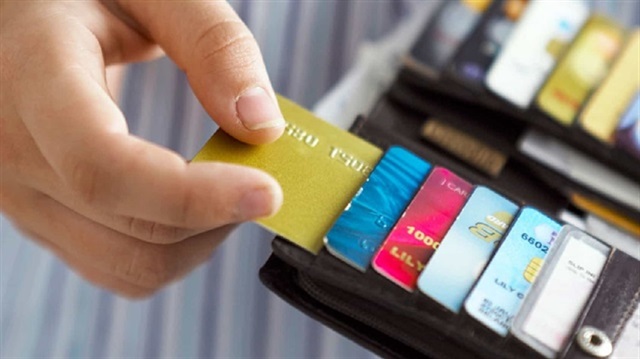
File photo
The use of installments for credit card shopping and loans in Turkey will be governed by new regulations under a decree published in the Official Gazette on Wednesday.
The term of installment payments for credit cards cannot exceed 12 months for purchases of goods and services, says the decree.
For electronic appliances, the period is three months, as well as six months for expenditures on computers, travel, logistics, and accommodation, and nine months for spending on health, social services, and taxes.
Turkish banks’ foreign currency swap transactions cannot pass over 25 percent of their equities, Turkey’s Banking Regulation and Supervision Agency (BDDK) announced on Tuesday."Total notional principle amount of banks' currency swaps and other similar products (spot forward FX transactions) with foreign counterparties where at the initial date local banks pay Turkish lira and receive FX should not exceed 25 percent of the bank’s regulatory capital," the agency said."In this regard, unless current excess is eliminated, no further transactions of these types could be executed and maturing transaction should not be renewed," it added.On Monday, the agency had put a limit to these transactions at 50 percent of the bank’s equities.Trump’s global policy a string of abandoned commitmentsTurkey raises tariffs on US-origin products
Banking watchdog puts new limits on FX swaps
In addition, purchases of telecommunications, alcoholic beverages, cosmetics, food, meals, fuel, jewelry, office equipment, gift cards, and expenses abroad cannot be split into installments.
According to the Official Gazette, vehicle loans can last no longer than 48 months, consumer loans 36 months, and computer/cellphone loans six months.
The regulation enters into force on Sept. 1 and is carried out by Turkey's Banking Regulation and Supervision Agency's (BDDK).
On Aug. 2, the BDDK released draft proposals to support financial stability and macroeconomic equilibrium in Turkey.
Turkey has increased tariffs on several U.S.-origin products, including alcohol and tobacco products and cars, according to a new presidential decree published early Wednesday in the official gazette.Under the decree, Turkey will raise tariffs to 100 percent on imports of the products.The new decree amends a presidential decree on July 11."Tax rates on imports of some products have been increased on a reciprocal basis against the U.S. administration's deliberate attacks on our economy," Vice President Fuat Oktay said on Twitter.Turkey to boycott US construction materialsAmong the products are cars, rice, some alcohol and tobacco products and some cosmetic products like sun creams.On Friday, Turkey’s Foreign Ministry said Turkey would retaliate against the raising of steel and aluminum tariffs by the U.S. administration.Foreign Ministry Spokesman Hami Aksoy said on Twitter that President Donald Trump's decision, which also violates World Trade Organization rules, does not comply with "state seriousness".Trump ramped up his attack on Turkey by raising steel and aluminum tariffs to 50 percent and 20 percent respectively.Chinese firm to buy raisins from Turkey rather than USThe U.S. decision is another salvo in the growing dispute between Turkey and the U.S.Last week, a Turkish delegation returned from Washington with no movement on the detention of American pastor Andrew Brunson, who is under house arrest in Turkey over terrorism charges.Brunson's charges include spying for the PKK -- listed as a terrorist group by both the U.S. and Turkey -- and the Fetullah Terrorist Organization (FETÖ), the group behind the defeated coup attempt in Turkey of July 2016.Turkey to boycott US construction materialsTurkey and the U.S. are currently experiencing rocky relations following Washington’s imposition of sanctions on Interior Minister Suleyman Soylu and Justice Minister Abdulhamit Gul for not releasing Brunson.The two NATO allies have been at odds since the defeated coup, which Ankara accused U.S.-based Fetullah Gülen and FETÖ of masterminding.Video: Erdoğan: Turkey will boycott US electronic products
Turkey raises tariffs on US-origin products
The proposals aim to encourage conscious consumption and cautious borrowing, the agency said.
Mehmet Ali Akben, head of the BDDK, told Anadolu Agency: "The proposals aim to bring down inflation, the current deficit, imports and household indebtedness."