

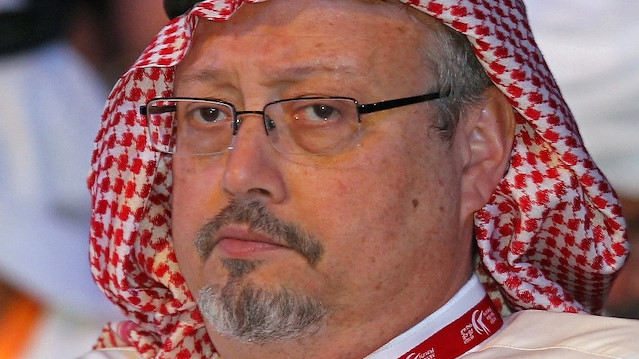
File photo
While devoting extensive coverage to Turkey’s probe of the killing of a Saudi journalist, German media has scolded Saudi officials for offering half-hearted cooperation.
Die Welt daily reported that Turkish prosecutors have concluded Jamal Khashoggi was strangled to death -- in a premeditated killing -- soon after he entered the Saudi Consulate in Istanbul on Oct. 2.
The daily decried how despite Riyadh's pledge to cooperate in the investigation, Saudi Attorney General Saud al-Mujeb’s visit to Istanbul this week failed to yield fruit.
On Wednesday, Istanbul prosecutors reiterated Turkey's demand that Saudi authorities extradite 18 suspects in the Khashoggi killing.
German public broadcaster ARD reported that many questions about the killing remain unanswered, including what happened to his body.
“A real clarification can only be achieved by Saudi investigators. But this is only possible with the consent of the Saudi royal family,” the report said.
Frankfurter Allgemeine Zeitung daily pointed to claims that the killing is tied to the inner circle of Crown Prince Mohammed bin Salman.
“There are suspicions that Saudi strong Crown Prince Mohammed bin Salman ordered the killing of the Washington Post columnist [Khashoggi],” it reported.
“Many of the alleged perpetrators had direct links to the 33-year-old heir to the throne, according to media reports. Although he denies any involvement, the incident has seriously damaged his international image.”
Die Zeit weekly raised the possibility of European sanctions on Saudi Arabia if Riyadh fails to clear up the case.
“Chancellor Angela Merkel and French President Emmanuel Macron have recently said that they are planning a common European response. What this response would be remains unclear at the moment,” it said.
Khashoggi, a Saudi national and columnist for The Washington Post, was killed on Oct. 2 inside the Saudi Consulate in Istanbul. After weeks of denying involvement, the kingdom admitted he had been killed at the consulate and the killing was premeditated.
British government keeps its position for the violent killing of Saudi journalist Jamal Khashoggi in the Saudi Consulate in Istanbul, Foreign Office said on Thursday.Upon a request by Anadolu Agency, the British Foreign and Commonwealth Office (FCO) said in a statement that the most recent statement by Foreign Secretary Jeremy Hunt in the House of Commons is still up-to-date.On Tuesday, Hunt told British lawmakers that if the reports on Khashoggi killing are proven correct, this would not be compatible with their values, a statement he repeated on Wednesday at the parliament’s foreign affairs committee.“There are all sorts of issues with respect to Saudi Arabia’s human rights record that are in sharp relief at the moment," he said.“But … I have spoken more clearly than any Western foreign minister that if the Khashoggi stories turn out to be true, that would be inconsistent with our values.”On Wednesday, Istanbul Chief Public Prosecutor's Office said Saudi journalist Jamal Khashoggi's body has been disposed of after being dismembered.Turkey expects Saudi cooperation on Khashoggi killing: justice ministerKhashoggi murder and House of Saud's futureThe Washington Post reported earlier, based on U.S. intelligence intercepts, that Crown Prince Salman had ordered an operation to lure the journalist back to Saudi Arabia.After weeks of denying any knowledge of his whereabouts, Saudi officials admitted that Khashoggi had been killed inside the Saudi Consulate in Istanbul.Hunt also said he was not aware of any plot against Khashoggi, responding to claims by a British tabloid that British intelligence were aware of a plot against the journalist.“We are as shocked as anyone else is about what happened,” he added.“The actions Britain and our allies take will depend on two things: Firstly, the credibility of the final explanation given by Saudi Arabia, and secondly on our confidence that such an appalling episode cannot - and will not - be repeated,” Hunt said last week.Hunt said he was "deeply concerned" at Turkey's description of Saudi journalist Jamal Khashoggi's “murder as premeditated".Khashoggi murder outcry threatens US-Saudi ties, Saudi prince says‘Turkey will not allow cover up,’ says ruling party
UK's stance in Khashoggi case unchanged
Turkey's justice minister on Thursday urged Saudi authorities to support the investigation into slain journalist Jamal Khashoggi.Khashoggi went missing after entering the Saudi Consulate in Istanbul on Oct. 2.After initially saying Khashoggi had left the consulate alive, the Saudi administration admitted weeks later he had died there."We are looking for answers to the question of where the body is," Abdulhamit Gül told reporters during a joint news conference with his Hungarian counterpart Laszlo Trocsany in Ankara."We expect the Saudi authorities to engage a close cooperation on this issue. They need to support in the form of cooperation in order to enlighten the whole incident," he added.Khashoggi murder and House of Saud's futureGül said despite written questions asked by Turkey's Chief Public Prosecutor's office, no answers have yet been received by the Saudi officials."We expect these questions to be answered as soon as possible. The Turkish judiciary will also deepen the investigation to answer these questions," he added.Stating that the international issue cannot be covered up, the justice minister said the responsibility on the Khashoggi killing can not be avoided.Khashoggi murder outcry threatens US-Saudi ties, Saudi prince saysOn questions whether the Istanbul Chief Public Prosecutor will visit Saudi Arabia as part of the Khashoggi probe, Gül said that it is "likely not happening because the incident occurred in Turkey.""Without Turkey's questions are answered, I think it is not right to enter into a new stage," he added.Istanbul chief prosecutor Irfan Fidan said after talks with Mojeb on Monday and Tuesday that Khashoggi was suffocated in a premeditated killing as soon as he entered the consulate, and his body was then dismembered and disposed of. Investigation of the incident suggests a special hit squad came to the consulate to kill Kashoggi and cover up the murder. The international community refused to accept the Saudi claim that the incident was not a premeditated murder.‘Turkey will not allow cover up,’ says ruling partyMeanwhile, Turkish President Recep Tayyip Erdoğan stressed that all details of the case should be revealed, including who gave the instruction for the "premeditated murder".U.S. President Donald Trump said he could impose sanctions on Saudi Arabia, but also signaled that he did not want to harm bilateral relations.Telephoning Erdoğan, Saudi King Salman bin Abdulaziz and Crown Prince Mohammad bin Salman promised necessary cooperation.The chief prosecutor's office in Riyadh also announced that the murder was planned.Fake news network vs bots: the online war around Khashoggi killing
Turkey expects Saudi cooperation on Khashoggi killing: justice minister
On Oct. 19, Saudi Arabia acknowledged that dissident journalist Jamal Khashoggi had died following a physical altercation with embassy officials. In an interview with FOX News, Saudi Foreign Minister Adel al-Jubeir described Khashoggi’s “murder” as a “tremendous mistake,” but vehemently denied allegations that Saudi Arabia’s Crown Prince Mohammed bin Salman had ordered his death. Mohammed bin Salman reiterated al-Jubeir’s comments on Oct. 24, by describing Khashoggi’s murder as a “heinous crime,” and vowing to punish Saudi officials responsible for his killing.The perceived implausibility of the Saudi government’s official narrative on Khashoggi’s murder triggered widespread international criticism and caused major Western powers to openly debate the imposition of punitive economic measures against Saudi Arabia. The reaction of Saudi Arabia’s most important ally, the United States, has been followed particularly closely by Mohammed bin Salman and his political allies. The U.S. government’s initial response to Khashoggi’s murder was positively greeted in Saudi Arabia, as Trump emphasized the importance of arms contracts with Riyadh for job creation in the U.S. defense industry, and U.S. Secretary of State Mike Pompeo had a cordial meeting with senior Saudi officials.Kazakh leader invites Saudi king, crown prince to visitThe Trump administration’s dovish reaction to Khashoggi’s death was widely criticized within the U.S. Congress. In the aftermath of Khashoggi’s murder, neoconservative Republicans like South Carolina Senator Lindsay Graham and Florida Senator Marco Rubio, aligned with prominent Democratic Party lawmakers in condemning the Saudi government’s involvement in Khashoggi’s death and questioning the future of the U.S.-Saudi Arabia alliance. The emergence of a broad-based coalition of critics of Mohammed bin Salman within the U.S. Congress convinced the Trump administration to change course, by revoking visas against selected Saudi officials and considering sanctions against the perpetrators of Khashoggi’s murder.How can US pressure Saudi Arabia?While the impact of these actions on the U.S.- Saudi Arabia relations has thus-far been limited, the United States could exploit Saudi Arabia’s growing vulnerabilities and pressure Mohammed bin Salman in two main ways. First, the U.S. government could pressure Saudi Arabia to make a larger advance payment on its weapons deals with Washington, and use the threat of contract cancellations to spur Riyadh to action. Even though Saudi Arabia agreed to $110 billion in contracts with the United States in May 2017, only $14.5 billion of these deals has been confirmed by the Saudi government. Securing a larger advance payment from Saudi Arabia would provide more credibility for Trump’s arguments about Saudi Arabia’s economic importance to the United States, and also demonstrate that his rhetoric about Riyadh not paying the U.S. enough for defense is being matched with concrete action.Khashoggi murder outcry threatens US-Saudi ties, Saudi prince saysSecond, Trump could offer Saudi Arabia a quid-pro-quo that the United States will refrain from imposing punitive economic measures against Riyadh, if Mohammed bin Salman takes tangible steps towards normalizing relations with Qatar. Even though U.S. Secretary of State Mike Pompeo urged Saudi Arabia to end its blockade of Qatar in late April and included both countries in its Arab NATO plan to contain Iran, Riyadh has dismissed U.S. concerns about Gulf disunity. As Khashoggi’s murder has reinforced international concerns about Mohammed bin Salman’s destructive impulsivity, U.S. policymakers are in a strong position to convince Riyadh to ease tensions with Qatar, as doing so could help repair Saudi Arabia’s damaged reputation.Enhanced relations with China and Russia?The growing risk of U.S. punitive measures against Saudi Arabia over Khashoggi’s murder has caused some prominent analysts, like Al Arabiya General Manager Turki Aldakhil and the Eurasia Group’s Ayham Kamel, to call for a rebalance of Saudi foreign policy towards China and Russia. While this argument has diffused across the Saudi intellectual and business community, it has weak empirical foundations. Although China is Saudi Arabia’s largest trade partner, the Chinese Petrochemical Corporation has cut oil imports from Saudi Arabia over concerns about price manipulation and Chinese investors were frustrated by Mohammed bin Salman’s decision to suspend the Aramco IPO. There are also few prospects for enhanced China-Saudi Arabia defense cooperation, as Riyadh only purchased $20 million worth of Chinese arms in 2017, and Saudi Arabia’s military campaign in Yemen relies on U.S. technology.‘Turkey will not allow cover up,’ says ruling partyThe prospects for a marked improvement in Saudi Arabia-Russia relations are equally dim. On Oct. 18, Russian President Vladimir Putin criticized Trump’s unwillingness to criticize Mohammed bin Salman over Khashoggi’s murder, by arguing that it differed markedly from Washington’s immediate decision to implicate the Russian security services in Sergei Skripal’s poisoning. Although Putin corresponded with King Salman over Khashoggi’s murder on Oct. 25, lingering concerns about Saudi Arabia’s blockade against Qatar and doubts about the potential for a breach in the U.S.-Saudi Arabia alliance could ultimately weaken the Moscow-Riyadh partnership.In the Middle East, the initial reactions to Khashoggi’s death sharpened regional polarizations. Saudi Arabia’s strongest allies, the United Arab Emirates, Bahrain and Egypt, praised the Saudi government’s handling of the Khashoggi investigation; while its leading critics, Qatar, Iran and Turkey challenged the Saudi account. While Al Jazeera’s extensive unflattering coverage of Riyadh’s handling of the Khashoggi case and Turkey’s insistence that Mohammed bin Salman gave dishonest account of Khashoggi’s murder, could further strain both countries’ relations with Saudi Arabia, a spiral of escalation is not the only conceivable outcome.Fake news network vs bots: the online war around Khashoggi killingMBS’s efforts to deflect international opprobriumIn recent days, Mohammed bin Salman has departed from his traditionally aggressive approach to international criticism by praising Qatar’s economic model and directly discussing the Khashoggi case with Turkish President Recep Tayyip Erdogan. Mohammed bin Salman’s unwillingness to further inflame tensions with Qatar and Turkey aims to showcase Saudi Arabia’s ability to act as a responsible stakeholder on the world stage, and deflect international criticisms of his foreign policy conduct.In addition to restricting damage to Saudi Arabia’s international image, Mohammed bin Salman’s efforts to de-escalate tensions with Saudi Arabia’s regional rivals could also be aimed at assuaging growing frustrations with his leadership style amongst the Saudi royal family. One leading potential opponent of Mohammed bin Salman is Prince Al-Waleed bin Talal, a business magnate arrested during last November’s anti-corruption crackdown, and a former employer of Khashoggi at the progressive Bahrain-based news outlet, Al-Arab News Channel. Another potential critic is Prince Ahmed bin Abdulaziz, who directly blamed Mohammed bin Salman for Saudi Arabia’s military intervention in Yemen last month and possesses considerable legitimacy, as one of the only surviving sons of Saudi Arabia’s founder, Abdulaziz Ibn Saud.In light of these dissenting views, Ahmad bin Abdulaziz's return to Riyadh on Oct. 31 poses a considerable challenge to Mohammed bin Salman's authority. The widely reported decision of the U.S. and British governments to provide security assurances to bin Abdulaziz suggests that Saudi Arabia's closest Western allies are grooming him as a critic who can act as a check on Mohammed bin Salman's impulsive actions on the world stage. Bin Abdulaziz's internal support base appears limited at first glance, as he was one of only three members of Saudi Arabia's allegiance council to oppose Mohammed bin Salman's selection as Crown Prince. However, the widely mooted existence of Khashoggi sympathizers within the elite establishment and his ties to Western powers make him arguably the greatest internal threat to Mohammed bin Salman.In spite of the influence wielded by these influential critics, their discontent is unlikely to pose a serious short-term threat to Mohammed bin Salman’s authority. The anti-corruption campaign caused no Saudi private businessmen to appear on March 2018’s Forbes Billionaires list. This attests to the diminished lobbying power of bin Talal and his allies within the Saudi private sector. Prince Turki al-Faisal, the unofficial leader of the Saudi royal family’s moderate wing, has also defended Mohammed bin Salman against allegations of his involvement in Khashoggi’s murder. Mohammed bin Salman also maintains firm control over Saudi Arabia’s security services and the absence of a vocal internal backlash against his dismissal of senior aide, Saud al-Qahtani, suggests that the Saudi Crown Prince’s internal position remains stable.Although the Saudi government continues to deny involvement in Khashoggi’s murder, the case has sparked fears of unprecedented U.S.-Saudi Arabia tensions and left Mohammed bin Salman scrambling to defend his tarnished international reputation. Despite these uncertainties, the atmosphere of fear created by Khashoggi’s murder and the absence of a realistic challenger to Mohammed bin Salman will likely ensure his continued dominance over Saudi politics for the foreseeable future.By Samuel Ramani, a DPhil candidate in International Relations at St. Antony’s College, University of Oxford. He is also a journalist who contributes regularly to The Washington Post and The Diplomat.
Khashoggi murder and House of Saud's future
The outcry in the United States demonizing Saudi Arabia over the murder of Saudi journalist Jamal Khashoggi in the kingdom's consulate in Istanbul threatens U.S.-Saudi strategic ties, the former Saudi intelligence minister warned on Wednesday."We value our strategic relationship with the United States and hope to sustain it. We hope the United States reciprocates in kind," royal family member Prince Turki bin Faisal al Saud said in an address to the National Council on U.S.-Arab Relations, a non-profit advocacy organization.Turki, to whom Khashoggi once served as an adviser, has also served as an ambassador to London and Washington. His speech denouncing what he called "the demonization of Saudi Arabia" clearly carried Riyadh's imprimatur, as he heads an Islamic research center named after his father, the late King Faisal.‘Turkey will not allow cover up,’ says ruling partyTurki's address came after Istanbul's chief prosecutor on Tuesday said that Khashoggi was suffocated in a premeditated killing and his body was then dismembered.Khashoggi, who lived in self-imposed exile in the United States, wrote columns for the Washington Post critical of the kingdom's de facto ruler, Crown Prince Mohammed bin Salman.Some U.S. lawmakers have accused the crown prince of ordering Khashoggi's death - a charge that Riyadh denies - and threatened sanctions. U.S. commentators have strongly condemned the kingdom.Fake news network vs bots: the online war around Khashoggi killingRecalling that more than 70 years of U.S.-Saudi ties survived previous crises, Turki said, "Nowadays, this relationship is once again threatened.""The tragic and unjustified" slaying of Khashoggi "is the theme of today's onslaught and demonization of Saudi Arabia in the same fashion as the previous crises. The intensity and gleefulness of it is equally unfair," he said. "Subjecting our relationship to this issue is not healthy at all."Turki reiterated that the kingdom is committed to bringing to justice those responsible for Khashoggi's murder "and whoever else failed to uphold the law."EU reiterates call for 'credible' probe into KhashoggiThe Trump administration is demanding full accountability from Riyadh in Khashoggi's death. In what it called a first step, it revoked the visas of some Saudi officials implicated in the slaying.The U.S.-Saudi relationship "is too big to fail," Turki said.Those ties, he noted, transcend oil production, trade, arms sales and investment to cooperation on Middle East peace efforts, stabilizing oil markets, fighting extremism and containing Iran, the kingdom's main regional foe. Khashoggi's body parts were disposed of after being dismembered: Turkish prosecutorCadaver dog used to search Saudi consulate denied entry into consul-general’s residence
Khashoggi murder outcry threatens US-Saudi ties, Saudi prince says