

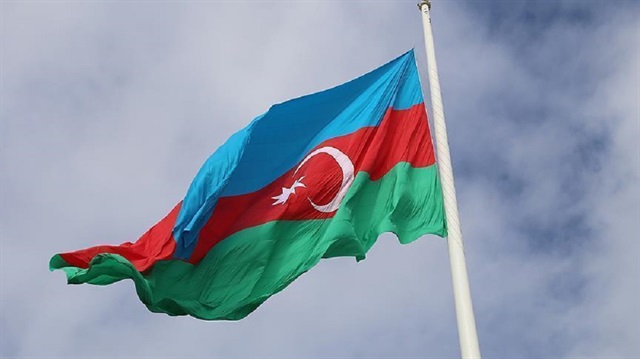
File photo
Azerbaijan is "completely" confident about the future of Turkey's economy, the country’s Foreign Ministry said on Monday.
In a statement, the ministry said: “Our country will continue to invest capital and take an active part in Turkey's economy."
It noted that the large projects carried out in Turkey in recent years will provide additional contributions to economy and security of the country and the region.
"Azerbaijan, as always, will continue to support Turkish people and the state in all areas," it added.
Turkey and the U.S. are currently experiencing rocky relations after Washington imposed sanctions on Interior Minister Suleyman Soylu and Justice Minister Abdulhamit Gul for not releasing American Pastor Andrew Brunson, who faces terrorism-related charges in Turkey.
U.S. President Donald Trump on Friday ramped up his attack on Turkey by doubling U.S. tariffs on Turkish aluminum and steel imports to 20 percent and 50 percent, respectively.
Pakistan on Monday opposed the “unilateral sanctions” imposed by the U.S. on Turkey over the detention of an American pastor under terrorism charges.“Pakistan, in principle, is opposed to imposition of unilateral sanctions against any country. The solution to any and all issues should lies in dialogue, mutual understanding and goodwill,” a statement by the country’s Foreign Ministry said on Monday.“Any steps or actions to the contrary only undermine the peace and stability and make the solution to a problem more difficult and intractable,” the statement added.Turkey and the U.S. are currently experiencing rocky relations following Washington’s imposition of sanctions on Interior Minister Suleyman Soylu and Justice Minister Abdulhamit Gul for not releasing American Pastor Andrew Brunson, who faces terrorism charges in Turkey.U.S. President Donald Trump ramped up his attack on Turkey by doubling U.S. tariffs on Turkish aluminum and steel imports to 20 percent and 50 percent, respectively.The statement by Pakistan’s Foreign Ministry lauded Turkey’s role towards regional and international peace and stability.“Pakistan acknowledges and greatly appreciates Turkey’s invaluable role towards regional and international peace and stability. It is also a vital member and engine of the global economy”, the statement further said.Expressing its solidarity, Islamabad reiterated its strong support for the government and the people of Turkey.“The people and the government of Pakistan reiterate their strong support for the government and the people of Turkey in their quest for peace and prosperity, and as always, will continue to stand by them towards the achievement of these shared goals,” the statement said.Germany slams US tariffs decision against TurkeyIran slams Trump's tariffs decision targeting TurkeyTurks sprint to support national currency after Erdoğan call
Pakistan opposes ‘unilateral sanctions’ by US on Turkey
President Vladimir Putin has not yet ordered retaliatory sanctions against the United States because Washington has not yet introduced new restrictions on Moscow and it is unclear what those curbs will be, the Kremlin said on Monday.The State Department announced new sanctions on Wednesday last week, blaming Moscow for the poisoning of a Russian ex-spy in Britain in March, something Russia denies.Russia's Foreign Ministry has said it is working on possible tit-for-tat retaliatory measures.Asked about those possible Russian counter measures on Monday, Kremlin spokesman Dmitry Peskov said it was too early to say what they might be."There was an announcement of some new (U.S.) sanctions, there was information that a bundle (of sanctions) was being prepared or was already ready, but it hasn't yet been introduced and of course there's no clear information on what these restrictions will be," Peskov told reporters.Russia to increase use of local currencies for tradeRussia's Lavrov to discuss planned four-way Syria summit in Ankara
Putin yet to order retaliatory sanctions against United States
Iran's Supreme Leader Ayatollah Ali Khamenei accused the government on Monday of economic mismanagement and said it needed to improve its performance to help the country better weather newly reimposed U.S. sanctions.Washington reimposed strict sanctions against Iran last Tuesday and President Donald Trump has threatened to penalise firms from other countries that continue to operate in the Islamic Republic. Iran has denounced the sanctions as "U.S. unilateralism"."More than the sanctions, economic mismanagement (by the government) is putting pressure on ordinary Iranians ... I do not call it betrayal but a huge mistake in management," Iranian state TV quoted Khamenei as saying, in his first reaction to the reimposition of U.S. sanctions.Russia, Iran, others sign deal on Caspian Sea's legal status"With better management and planning we can resist the sanctions and overcome them," Khamenei said.Iran's rial currency has lost about half of its value since April in anticipation of the renewed U.S. sanctions, driven mainly by heavy demand for dollars among ordinary Iranians trying to protect their savings.Fearing further economic hardship, thousands of Iranians in recent weeks have protested against the slump in the rial, sharp rises in the prices of some food items and state corruption.The protests in cities and towns across Iran have often begun with slogans against the high cost of living, high prices and a lack of jobs, but have then quickly turned into anti-government rallies. Iran slams Trump's tariffs decision targeting TurkeyIran Supreme Leader calls for action to face 'economic war'
Iran's Khamenei says mismanagement hurts economy more than US sanctions
Turkey should respond to the economic war imposed by U.S. President Donald Trump with hefty customs duties. Big U.S. brands that benefit from Turkey’s market should be subject to these import duties in response to the doubling U.S. tariffs on Turkish aluminum and steel imports to 20 percent and 50 percent, respectively. The tariffs followed Washington’s imposition of sanctions on Interior Minister Süleyman Soylu and Justice Minister Abdulhamit Gül for not releasing American Pastor Andrew Brunson, who faces terrorism charges in Turkey.Turkey should also impose substantial customs duties on technology brands such as IBM and Apple as well as construction machinery and equipment company Caterpillar Inc. Ankara could impose import duties on luxury lifestyle products as well as computers, phones, cosmetics, yachts, boats, automobiles, racecars, data processing machines and construction machines.Turkey launches probe into suspected actions targeting economic securityCurrent account deficit should be reducedThe $3.3 billion deficit in bilateral trade between the U.S. and Turkey could be narrowed by additional customs taxes. The additional tax that could be imposed on luxury lifestyle items could lead to great savings in the domestic market.Apple’s technology products and Caterpillar Inc.’s construction machinery obtain hundreds of millions of dollars’ worth of profits in Turkey each year. Even though the iPhone is not the bestselling smartphone in Turkey, it makes up 80 percent of smartphone sales’ profits.In addition to the additional customs duties backed by the public, it is expected that consumers support Turkey’s economy by boycotting U.S.-made products.Turkey Central Bank to provide all liquidity banks needEra of domestic product useIt is also expected that industry figures utilize raw materials and intermediate goods resources domestically in order to support Turkey’s economic independence struggle. Turkey’s exports to the U.S., which stood at $8.5 billion last year, have risen considerably since the beginning of 2018.Turkey’s third biggest export market is the U.S., and it is the fifth largest country where Turkey exports its goods, with trade volume amounting to $20.6 billion in 2017, official data showed.Erdoğan slams US for preferring terrorists as partnerImports from other marketsTurkey’s imports from the U.S. rose by 9.9 percent to $11.9 billion in 2017 compared to the previous year. Turkey’s foreign trade deficit with the U.S. has decreased over the past three years, showing a reduction of 22.4 percent in 2017 compared to the previous year. It is expected that Turkey will respond to U.S. economic and political pressure by imposing hefty customs duties.Retaliatory tariffs two months agoTwo months ago, Turkey imposed additional customs duties on 22 U.S. products with an import value of $1.8 billion. The tariffs were imposed on imports of U.S. coal, paper, walnuts, almonds, tobacco, unprocessed rice, whisky, automobiles, cosmetics, machinery equipment and petrochemical products.No deposits will be seized: Turkish FinMinGermany slams US tariffs decision against TurkeyIran slams Trump's tariffs decision targeting Turkey
How Turkey should respond to US’s economic war