

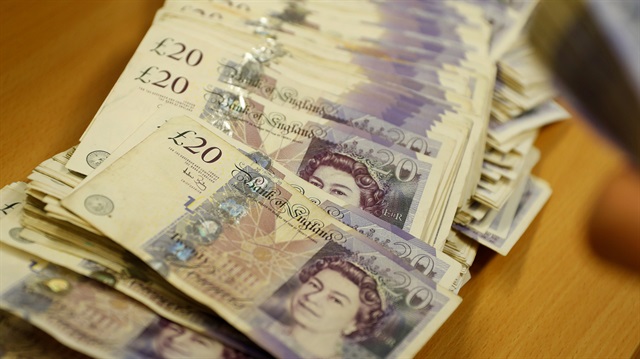
File photo
The UK's top share index rose on Monday, starting September on a stronger note as a weaker pound and a bounce across commodity stocks helped British equities outperform continental peers. The blue chip FTSE 100 index was up 0.8 percent at 7,493.04 points by 0857 GMT, while mid caps edged 0.2 percent higher.
A rise in oil stocks contributed more than 13 points to the FTSE 100, the biggest sectoral boost to the index.
Shares in Royal Dutch Shell and BP were up 1.5 percent and 1.2 percent respectively as the price of oil rose, supported by concerns that falling Iranian output will tighten markets once U.S. sanctions hit in November.
A firmer copper price also buoyed UK mining stocks, with Glencore, BHP Billiton and Anglo American up as much as 1.4 percent.
Other major stock markets across Europe were subdued on Monday, however, as investors fretted about an escalation in the trade war between the United States and China, which also weighed on Asian markets overnight.
"Investors still have mixed outlooks regarding the global trade situation as well as the turmoil in emerging markets caused by the recent Turkish Lira crisis and this means fewer traders are going long on stocks right now," Pierre Veyret, technical analyst at ActivTrades, said.
A weaker pound was another factor keeping the FTSE in positive territory. A fresh round of Brexit-related headlines dented demand for the currency, as critics at home and abroad ramped up their opposition to Prime Minister Theresa May's plans for leaving the European Union.
A depressed pound lifted the FTSE 100's big, dollar-earning constituents on the day.
However, worries over Brexit kept investors cautious on UK equities.
"The UK is a defensive, high-dividend yielding market which might have a problem if bond yields move sustainably higher, and if global equities advance, as we expect," equity strategists at J.P. Morgan said in a note. They are underweight UK equities.
"We look for a stronger GBP, which will weigh on the performance of FTSE 100."
Veterinary firm Dechra Pharmaceuticals was the biggest faller among mid cap stocks, its shares tumbling 15 percent and on track for their biggest one-day loss since January 2003.
Dechra Pharma dropped after it said it would implement a plan to navigate a hard Brexit, adding that the measure may result in 2 million pounds ($2.6 million) of additional expense.
Analysts at Investec said that while Dechra's preliminary results were ahead of their expectations, they were introducing some caution into their forecasts to reflect the potential impact of accounting standard changes, sanctions on Iran and a hard Brexit.
Britain's finance ministry and the Bank of England are discussing delaying Governor Mark Carney's departure, due at the end of June 2019, the BBC reported on Monday without citing sources."I understand that the Treasury is concerned that trying to complete a process to find a new Governor now -- in the teeth of the Brexit negotiations -- would be difficult," the BBC's economics editor wrote.The extension to Carney's period of office may be much less than the one-year period mooted in an article in the Financial Times earlier on Monday, the BBC said.The BoE had no immediate comment on the BBC report, and had previously declined to comment on the FT article.
BoE and UK finance ministry discussing extending Carney's time as governor
British manufacturers had their weakest month in over two years and export orders suffered a rare decline in August, a warning that a world economic slowdown, as well as the approach of Brexit, is weighing on the country's factories, a survey showed.The IHS Markit/CIPS UK Manufacturing Purchasing Managers' Index (PMI) fell to 52.8, its lowest level since July 2016, immediately after the Brexit vote, and a lot weaker than a median forecast of 53.8 in a Reuters poll of economists.Sterling weakened against the dollar and the euro after the data, and economists said that the prospect of leaving the European Union in March next year without any trade agreement appeared to be weighing on sentiment."The main reason for the fall in the headline orders was a contraction in export orders, suggesting that the possibility of a 'no deal' exit from the EU in March and a moderation in global growth is starting to weigh more heavily on the sector," said Andrew Wishart, UK economist at consultants Capital Economics.PM May says Britain will not compromise over Brexit planRob Dobson, an IHS Markit director, said manufacturing -- which accounts for about 10 percent of Britain's economy -- looked increasingly lacklustre in August."The latest PMI report is broadly consistent with zero growth in manufacturing production, meaning the sector will likely fail to provide any support to the wider UK economy in the third quarter," he said.New orders were the weakest in more than two years, weighed down by the first drop in export orders since April 2016, and hiring by manufacturers almost stagnated.EU, Britain talk up chances of autumn Brexit deal"Some firms linked lower inflows of new work from abroad to the recent weaker pace of expansion of the world economy," Markit said, adding the recent weakening of the pound had not boosted exports.The lack of clarity over the terms of Britain's departure from the European Union in less than seven months' time helped push business confidence to a 22-month low.Inflation pressure remained strong, Markit said, although prices charged by manufacturers grew less quickly than in July.The PMI for Britain's larger services industry is due to be published on Wednesday, helping to give investors a clearer sense of whether the economy has managed to maintain its recovery from an early 2018 slowdown. EU's Barnier sees ambitious security partnership with Britain after Brexit
UK factories feel pinch from global economy as export orders fall