

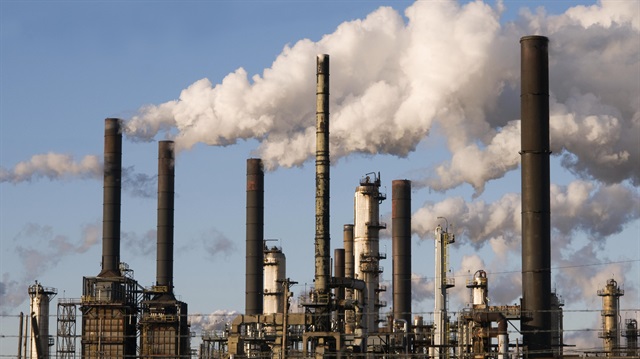
File photo
British manufacturers had their weakest month in over two years and export orders suffered a rare decline in August, a warning that a world economic slowdown, as well as the approach of Brexit, is weighing on the country's factories, a survey showed.
The IHS Markit/CIPS UK Manufacturing Purchasing Managers' Index (PMI) fell to 52.8, its lowest level since July 2016, immediately after the Brexit vote, and a lot weaker than a median forecast of 53.8 in a Reuters poll of economists.
Sterling weakened against the dollar and the euro after the data, and economists said that the prospect of leaving the European Union in March next year without any trade agreement appeared to be weighing on sentiment.
"The main reason for the fall in the headline orders was a contraction in export orders, suggesting that the possibility of a 'no deal' exit from the EU in March and a moderation in global growth is starting to weigh more heavily on the sector," said Andrew Wishart, UK economist at consultants Capital Economics.
British Prime Minister Theresa May said she would not compromise with Brussels over her plans for Brexit as a media report said rivals in her party were set to publish their own proposal calling for a cleaner break with the European Union.With under two months before Britain and the EU want to agree a deal to end over 40 years of union, May is struggling to sell what she calls her business-friendly Brexit to her own party and across a divided country.The EU has tentatively welcomed what has become known as the Chequers plan, which is designed to protect cross-border trade, but difficult negotiations lie ahead."I will not be pushed into accepting compromises on the Chequers proposals that are not in our national interest," May wrote in the Sunday Telegraph newspaper."The coming months will be critical in shaping the future of our country and I am clear about my mission."May also said she would not hold a second referendum on Britain's EU membership, reiterating a long-held position in an attempt to counter increasingly vocal campaigning for another public vote on the terms of the divorce."To ask the question all over again would be a gross betrayal of our democracy," May said.May's plan would keep Britain in a free-trade zone with the EU for manufactured and agricultural goods. But some Brexit supporters have said that would mean parts of the British economy would still be subject to rules set in Brussels.Two of May's most senior lawmakers - Boris Johnson and David Davis - quit as foreign secretary and Brexit secretary respectively in July in protest at May's plan, saying it did not go far enough and would let down the millions of people who voted to leave the EU in the 2016 referendum.According to a report in the Sunday Times newspaper, leading Brexiteer lawmakers in May's party are ready to publish their own plan for Brexit ahead of the party's annual conference which begins at the end of September.That would be designed to heap pressure on May, who needs to get any deal with Brussels through parliamentary votes in Westminster before Britain is due to leave the EU on March 29 next year.May reiterated that Britain would be ready to leave the EU without a deal if the two sides cannot agree on the divorce terms. (Reporting by Kate Holton and William James Editing by Marguerita Choy and Dale Hudson)
PM May says Britain will not compromise over Brexit plan
Rob Dobson, an IHS Markit director, said manufacturing -- which accounts for about 10 percent of Britain's economy -- looked increasingly lacklustre in August.
"The latest PMI report is broadly consistent with zero growth in manufacturing production, meaning the sector will likely fail to provide any support to the wider UK economy in the third quarter," he said.
New orders were the weakest in more than two years, weighed down by the first drop in export orders since April 2016, and hiring by manufacturers almost stagnated.
EU and UK negotiators on Friday talked up prospects of agreeing a Brexit deal this autumn, citing recent progress in detailing very close security cooperation to take effect after Britain leaves the bloc.The European Union's Michel Barnier said it was "possible" to get an agreement in time for a summit of all the bloc's leaders in Brussels on Oct. 18-19, though added a delay into November was also possible .After his latest talks with Barnier, Brexit minister Dominic Raab said he was "stubbornly optimistic" and "as confident as before, if not more" that there would be a deal.EU's Barnier sees ambitious security partnership with Britain after BrexitThe two said they made progress over security cooperation, including on exchanging data."Europe's security is the United Kingdom's security," Raab told a joint news conference.Barnier said unresolved issues included geographical indications, the role of the EU's top court in policing the agreement, Euratom cooperation and data protection, among others. French, UK fishermen to seek scallops deal after sea skirmishes
EU, Britain talk up chances of autumn Brexit deal
"Some firms linked lower inflows of new work from abroad to the recent weaker pace of expansion of the world economy," Markit said, adding the recent weakening of the pound had not boosted exports.
The lack of clarity over the terms of Britain's departure from the European Union in less than seven months' time helped push business confidence to a 22-month low.
Inflation pressure remained strong, Markit said, although prices charged by manufacturers grew less quickly than in July.
The PMI for Britain's larger services industry is due to be published on Wednesday, helping to give investors a clearer sense of whether the economy has managed to maintain its recovery from an early 2018 slowdown.
The European Union's chief Brexit negotiator Michel Barnier said on Friday that the bloc was seeking an "ambitious partnership" on security issues with Britain after its exit from the bloc.Barnier said he had discussed security cooperation after Britain leaves the EU with Brexit minister Dominic Raab at a meeting in Brussels on Friday."We discussed a subject which is extremely important, serious, which is the security of our citizens," Barnier told reporters after the Raab meeting."On internal security matters, we are prepared to build an ambitious partnership with the United Kingdom." Britain starts work on satellite system to rival EU's GalileoBrexit, opportunity for boosted Turkey-UK ties: ExpertUK May says no-deal Brexit not 'the end of the world'
EU's Barnier sees ambitious security partnership with Britain after Brexit