

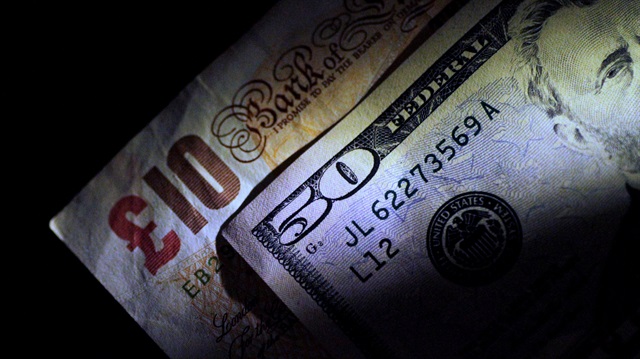
File photo
Sterling eased back from its highest levels in nearly two weeks on Wednesday as investors turned their attention back to negotiations for Britain's departure from the European Union.
There have been mixed messages this week on whether British and EU officials will meet an informal October deadline to reach an agreement on how they will structure trade ties following their divorce next year.
Diplomats in Brussels said they expected a delay in finalizing the terms of Britain's exit and could need to hold an emergency summit in November.
But British Brexit minister Dominic Raab said late on Tuesday that he was confident an exit agreement could be reached by an October 18-19 summit of EU leaders.
Dollar weakness after U.S. President Donald Trump's said that he was unhappy with the Federal Reserve for raising interest rates also helped the pound earlier this week.
Following Raab's comments, sterling hit its highest levels against the greenback in 12 days, at $1.2924. The British currency had plunged to nearly 14-month lows last week as worries the UK will crash out of the EU without a trade deal mounted.
By 0807 GMT on Wednesday, sterling was 0.3 percent lower at $1.2871.
The pound was 0.2 percent lower at 89.77 pence per euro.
"One thing is clear: the agreement will have to be reached well before year-end to leave sufficient time for the ratification ahead of the actual Brexit by the end of March 2019," analysts at Commerzbank wrote in a note to clients.
"However, the longer the negotiations drag on for the more the FX market has to fear a no-deal accident, i.e. that the UK will leave the EU without a transition agreement which would entail notably elevated risks premiums for the pound exchange rates."
They also noted British government papers analyzing the possible consequences of a no-deal Brexit that are due to be published this week would be key for sterling's performance over the next few days.
"The inherent willingness of both sides to find a Withdrawal Deal solution should serve as a bit of a backstop to the degree of no-deal Brexit risks priced into the currency," said ING currency strategist Viraj Patel.
"But when it comes to sterling and political risks, it is far too early to signal the all-clear; the biggest test for the pound will be the return of a divided UK parliament from their summer recess and the upcoming Party Conference Season."
Sterling fell on Monday as the dollar rebounded and investors shifted their focus to impending talks that may decide whether Britain gets a trade deal with the European Union before it quits the bloc.The pound has suffered six straight weeks of losses against the dollar, its worst run since 2014, even though data such as retail sales suggest the UK economy is holding up.With less than eight months to go until Britain leaves the EU, the government has yet to agree with Brussels the terms of its departure, and some hedge funds have started betting against the currency.Analysts say sterling, which has shed 12 percent of its value since April, will remain vulnerable to the vagaries of Brexit negotiations in the months ahead."The price of the pound continues to reflect Brexit concerns and an economy that's at best muddling through," WorldFirst head of FX strategy Jeremy Cook said. "The limelight is elsewhere right now and there's plenty of places people would rather be investing than sterling."At 0820 GMT, the pound was down 0.1 percent against the dollar at $1.2733, near a 14-month low of $1.2662. It was up 0.1 percent versus the euro at 89.61 pence per euro .The euro slipped on Monday as the dollar gained before proposed trade talks between the United States and China this week that investors hope will ease tensions between the world's two biggest economies.Meanwhile, business leaders' confidence in the British economy has fallen to its lowest point this year, reflecting uncertainty about Brexit, according to a survey published on Monday. 
Pound falls as focus turns to Brexit
The British pound rose on Friday as the dollar fell across the board and some traders saw an opportunity to buy sterling after data this week pointed to an UK economy holding up relatively well.Ongoing worries about whether Britain can agree a trade deal with the European Union over the coming months to avoid a sudden and disorderly exit from the bloc continue to keep most investors cautious about any sustained sterling strength.The pound this week suffered its longest losing streak against the dollar since the height of the financial crisis in 2008, hitting a near 14-month low of $1.2662 on Wednesday, but has since bounced three quarters of a cents higher.Can Britain alone stop Brexit? Scottish court hears appealRetail sales data on Thursday showed that the British economy, while far from booming, has some momentum.British shoppers spent more than expected in July, pointing to a solid start to the third quarter for the economy, although data published earlier in the week showed a disappointing rise in worker wages that has underlined the squeeze on consumers."The pound has had a disappointing week despite a raft of data that points to an economy that while not firing on all cylinders is by no means the worst in the G7. Once again it’s been politics that has been weighing on the currency with the increasing talk of a "no deal" Brexit keeping traders on the sidelines," CMC Markets analyst Michael Hewson.Sterling stuck near 2018 lows ahead of inflation dataSterling rose 0.2 percent to $1.2732, near its day's high of $1.2749.Against the euro the pound struggled, losing 0.2 percent to 89.645 pence but still below recent lows of more than 90 pence per euro.Sterling stuck near 2018 low on dollar strength, Brexit woesWith most UK economic data published this month out of the way, the focus will shift back to Brexit as Britain heads towards several months of crucial negotiations and several EU leaders summits.Jeremy Hunt, the British foreign minister, warned on Wednesday that the short-term market impact if Britain leaves the EU without a deal would be significant. 
Pound holds above $1.27, buoyed by dollar weakness