

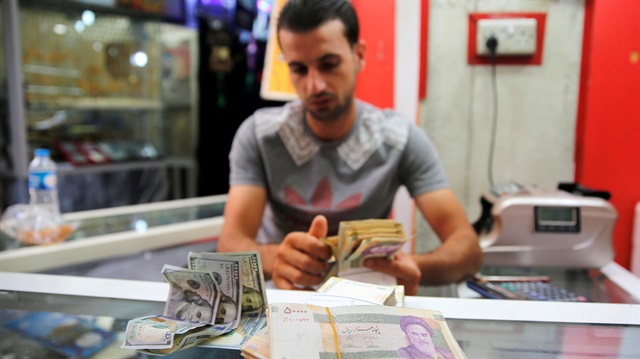
Iranian rials are seen at a currency exchange shop in Baghdad, Iraq August 8, 2018.
Iran rial extended its slide on Wednesday, hitting a record low around 150,000 against the dollar, according to foreign-exchange websites, as the country's economic fortunes ebb after the United States re-imposed sanctions.
The dollar was being offered for 150,000 rials, compared with about 138,000 rials on Tuesday, according to website Bonbast.com, which tracks the unofficial market. The website bazar360.com also quoted 150,000. Mesghal.online gave an exchange rate of 152,530.
The rial has lost more than two-thirds of its value this year because of a weak economy, financial difficulties at local banks and heavy demand for dollars among Iranians. Many fear the Washington's pulling out of a 2015 nuclear deal and renewed U.S. sanctions will cut into Iran’s exports of oil and other goods.
A set of U.S. sanctions targeting Iran’s oil industry is due to take effect in November.
The Iranian rial hit a record low against the U.S. dollar on the unofficial market on Monday, amidst a deterioration in the economic situation and the reimposition of sanctions by the United States.The dollar was being offered for as much as 128,000 rials, according to foreign exchange website Bonbast.com, which tracks the unofficial market.The currency has been volatile for months because of a weak economy, financial difficulties at local banks and heavy demand for dollars among Iranians who fear the pullout of Washington from a landmark 2015 nuclear deal and renewed U.S. sanctions against Tehran could shrink the country's exports of oil and other goods. Weak pound, higher commodity stocks boost Britain's FTSE 100Israel signals it could target Iranian military assets in IraqIran foreign minister arrives in Damascus for talks with Syrian officials
Iranian rial hits record low at 128,000 to the dollar
Last week, Iran’s parliament sacked the minister of economic affairs and finance, the latest in a continuing shakeup of top economic personnel. In early August, Iranian lawmakers voted out the minister of labour and in July President Hassan Rouhani replaced the head of the central bank.
Protests linked to the tough economic situation erupted last December, spreading to more than 80 cities and towns and resulting in 25 deaths.
Sporadic protests, led by truck drivers, farmers and merchants in Tehran’s bazaar, have continued since then and have occasionally resulted in violent confrontations with security forces.