

File photo
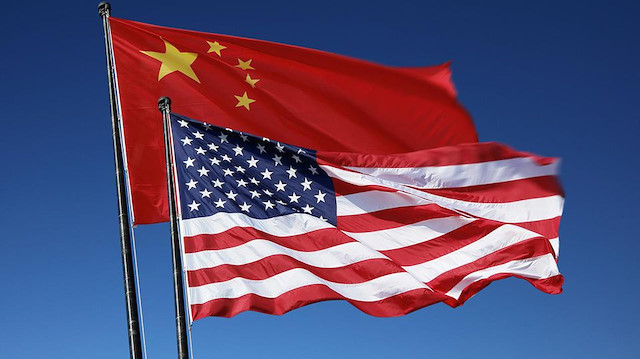
The U.S. government should create a fund to counter Chinese infrastructure financing deals in the developing world that export China's "model of authoritarian governance," according to a bipartisan commission report to the U.S. Congress released on Wednesday.
The report from the U.S. China Economic and Security Review Commission has been complied almost every year since 2002 by a group tasked with monitoring the national security implications of U.S.-China trade relations. This year's edition said that China's efforts to finance bridges and even digital networks in Asia, Africa, the Middle East and Europe have given the Chinese government an excuse to maintain a military presence there.
The report recommended that Congress create a fund to assist countries in parts of the world where China is expanding its influence. It also warned about the threat of China's push into the next-generation 5G wireless technology on U.S. security and business interests.
The prime minister of China said Tuesday there are no winners in a trade war with the U.S."There is no winner in the trade war," Li Keqiang said at the 33rd Association of Southeast Asian Nations (ASEAN) Summit in Singapore where he addressed the trade war, the South China Sea dispute and the ASEAN market region.He said China does not wish to see flaws in the global trade chain that can affect other countries.Turning to the South China Sea, he said common effort is needed to resolve the issue and China wished the process to solve problems in the disputed areas to be resolved in three years.China says US controls on semiconductor firm break WTO rulesUS-China trade tensions will create 'domino effect'Keqiang also said China is working to make the ASEAN market region even more dynamic and Beijing has the potential to do that.The summit began Tuesday and will continue until Thursday.Leaders of China, India, Japan, South Korea, Russia, Australia and of 10 ASEAN countries are expected to participate in the summit.
Chinese premier says no winner in trade war with US
China has been pushing its so-called Belt and Road Initiative that finances major ports, high speed rail, highways and bridges in countries ranging from Malaysia to Kenya and Russia. The commission said China was using it not just to "encourage and validate authoritarian actors abroad," but also to export standards for technology applications that could threaten U.S. businesses and market access across the globe.
The commission, created by Congress in 2000, said Beijing was using the Belt and Road Initiative to justify a military presence in some of the countries.
It recommended that Congress create a fund to provide assistance to countries especially in the Indo-Pacific region for digital connectivity, infrastructure and energy access.
The U.S. decision to cut off a Chinese state-backed chipmaker from U.S. suppliers amid allegations the firm stole intellectual property from a U.S. semiconductor company breaks World Trade Organization rules and aims to protect a U.S. monopoly, China told a WTO meeting on Tuesday.Last month the U.S. Commerce Department put Fujian Jinhua Integrated Circuit Co Ltd on a list of entities that cannot buy components, software and technology goods from U.S. firms.But a Chinese official told the WTO meeting that Jinhua had not yet started production and was far from threatening DRAM manufacturers in the United States, which had said it presented a national security threat. "In our point of view, the real purpose of the U.S. measures is to maintain the monopoly interests of the U.S. DRAM industry," the Chinese official said, according to a transcript of remarks seen by Reuters. Germany cannot accept China’s camps for Uighur MuslimsUS-China trade tensions will create 'domino effect'China says world should ignore 'gossip' about Xinjiang
China says US controls on semiconductor firm break WTO rules
The commission also warned about China's rising dominance in 5G wireless technology and the proliferation of devices connected to the internet that could be used to launch a cyber attack.
"U.S. telecommunications providers' reliance on imports from China raises serious supply chain concerns about the secure deployment of U.S. critical next generation telecommunications infrastructure," said the report.
Concern about Chinese cyber attacks and cyber espionage has forced Chinese telecom equipment makers Huawei Technologies Corp and ZTE Corp to scale back some of their business in the United States.
President Donald Trump earlier this year blocked microchip maker Broadcom Ltd from taking over Qualcomm Inc amid worries it would give China the upper hand in 5G mobile communications.
Trade tensions between the United States and China will create a "domino effect" and prompt other countries to turn protectionist, Malaysian Prime Minister Mahathir Mohamad said on Tuesday.Speaking at the Association of South East Asian Nations (ASEAN) Business and Investment Summit in Singapore, Mahathir said other developed countries will follow the footsteps of the United States and China by imposing protectionist measures against developing countries, like ASEAN member states."The trade tension between the two world powers is bound to create a domino effect that will affect trade reactions and will be a reason for other developed countries to adopt protective measures against developing countries, including the ASEAN countries," Mahathir said."This is not the time to close our doors by invoking trade protectionism measures," he added.China says world should ignore 'gossip' about Xinjiang"DOJ will help return money Goldman Sachs charged for 1MDB dealings"Mohamad also said on that U.S. prosecutors had promised to help return money that Goldman Sachs charged for its dealings with troubled Malaysian state fund 1MDB.The U.S. investment bank has been under scrutiny for its role in helping raise funds through bond offerings for 1Malaysia Development Bhd (1MDB), which is the subject of corruption and money-laundering investigations in at least six countries.The U.S. Department of Justice has said about $4.5 billion was misappropriated from 1MDB, including some money that Goldman helped raise, by high-level officials of the fund and their associates from 2009 through 2014. U.S. prosecutors filed criminal charges against two former Goldman Sachs bankers earlier this month.Asked if he had officially requested the U.S. DOJ to help return money that Goldman charged for its dealings with 1MDB, Mahathir said:"It takes a little bit of time but they (DOJ) have promised that they will give back the money." He was speaking on the sidelines of a speech he delivered in Singapore.Bankers at Goldman Sachs Group "cheated" Malaysia in dealings with state fund 1MDB, Mahathir said in an interview with U.S. news channel CNBC aired earlier on TuesdaBolton says US objects to China's military steps in South China SeaChina says world should ignore 'gossip' about Xinjiang
US-China trade tensions will create 'domino effect'
The world should ignore "gossip" about China's Xinjiang region and trust authorities there, the Chinese government's top diplomat said on Tuesday when asked if Beijing would allow international observers to inspect camps holding Muslims there.Western countries including Canada, France, Germany, and the United States have called on China to close down camps in Xinjiang, where activists say as many as 1 million members of the Uighur minority and other Muslims are being detained.China has said in the past that Xinjiang faces a threat from Islamist militants and separatists. It rejects all accusations of mistreatment and denies mass internment.Germany cannot accept China’s camps for Uighur MuslimsAfter initial blanket denials, however, Chinese officials have said some people guilty of minor offences were being sent to "vocational" training centres, where they are taught work skills and legal knowledge aimed at curbing militancy.State Councillor Wang Yi told reporters after a meeting with Germany's foreign minister, Heiko Maas, that he hoped people would understand and support the Xinjiang regional government's efforts to combat terrorism, put an end to the spread of extremism and provide for social stability."(People) should not listen to gossip or rumour, because the Xinjiang regional government, of course, understands the situation in Xinjiang best, and not some other people or organisations," said Wang, who is also foreign minister.China triples spending to expand detention camps for Uighur Muslims"The efforts are completely in-line with the direction the international community has taken to combat terrorism, and are an important part of the global fight against terrorism," Wang said."If we can take care of prevention, then it will be impossible for terrorism to spread and take root," he said.Reports of mass detentions and strict surveillance of Uighurs and other Muslims have prompted the United States to consider sanctions against officials and companies linked to suspected human rights abuses.Researchers have noted that spending on security-related construction in Xinjiang tripled in 2017, and that despite the "vocational training" campaign, Xinjiang government data shows employment has not markedly improved.China rejects Western concerns on alleged Uighur mass detentionsWest calls on China to close Uighur detention campsSecurity spending soars in China's troubled Xinjiang region: reportActivists urge deep scrutiny of China at UN rights gathering this week
China says world should ignore 'gossip' about Xinjiang