

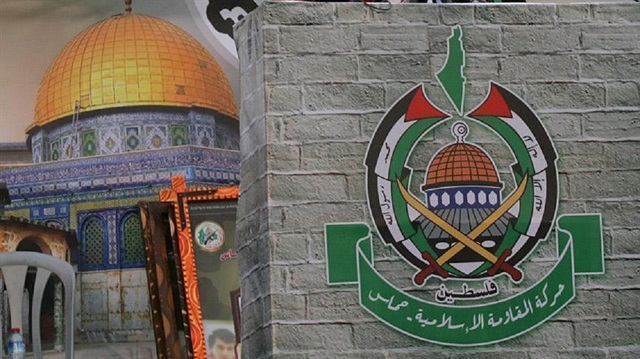
File photo
Talks have been reportedly underway for a five-year gradual truce between Palestinian resistance group Hamas and Israel, a Lebanese newspaper reported Saturday.
Al Akhbar daily, citing sources close to Hamas, said the talks were being conducted through a third party.
According to the newspaper, the first phase of the proposed truce will be applied in one week by halting the launch of incendiary balloons from the Gaza Strip into Israel, in return for Israel reopening the Kerem Shalom crossing, Gaza’s sole commercial access point.
Saleh al-Arouri, deputy leader of Palestinian resistance movement Hamas, returned to Gaza Thursday after eight years of exile.According to a press release from the administration of the Rafah Border Crossing, an Arouri-led delegation including leading group members Mousa Abu Marzouk, Izzat al-Rishq and Hussam Badran crossed the border into the Gaza Strip.The delegation was welcomed by Hamas leader Ismail Haniyeh and members of the group’s political bureau.Arouri has been in exile since 2010.His return to Gaza has been interpreted in Israeli and Palestinian media as "relevant to negotiations through third parties for a long-term agreement between Hamas and Israel".155 Palestine protesters killed by Israel since Mar. 30Israel's Haaretz newspaper wrote that the Tel Aviv administration was "hopeful" about the talks.The Yediot Ahronot newspaper noted that Israel has given assurances through Egypt that Tel Aviv, which has allowed Arouri’s entry into Gaza, would not target him with any attack.Local media also reported that the United Nations Special Coordinator for the Middle East Peace Process, Nickolay Mladenov, has played an important role in the alleged Egypt-backed Hamas-Israeli talks.Hamas delegation visits EgyptOn Monday, a Hamas delegation led by Arouri arrived in Cairo to discuss the latest developments in the Palestinian political arena with Egyptian officials.In a statement, Hamas spokesman Fawzi Barhoum said it included Marzouk, Rishq and Badran as well as Khalil al-Hayya and Rawhi Mushtaha.Israel denies exit to hundreds of Gazans in 2018Earlier Monday, al-Hayya and Mushtaha set out from the blockaded Gaza Strip for the Egyptian capital via the Rafah Border Crossing.According to sources close to Hamas, the delegation has been in intensive negotiations with Egyptian intelligence in order to establish Palestinian national unity and a long-term ceasefire agreement between Israel and the resistance organizations in Gaza.Gaza refugees protest UNRWA's downsizing measuresMeanwhile, the cancelation of Israeli Prime Minister Benjamin Netanyahu's planned visit to Colombia is believed to be related to the "developments in Gaza”, according to Israeli media, which referred to speculation that he needs to be available due to the possibility that there might be a breakthrough in talks between the Tel Aviv administration and Palestinian sides.The Haaretz newspaper reported that Israel’s Security Cabinet is expected to meet Sunday to discuss a possible deal with Hamas.
Top Hamas leader returns to Gaza
The balloons are being fired by Palestinian activists as part of ongoing anti-occupation rallies being held along Gaza border.
The second phase of the plan, according to the sources, includes the total lifting of the 11-year Israeli blockade on Gaza and improving living standards.
The third phase of the plan includes implementing UN pledges on carrying out a host of humanitarian projects as building a seaport in Egypt’s canal city of Ismailiyah, a power station in Sinai and the rebuilding of the Gaza Strip, the sources said.
The U.S. administration has asked the office of Israeli Prime Minister Benjamin Netanyahu for “clarification” of a controversial “Jewish Nation-State” law, Israel’s Channel 10 reported on Thursday. Approved last month by the Knesset (Israel’s parliament), the new legislation describes Israel as “the nation-state of the Jewish people” -- a designation that has angered the country’s non-Jewish minority.In response to the U.S. request for clarification, Netanyahu’s office reportedly told White House officials that the law would not adversely affect the rights of any citizen of Israel or lead to discrimination against any minority groups. According to one official source cited by Channel 10, US administration officials were particularly concerned over an article of the law pertaining to “Jewish settlement”. The official source, who was not named, said the White House -- which has not publicly criticized the law -- was satisfied with the assurances it had received from Netanyahu’s office, according to Channel 10. The broadcaster went on to note that, in light of objections to the law raised by prominent members of the U.S. Jewish community (including pro-Israel legal expert Alan Dershowitz), the administration of U.S. President Donald Trump would like to see the legislation amended. Netanyahu’s office confirmed that the law had come up for discussion at a recent meeting between Netanyahu’s chief-of-staff, Yoav Horowitz, and U.S. Ambassador to Israel David Friedman. The PM’s office went on to assert that there had been no criticism of the law by U.S. officials.The legislation also states that a “united Jerusalem” is Israel’s capital and that Hebrew is its official language, stripping Arabic of its earlier designation as an official language while recognizing its “special status”.The new law risks further alienating the country’s sizeable Arab minority, who say they already face discrimination from Israeli Jews and the government. Palestinians holding Israeli citizenship account for approximately 21 percent of the country’s population.'Double standards of the Israeli judicial system'2nd Druze officer quits over Israel’s Nation-State lawUS support for Israel hurts Middle East peace prospects
US seeks ‘clarification’ of controversial Israel law
According to the Lebanese newspaper, Hamas has initially agreed to an Egyptian and international roadmap for de-escalation in Gaza. However, a final decision will be taken by the resistance group after a meeting of Hamas political bureau.
A prisoners swap between Israel and Hamas is also expected to be discussed in light of the truce talks, the sources said.
On Thursday, Hamas deputy leader Saleh al-Arouri returned to Gaza after eight years of exile.
Israeli Prime Minister Benjamin Netanyahu has cancelled a planned visit to Latin America amid reports of an “imminent” truce with Gaza-based resistance movement Hamas. According to a Thursday statement released by his office, Netanyahu “has decided to stay in Israel next week due to the situation in the south [i.e. the Gaza Strip] and has therefore canceled his planned trip to Colombia”. Israeli daily Haaretz reported that Netanyahu had canceled his scheduled trip “amid reports of progress in Egypt-brokered talks between Israel and the Hamas leadership in Gaza”. It is the first time for Netanyahu to cancel a planned trip overseas due to a security-related matter. While Hamas has yet to confirm reports that it is close to hammering out a truce deal with Israel, observers quoted in Israeli media say an agreement is “imminent”. Two weeks ago, Israel and Gaza-based resistance factions announced a limited ceasefire deal after a series of escalations along the Gaza-Israel buffer zone. For the past three months, Palestinians have been staging regular demonstrations near the buffer zone.Since the demonstrations began on Mar. 30, more than 150 Palestinians have been martyred -- and thousands more injured -- by Israeli army gunfire.Protesters demand the “right of return” to their homes and villages in historical Palestine, from which they were driven in 1948 to make way for the new state of Israel.They also demand an end to Israel’s 11-year blockade of the Gaza Strip, which has gutted the coastal enclave’s economy and deprived its roughly two million inhabitants of many basic commodities.
Israeli PM cancels trip abroad amid talk of Gaza truce
Arouri’s return to Gaza has been interpreted in Israeli and Palestinian media as "relevant to negotiations through third parties for a long-term agreement between Hamas and Israel".
Since 2007, the Gaza Strip has groaned under a crippling Israeli blockade that continues to deprive its inhabitants of many essential commodities, including food, fuel, medicine and building materials.