

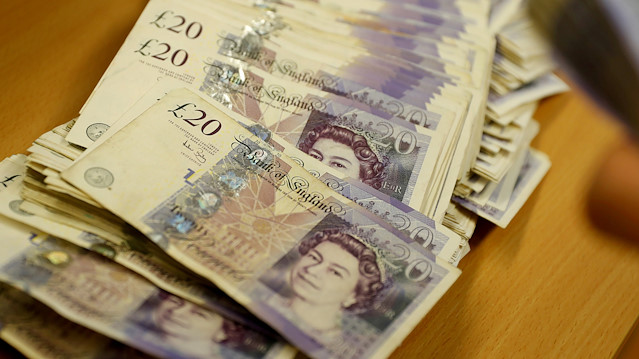
File photo
Sterling gained on Friday, putting it on course for its second best week of 2018 on optimism for a Brexit deal and signals from the Bank of England that if the exit from the European Union is smooth more interest rate hikes could be on the way.
The pound enjoyed its best day of the year on Thursday as a market heavily short the currency rushed to adjust to the possibility that a Brexit deal will be clinched in the coming weeks - removing a major uncertainty overshadowing the economy and the BoE as it tries to bring inflation back to target .
"Were it not for Brexit uncertainty, the Bank of England would probably have laid the groundwork today for its next rate hike," BNP Paribas analysts said in a note.
"Once the MPC (Monetary Policy Committee) gets the Brexit 'green light', we expect two hikes in 2019, in May and November – sooner, and by more, than markets expect."
Money markets are not fully pricing in a full 25 basis point rate hike from current levels of 0.75 percent next year, however, underscoring investors' worries about whether a disorderly Brexit can be avoided.
Sterling rose 0.3 percent to $1.3037, its highest since Oct. 23. It slipped 0.1 percent against the euro but remained near two-week highs after Thursday's huge jump.
David Madden, an analyst at CMC Markets, said that if the pound held above $1.30 "it could pave the way for $1.3250 to be tested", but if sterling drops again the currency may fall towards $1.2661.
The British government and EU officials have played down hopes for an imminent Brexit deal, emphasising that while an agreement is close the two sides still have work to do.
Any agreement with Brussels would then need to win approval from British parliamentarians before the Brexit date of March 29, a far from easy process given factions with Prime Minister Theresa May's Conservative party oppose her plans.
Euro zone government bond yields rose on Friday ahead of U.S. jobs data, and after reports that U.S. President Donald Trump is taking steps to resolve a trade war with China fuelled a bid for riskier assets.Asian equities jumped to three-week highs after Bloomberg reported that Trump is seeking a trade agreement with Chinese President Xi Jinping, setting the tone for a strong European open which saw stocks there gain 1.1 percent."We've seen a correction of the very pessimistic mood by investors, driven by decent earnings and some good news regarding the trade spat," said Rene Albrecht, analyst at DZ Bank."But this looks like election tactics by Trump with the mid-terms next week. With stock markets diving he probably felt the need to counteract."US grants eight countries Iran sanctions waiversBoth 10-year U.S. Treasury bond yields and 10-year German yields - key safe-haven assets - rose to their highest in over a week, up three basis points each early on Friday.,Most other higher-grade euro zone government bond yields were 2-4 basis points higher.,.The improved risk appetite helped fuel demand for Italy, with its bond yields falling up to five basis points. Albrecht said the upcoming U.S. mid-term elections meant the selloff in risk assets would be limited.China says Xi-Trump call was quite positiveFurther direction might come from the U.S. jobs report due at 1230 GMT, with investors looking for more indications on the health of the U.S. economy and the pace of further Federal Reserve interest rate rises.U.S. job growth is expected to have rebound in October with wages expected to have recorded their largest annual gain in 9-1/2 years, pointing to further labour market tightening that could encourage the Fed to hike again in December.Data on Thursday showed worker productivity slowed in the third quarter, which tempered the rise in yields in late trade, according to an analysis by ING."There is perhaps a bit more evidence the U.S. is starting to feel the negative effects of trade uncertainty, higher interest rates and the stronger dollar," analysts at the bank wrote in a note published on Friday.After the market close, the European Banking Authority will release the results of its latest stress tests. Analysts will be looking to see how a lengthy selloff in Italian government bonds has affected the balance sheets of the four Italian banks surveyed.Trump announces plans to limit asylum seekers
Trade war hopes boost euro zone bond yields