

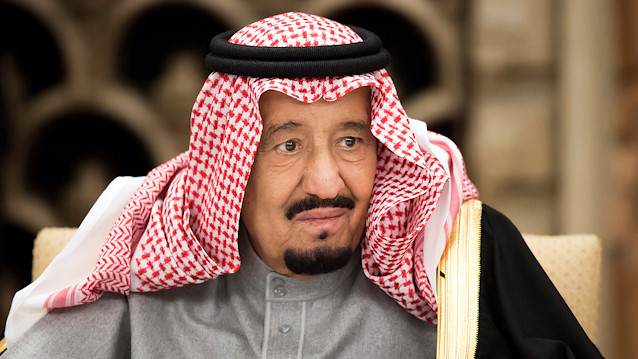
Saudi Arabia's King Salman bin Abdulaziz Al Saud
Saudi Arabia's King Salman on Monday called on the international community to put an end to Iran's nuclear and ballistic missile programme, but made no direct mention of the killing of journalist Jamal Khashoggi.
The king, who had largely stepped back from active political life, has intervened to try to defuse the crisis, the biggest to hit Saudi Arabia in a generation, and shore up the power of his son and heir apparent, Crown Prince Mohammed bin Salman.
He did, however, laud the Saudi judiciary and prosecution service in his speech on Monday for "performing the duties they were entrusted with", without elaborating.
The murder of Jamal Khashoggi inside the Saudi consulate in Turkey’s Istanbul has thrust an unwavering spotlight on Riyadh and top Saudi officials close to Crown Prince Mohammed bin Salman.As Turkey keeps pushing for the truth in the case of Khashoggi’s murder, Saudis have taken to social media. Hashtags laced with anti-Turkey sentiment even became a trending topic on Twitter on Sunday evening. Two hashtags in particular calling for boycotting tourism in Turkey and professing love for Crown Prince bin Salman were trending in the Kingdom. A closer look at some of the users behind the campaigns reveals that a large number of accounts taking part in these campaigns appear to be run by bots with photos of bin Salman used as profile pictures. One tweet accompanied by a photo says, “Not taking a stance is betrayal” and another reads, “How can we respect those that don’t respect our leaders? Will they show us respect if we go to them?”#مقاطعه_السياحه_التركيهمن لا يحترم قادتنا وبلادنا ومقدساتنا كيف يحترمنا اذا ذهبنا لهم pic.twitter.com/x8Cc4rFJ6j— 🇸🇦MBS💛🖤abuoenad ابوعناد (@abuoenad) 18 Kasım 2018 A different Twitter user tweeted a photo of a crossed-out Turkish flag, calling the boycott of Turkish goods “a national duty.”عداوة تركيا للسعودية اشبه بعداوة الشيطان لابن ادم، عداوة يغذيها الحسد والحقد، والسعودي الغيور على بلدة يجب علية مقاطعة تركيا في كل شئ هذا واجب وطني #مقاطعه_السياحه_التركيه pic.twitter.com/8sLBvDsfAs— مكحل الذيب (@t800800) 18 Kasım 2018 Saudi journalist Khashoggi was killed inside the Saudi consulate in Istanbul on Oct. 2, and Turkey has provided the U.S. as well as other countries with a recording of the murder.After weeks of denying any involvement in the crime, Saudi Arabia later admitted that Khashoggi had been killed inside the consulate but claimed the Saudi royal family had no prior knowledge of any plot to murder the journalist.According to reports, Turkish investigators found traces of "hydrofluoric acid and other chemicals" inside a well at the Saudi consul general's home in Istanbul, suggesting Khashoggi’s body was dissolved in acid and other chemicals.Germany imposes travel bans on 18 Saudis over Khashoggi killingOn Thursday, Saudi Arabia’s chief prosecutor’s office announced it had charged 11 out of 21 suspects in relation to the murder, seeking the death penalty for five of the suspects.The CIA believes Saudi Crown Prince Mohammed bin Salman ordered the killing of Khashoggi, sources familiar with the matter said on Friday, complicating President Donald Trump's efforts to preserve ties with a key U.S. ally.The sources said the CIA had briefed other parts of the U.S. government, including Congress, on its assessment, which contradicts Saudi government assertions that Prince Mohammed was not involved.Khashoggi killing embarrassed France: French journalistTrump wants Saudi Arabia as an ally despite 'vicious' Khashoggi murderWashington Post says Trump is defending bin Salman’s 'lies'
Saudi trolls take action as Ankara presses forward in Khashoggi case
The king’s remarks to the Shura Council, a top advisory body to the government, were his first public comment since Khashoggi’s murder, which sparked global outcry and strained Riyadh's ties with the West.
Khashoggi, a Saudi journalist working for The Washington Post, was killed shortly after he entered the Saudi Consulate in Istanbul Oct. 2.
Saudi Arabia had offered shifting explanations for Khashoggi's disappearance before suggesting he was killed during a botched rendition operation by rogue agents.
Germany on Monday imposed a travel ban on 18 Saudi citizens over their suspected involvement in the killing of journalist Jamal Khashoggi.“These individuals are the members of a 15-man team and three others suspected of taking part in this plan,” Christofer Burger, deputy spokesman for the Foreign Ministry, told a news conference in Berlin.He said the decision was taken in close coordination with two other EU partners -- the U.K. and France.Saudi king makes no mention of Khashoggi case in first public comment since murderAsked whether Saudi Crown Prince Mohammed bin Salman was among the first group of people receiving sanctions, Burger declined to make any comments on the matter.The Washington Post reported last week that the CIA had concluded the Khashoggi’s murder was ordered by the Crown Prince Mohammed bin Salman.Khashoggi, a Saudi journalist working for The Washington Post, was killed shortly after he entered the Saudi Consulate in Istanbul Oct. 2.Saudi trolls take action as Ankara presses forward in Khashoggi caseSaudi Arabia had offered shifting explanations for Khashoggi's disappearance before suggesting he was killed during a botched rendition operation by rogue agents.So far, 21 people, including security officers, have been arrested in Saudi Arabia in connection with the murder.'Hariri's govt seeks to deliver Lebanon to Saudi Arabia'Trump wants Saudi Arabia as an ally despite 'vicious' Khashoggi murder
Germany imposes travel bans on 18 Saudis over Khashoggi killing
Yemen conflict
The king said Saudi Arabia supported U.N. efforts to end the conflict in Yemen, where a Saudi-backed coalition has been battling Iran-aligned Houthi rebels for nearly four years to restore the internationally-recognised government.
"Our standing by Yemen was not an option but a duty to support the Yemeni people in confronting the aggression of Iranian-backed militias," he said.
Impoverished Yemen has remained wracked by violence since 2014, when Shia Houthi rebels overran much of the country, including capital Sanaa.
Yemen's cholera outbreak - the worst in the world - is accelerating again, with roughly 10,000 suspected cases now reported per week, the latest data from the World Health Organization (WHO) showed. Some 1.8 million Yemeni children are malnourished, making them more vulnerable to disease.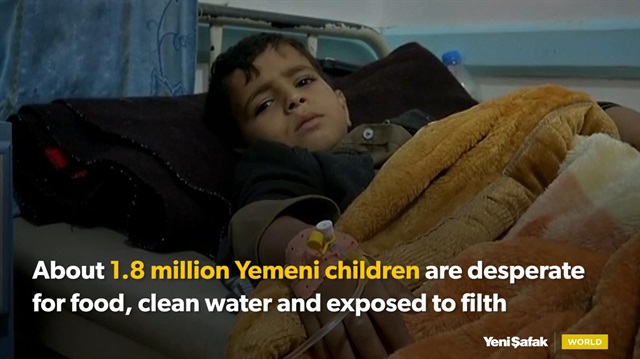
Starving Yemeni children struggle to battle cholera as conflicts continue
The following year, UN-sponsored peace talks in Kuwait failed to end the destructive conflict.
The violence has devastated Yemen’s infrastructure, including water and sanitation systems, prompting the UN to describe the situation as “one of the worst humanitarian disasters of modern times”.
Iran will continue to export oil despite U.S. sanctions, which are part of a psychological war doomed to failure, Iranian President Hassan Rouhani said on Monday.By reimposing sanctions on OPEC's third biggest crude producer, Washington wants to force Tehran to drop its ballistic missile programmes, further curb its nuclear work and limit its support for proxy militias from Syria to Lebanon and Yemen."We will not yield to this pressure, which is part of the psychological war launched against Iran," Rouhani said in a speech in the city of Khoy, broadcast live on state television."They have failed to stop our oil exports. We will keep exporting it ... Your regional policies have failed and you blame Iran for that failure from Afghanistan to Yemen and Syria," he added, to chants of "Death to America!".Iran remains hopeful that Europe can salvage nuclear dealRouhani said Washington lacked the necessary international support for its sanctions, and noted that it had granted temporary waivers to eight major buyers of Iranian oil."America is isolated now. Iran is supported by many countries. Except for the Zionist regime (Israel) and some countries in the region, no other country backs America's pressure on Iran," he said.The European Union, France, Germany, Britain, Russia and China, participants with the United States in the 2015 deal that lifted sanctions on Iran in exchange for curbs on its nuclear programme, have been trying to find ways to circumvent the U.S. limitations.In particular, the EU has been trying to establish a Special Purpose Vehicle (SPV) for non-dollar trade with Iran.Iran's carpet exporters eye new markets after sanctionsBut this has not stopped foreign businesses ranging from oil companies and trading houses to firms leaving Iran for fear of incurring U.S. penalties.Iran has threatened to exit the deal if its economic benefits are not preserved, but Foreign Ministry spokesman Bahram Qasemi told a news conference that it remained "hopeful that the Europeans can save the deal".The SPV was conceived as a clearing house that could be used to help match Iranian oil and gas exports against purchases of EU goods, circumventing the U.S. sanctions, which are based on the global use of the dollar for oil trade.The EU wanted to have the SPV set up by this month, but no country has offered to host it, six diplomats told Reuters last week."We expect EU to implement the SPV as soon as possible," Qasemi said. "Iran adheres to its commitments as long as other signatories honour theirs." 
Rouhani says Iran to continue oil exports and resist US economic war
Tamnoush, an Iranian company that makes fizzy drinks, has shut down its production line after 16 years and laid off dozens of workers. It was facing massive losses as U.S. sanctions pushed up the price of imported raw materials."All our 45 workers are jobless now. The men are driving taxis and women are back to being housewives," said CEO Farzad Rashidi.Reuters interviews with dozens of business owners across Iran show hundreds of companies have suspended production and thousands of workers are being laid off because of a hostile business climate mainly caused by new U.S. sanctions.The Iranian rial has fallen to record lows and economic activity has slowed dramatically since U.S. President Donald Trump withdrew from the big powers' nuclear deal with Tehran in May.Syria regime, Iran-backed groups propagating Shia faithHe imposed sanctions directed at purchases of U.S. dollars, gold trading, and the automotive industry in August. Iran's vital oil and banking sectors were hit in November."We have lost around five billion rials ($120,000 at the official rate) in the last few months, so the board decided to suspend all activities for as long as the fluctuations in the currency market continue. It is stupid to keep driving when you see it's a dead end," Rashidi said.The country has already experienced unrest this year, when young protesters angered by unemployment and high prices clashed with security forces. Official projections indicate unrest could flare up again as sanctions make the economic crisis worse.Four days before parliament fired him August for failing to do enough to protect the jobs market from sanctions, labour minister Ali Rabiei said Iran would lose a million jobs by the end of year as a direct result of the U.S. measures.Rouhani says Iran to continue oil exports and resist US economic warUnemployment is already running at 12.1 percent, with three million Iranians unable to find jobs.A parliamentary report in September warned that rising unemployment could threaten the stability of the Islamic Republic."If we believe that the country's economic situation was the main driver for the recent protests, and that an inflation rate of 10 percent and an unemployment rate of 12 percent caused the protests, we cannot imagine the intensity of reactions caused by the sharp rise of inflation rate and unemployment."The report said if Iran's economic growth remains below 5 percent in coming years, unemployment could hit 26 percent.Iran remains hopeful that Europe can salvage nuclear dealThe International Monetary Fund has forecast that Iran’s economy will contract by 1.5 percent this year and by 3.6 percent in 2019 due to dwindling oil revenues.PRODUCERS STRUGGLING Iran's vice president has warned that under sanctions Iran faces two main dangers: unemployment and a reduction in purchasing power."Job creation should be the top priority ... We should not allow productive firms to fall into stagnation because of sanctions," Eshaq Jahangiri said, according to state media.But business owners told Reuters that the government's sometimes contradictory monetary policies, alongside fluctuations in the foreign exchange market, price increases for raw materials, and high interest loans from banks have made it impossible for them to stay in business.Many have not been able to pay wages for months or had to shed significant numbers of workers.A manager at the Jolfakaran Aras Company, one of the biggest textile factories in Iran, told Reuters that the firm was considering halting its operations and hundreds of workers might lose their jobs."Around 200 workers were laid off in August, and the situation has become worse since. There is a high possibility that the factory will shut down," the manager said, asking not to be named.Ahmad Roosta, CEO of Takplast Nour, was hopeful that a drought in Iran would provide a boost for his newly launched factory, which produces plastic pipes used in agriculture."I will wait one or two months, but I will have to shut down if the situation remains the same ... The farmers, who are the main consumers of our products, cannot afford them," Roosta told Reuters.The sanctions have affected the Iranian car industry, which had experienced a boom after sanctions were lifted two years ago and it signed big contracts with French and German firms.French carmaker PSA Group suspended its joint venture in Iran in June to avoid U.S. sanctions, and German car and truck manufacturer Daimler has dropped plans to expand its Iran business.Maziar Beiglou, a board member of the Iran Auto Parts Makers Association, said in August that more than 300 auto parts makers have been forced to stop production, threatening tens of thousands of jobs in the sector.A spokesperson for Iran's Tire Producers Association blamed the government's "changing monetary policies over the last six months" for problems in the sector."Fortunately tire factories have not slowed down, but the production growth that we had planned for was not achieved,” Mostafa Tanha said in a phone interview from Tehran.YOUTH UNEMPLOYMENTWashington says economic pressures on Tehran are directed at the government and its malign proxies in the region, not at the Iranian people. But Iran's young people, bearing the brunt of unemployment, stand to lose the most.Maryam, a public relations manager in a food import company, lost her job last month."The prices went so high that we lost many customers ... In the end the CEO decided to lay off people and started with our department."She said the company had stopped importing, and people who still worked there were worried that it might shut down after selling off its inventory.Youth unemployment is already 25 percent in a country where 60 percent of the 80 million population is under 30.The unemployment rate among young people with higher education in some parts of the country is above 50 percent, according to official data.Armin, 29, has a mechanical engineering degree but lost his job in the housebuilding industry when the sector was hit by recession following the fall of rial."The property market is slowing because high prices have made houses unaffordable ... It is getting worse day by day," he told Reuters from the city of Rasht in northern Iran.Nima, a legal adviser for startups and computer firms, believes sanctions have already affected many companies in the sector that depended on an export-oriented model and hoped to expand in the region.He said even the gaming industry in Iran has felt the sanctions pinch: "The situation has become so severe that many of these teams decided to suspend development of their games and are waiting to see what will happen next. Without access to international markets, they see very little chance of making a profit."Saeed Laylaz, a Tehran-based economist, was more sanguine. He said youth unemployment was a product of Iran's demographics and government policies, and sanctions were only adding to an existing problem."The sanctions, the uncertainty in the market and Rouhani's zigzag policies have put pressures on the economy and the job market, but I predict that the market will find a balance soon," Laylaz told Reuters."We will defeat this round of sanctions as we have done in the past," said Laylaz who met Rouhani last month with other economists to offer advice on economic policies. 
Iranian jobs pay the price as US sanctions start to bite