

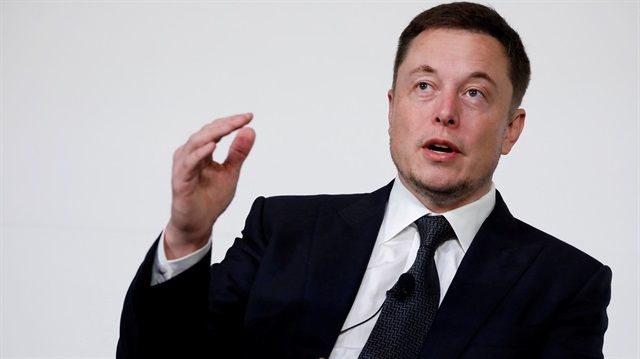
Elon Musk
Tesla Inc Chief Executive Elon Musk's decision to abruptly abandon a plan to take his electric carmaker private will not resolve his mounting regulatory and legal woes, and may even make them worse, some securities lawyers said.
Explaining his reversal in a late-night blog post on Friday, the billionaire CEO said that taking the company private “would be even more time-consuming and distracting than initially anticipated,” and that “most of Tesla’s existing shareholders believe we are better off as a public company.”
It was on Aug. 7 that Musk first surprised investors with his plan by tweeting that he had “funding secured” for a go-private deal, which would have had a value of $72 billion. In a separate tweet, he wrote: “Investor support is confirmed."
Tesla Motors Canada is suing the government of Ontario province over the cancellation of rebates to buyers of electric cars, Canadian media reported Thursday.Purchasers were able to garner as much as CAN$14,000 (US$10,636) toward the purchase, but newly elected Premier Doug Ford and his Progressive Conservative Party killed the plan in July.The suit claims that Tesla Canada was removed from a program where buyers of some electric vehicles could still get the rebates during a transition period to end the bonuses.Tesla says hundreds of purchasers of its cars where left hanging when the program ceased in July and were no longer eligible for the rebate.Tesla, Musk face SEC wrist slap at worst, experts say“The decision has already inflicted substantial harm on Tesla Canada in the form of lost sales and the creation of an impression among Ontarians that Tesla Canada may be singled out for future arbitrary treatment under the law,” says the statement filed by Tesla Aug. 10.The suit requests the court to quash Ford’s decision, adding that the government gave no reason for excluding Tesla from the Sept. 10 deadline for those who have had their vehicle delivered from a dealer. But it ended immediately for those who bought cars directly from the manufacturer, in this case Tesla.The Ontario Transportation Ministry said that because the case is now before the courts, it could not comment on the Tesla action.Tesla has agreed to refund the deposit to some buyers who said they cannot afford the purchase of a $71,000 car without the maximum government rebate of CAN$14,000.
Tesla sues Ontario government over car rebate program
Musk and Tesla are facing investor lawsuits and a U.S. Securities and Exchange Commission investigation into the truthfulness of the CEO'S Aug. 7 tweets, according to an Aug. 8 report by the Wall Street Journal.
The SEC declined to confirm that report to Reuters. A Tesla spokesman declined to comment.
"The SEC will continue its investigation until it's satisfied that it is on top of the facts," said Stephen Crimmins, an attorney with Murphy & McGonigle who spent 14 years at the SEC, where he prosecuted hundreds of securities cases.
Tesla CEO Elon Musk and the company itself may have little to fear from U.S. regulators according to legal analysts, despite Musk's failure so far to back up his early August tweet saying he had "funding secured" for his plan to take the electric car maker private.The U.S. Securities and Exchange Commission under President Donald Trump has moved away from the practice of leveling huge monetary penalties against corporations.That enforcement trend, according to four experts, could benefit Tesla as the company faces an SEC investigation of CEO Elon Musk's Aug. 7 tweet about "secured" financing for a private buyout of the company.“I expect Tesla to pay zero,” said Georgetown law professor Urska Velikonja, who is engaged in an ongoing analysis of SEC enforcement trends against companies and individuals.SEC Chair Jay Clayton has emphasized accountability for individual wrongdoers, rather than holding corporations responsible for employees' misconduct.Even if the commission ultimately concludes Musk's tweet was unfounded, the Tesla CEO's potential penalty would probably be less than $200,000, according to two securities law professors and a defense lawyer who tracks SEC enforcement at the SEC Actions blog.Tesla declined to comment on the experts’ assessment of potential exposure to the SEC.Lawyers from Wachtell Lipton Rosen & Katz, which represents Tesla CEO Musk, did not immediately respond to an email request for comment. The SEC declined to comment.Tesla forms three-member panel to look at any Musk dealSharp Drop in PenaltiesLast year, Georgetown's Velikonja documented a sharp drop in total penalties assessed by the commission after Clayton took over as chairman. This year – Clayton’s first full year as SEC chair – the decline is even more notable.According to Velikonja, the agency has assessed about $592 million in monetary penalties in cases settled in the first 10.5 months of fiscal year 2018, which ends next month. Those are the lowest aggregated SEC penalties in at least a decade, Velikonja said. The previous low, according to the Georgetown professor, was $656 million over the same 10.5 month-period in fiscal year 2012.Musk says Saudi fund pushed for two years to take Tesla privateThe drop in penalties reflects the SEC’s pivot away from the quasi-prosecutorial role it adopted after big financial frauds in the 2000s.“The Clayton administration is trying to bring the agency back to its roots in civil enforcement,” said securities defense lawyer Stephen Crimmins of Murphy & McGonigle. “The focus is on putting in place structural changes" to avert future misconduct, according to Crimmins.The commission has also emphasized penalizing individual wrongdoers rather than corporations, on the theory that shareholders should not bear the cost of their own deception. As a company, said Michigan law professor Adam Pritchard, Tesla issued a “measured and responsible” statement after Musk tweeted his go-private plan.“Tesla should not and won’t be sanctioned,” Pritchard said.What about Musk himself?The full story behind Musk’s tweet about the financing of a buyout is not publicly known, though Tesla on Monday posted a blog entry in which the CEO said he was referring to funding assurances from the Saudi Arabian sovereign wealth fund.Defense lawyer Crimmins said SEC investigators will likely look for documentary evidence and testimony to back or refute Musk’s assertion that he reasonably believed the Saudi fund would finance his contemplated buyout.SEC investigations can take years but Crimmins said this inquiry seems straightforward and could be concluded quickly.Thomas Gorman, a securities defense lawyer at Dorsey & Whitney who authors a blog about SEC enforcement, said the facts that have already emerged make it unlikely the SEC will bring a case against Musk. 'Not the stuff of government action'“While one might select better language if the sentence was wordsmithed, that (tweet) is not the stuff of a government enforcement action,” Gorman said.If the SEC does conclude Musk’s tweet was misleading, three experts said, his penalty will probably be a relatively paltry amount - less than $200,000.That amount could be higher, according to Crimmins, if the commission determines Musk’s tweet was fraudulent, not merely negligent.The SEC has so far targeted 63 individuals for reporting violations in fiscal year 2018, according to Velikonja’s analysis. They have paid on average a $75,000 penalty.Federal regulations permit the SEC to seek up to $160,000 from individuals for each securities violation. The SEC has in the past devised ways to multiply violations to increase penalties but defense lawyer Gorman and law professors Velikonja and Pritchard said the commission would probably count Musk’s tweet as a single violation if it determined the assertion of secure funding to have been misleading.“The value of the case for the SEC is sending a message," said Velikonja. “This would be the SEC saying, ‘We’re going to go after the biggest guys. We’re not afraid of Elon Musk.’”The commission can also seek injunctions. The most extreme punishment the SEC can impose is a prohibition on serving as an officer or director of a public company. Experts do not expect such a draconian penalty in the Tesla case, especially, according to Crimmins, because Musk is so integral to the company’s prospects.But if the commission finds a violation, the SEC could enjoin Musk and Tesla from future misleading communications. That sort of prohibition, said Michigan prof Pritchard, would mean more severe consequences for subsequent breaches of securities law.The SEC can even insist that Musk and Tesla agree to vet future market-moving tweets with securities lawyers before they’re posted, according to Crimmins.“That would be an elegant solution,” he said. 
Tesla, Musk face SEC wrist slap at worst, experts say
"What happened on Friday will be of interest to the SEC because it will allow them to probe whether Musk's pulling back from the go-private somehow indicates that he did not have a reasonable basis for his statement. They will be asking questions of him and others involved in the decision as to why he reversed course."
Musk has stuck to his original statement that he believed a deal was possible, and one person familiar with the discussions told Reuters that Musk was serious about taking the carmaker private.
But acting in good faith may not be enough to help Musk escape the regulator's gaze.
Tesla Inc's board named a special committee of three directors on Tuesday which will evaluate Elon Musk's proposals to take the company private, although it said it was yet to see a firm offer from the company's chief executive.Musk said on Monday he was in talks with a Saudi sovereign fund for taking the electric car maker private. He later tweeted he was working with buyout firm Silver Lake and investment bank Goldman Sachs Group Inc as financial advisers on his plan.The special committee is composed of independent directors Brad Buss, Robyn Denholm and Linda Johnson Rice.Buss served as chief financial officer of solar panel installer SolarCity for two years before retiring in 2016. Tesla bought SolarCity that year.Denholm, the first woman to join Tesla's board, is chief operations officer of telecom firm Telstra and the ex-CFO of network gear maker Juniper Networks.Rice, the first African-American and second woman to join the company's board, is the chairman of Johnson Publishing Co, home to Ebony and Jet magazines.The special committee has the authority to take any action on behalf of the board to evaluate and negotiate a potential transaction and alternatives to any transaction proposed by Musk, the company said in the statement.Latham and Watkins LLP has been retained by the committee as its legal counsel. Wilson Sonsini Goodrich and Rosati will be legal counsel for Tesla itself.Shares in Tesla, which are still well below highs hit when Musk initially raised the prospect of the transaction last week, inched up 0.7 percent in trading before the bell.Musk says Saudi fund pushed for two years to take Tesla private
Tesla forms three-member panel to look at any Musk deal
U.S. securities law requires public company executives to have a “reasonable basis” on which to make representations to the investing public, and that would likely be the focus of an SEC probe, said three securities lawyers.
It remains unclear what Musk meant by “funding secured.” In an Aug. 13 statement, Musk said that he left a July 31 meeting with the managing director of Saudi Arabia’s sovereign wealth fund “with no question that a deal ... could be closed.”
The Saudi fund had earlier acquired a just-below 5 percent stake in Tesla on the open market. But the fund has made no comment on whether it had promised to back a much larger Tesla go-private deal.
Saudi Arabia's sovereign wealth fund has been pushing to take electric carmaker Tesla private in talks with Chief Executive Elon Musk dating back nearly two years and also backed the deal last week, Musk said in a blog post on Monday.Musk last week shocked investors with his announcement on Twitter that he was looking to take Tesla private at $420 a share, valuing the company at $72 billion. He provided no details on funding except that it was "secured"."Going back almost two years, the Saudi Arabian sovereign wealth fund has approached me multiple times about taking Tesla private," Musk wrote in a blog post https://www.tesla.com/blog/upd... on Monday."They first met with me at the beginning of 2017 to express this interest because of the important need to diversify away from oil. They then held several additional meetings with me over the next year to reiterate this interest and to try to move forward with a going private transaction."Obviously, the Saudi sovereign fund has more than enough capital needed to execute on such a transaction."Musk said that since his Twitter posts last week the managing director of the Saudi fund had expressed support for proceeding with the deal subject to financial and other due diligence."I left the July 31st meeting (with the fund) with no question that a deal with the Saudi sovereign fund could be closed, and that it was just a matter of getting the process moving," Musk said."This is why I referred to 'funding secured' in the August 7th announcement." 
Musk says Saudi fund pushed for two years to take Tesla private
'FUNDING SECURED'
Musk said on Friday he believed there was plenty of potential funding to take the company private, but he did not provide any further details to bolster his "funding secured" assertion.
Teresa Goody, CEO of law firm Goody Counsel and a former SEC attorney, said Musk's statement on Friday appeared to undermine his Aug. 7 tweet that investor support was confirmed.
She also raised concerns about a second comment Musk made on Friday, where he said it had become apparent that compliance restrictions would prevent many of Tesla's institutional shareholders from holding private Tesla equity.
Both statements are likely to raise further questions among SEC officials as to whether Musk had performed sufficient due diligence to have had a reasonable basis for his Aug. 7 tweets, she said.
Another statement in the blog that could catch the eye of SEC officials is Musk's reference to his discussion with Tesla's board on Thursday, during which both parties decided not to pursue the deal, said M. Ridgway Barker, a partner and chair of the corporate finance practice at law firm Withersworldwide.
Such discussions are unlikely to be subject to legal privilege and the SEC could subpoena minutes of the meeting, he said.
“If the board discussion included that the deal is not financeable, or prohibitively expensive, that is going to cast further doubt over Musk’s claims,” he said.