

3 militants, 7 civilians killed, over 40 people wounded in clashes between Indian forces and Kashmiri protesters on Sunday
Kashmir has been observing a complete shutdown on Monday to protest the killing of seven Kashmiri civilians and three militants the previous day.
In Sunday's clashes, 43 others were also wounded in southern Kashmir's Kulgam district.
While the militants were killed in a gunbattle with the Indian forces, the civilian supporters were killed in a blast when they entered the house from where the militants had been fighting.
Indian forces use explosives to blow up the houses from which the militants fight during the gunbattles.
The call for Monday’s shutdown was made by the region’s pro-Independence leadership.
All business establishments, government offices, shops, educational institutions and transportation remained out of service.
The Indian authorities imposed curfew-like restrictions in several parts of the region to prevent pro-Independence protests and demonstrations.
An Indian court has ordered the trial of sexual harassment charges against one of world's leading climate change experts, Rajendra K. Pachauri, his lawyer said on Saturday.The 78-year-old Pachauri, who had previously chaired the United Nation's Intergovernmental Panel on Climate Change, had stepped down from the panel in 2015 following a sexual harassment complaint by a researcher at Pachauri's Delhi-based The Energy and Resources Institute (TERI). (https://reut.rs/2pZRAvQ)Pachauri denies the charges and has sought a speedy trial due to his old age, his counsel Ashish Dikshit told Reuters.Indian officials exchange blame for train plowing into festival crowdPachauri is accused of making physical advances, wrongful restraint, sending unwanted emails, and messages. He goes on trial just as the #MeToo movement sweeps India with a large number of women accusing public figures in the media and entertainment industry of sexual misconduct. A junior government minister resigned last week after women accused him of making physical advances in hotel rooms and in the office during his previous career as a journalist.India is also considering tightening sexual harassment laws, government officials told Reuters last week.The Delhi court has charged Pachauri under sections of the Indian Penal code including sexual harrassment and outraging the modesty of a woman.The trial begins on Jan. 4, his counsel said.India's Punjab state chief minister says train accident killed 59
India to put former top climate change official on trial for sexual harassment
India's railway officials and local community leaders traded blame on Saturday over an accident in which a train ran over scores of people gathered on the railway tracks for a festival in the northern city of Amritsar.Punjab state's Chief Minister Amarinder Singh told reporters on Saturday that 59 people had died with 57 injured in the accident and that an official inquiry would be carried out over the next four weeks.A large crowd had formed near the tracks on the city's fringe for the burning of effigies as part of a major Hindu festival on Friday when the train sped through the gathering in darkness, officials and witnesses said.Grieving relatives and residents, some of whom were still scouring the bloodied fields for belongings of their loved ones, said there was no warning from the train as it rolled down the tracks just as firecrackers exploded in the sky in the annual Dusshera festival.Video: Railway accident in India leaves 59 dead, dozens injured "I've been seeing this event every Dusshera from here and this has never happened before, the railways should have stopped or slowed down the train," said Deep Kumari, who watched the festival from the terrace of her house. "Everyone here knows this effigy burning happens here and there is a big crowd."India's state railways, largely built during British colonial rule, have long faced criticism for their safety record. A political focus on keeping fares low for the 23 million passengers who use the network daily has resulted in decades of underinvestment in rail safety infrastructure, critics say.Data from parliament in July showed that 49,790 people were killed by trains on the tracks in India between 2015 to 2017.Friday's accident was the worst in years but Manoj Sinha, the junior minister in charge of running the world's fourth largest rail system, said they couldn't be held responsible for people gathered on tracks.India's Punjab state chief minister says train accident killed 59"Railways cannot be blamed, railways were not informed about the ceremony. Why was it organised there? There was no notice given to the railways," he told reporters as he visited the site early on Saturday, surrounded by officials and police.Clothes were strewn and there were blood marks around the narrow railway lane on the outskirts of Amritsar where the accident occurred. Police said they were still looking to ascertain the number of dead as some bodies were mangled beyond recognition.Video footage running on television stations and social media showed giant effigies burning in the distance and crackers going off while the train runs through in the foreground. Many of the victims were shooting videos on their mobile phones or taking selfies.Witnesses also said that Friday's ceremony was delayed by a few hours because the chief guest was running late, which meant the event ultimately coincided with the train's scheduled arrival.Anger turned on Navjyot Kaur Sidhu, a former Punjab state lawmaker who came late for the burning of the effigies and then left just before the accident occurred.Bikram Singh Majitha, a leader of the regional Akali Dal party, said the effigy burning usually happens at sunset, not later."You can see from some of the videos that people shot that as soon as the effigy was lit, you can the train coming from the other side. It was horrific, the organisers must answer why the delay," he said.But Kaur, whose husband, Navjyot Singh Sidhu, is a former Indian Test cricketer and now a state minister, said effigies were burnt at six places in Amritsar and most of them were in fields near the tracks."The (railway authorities) should have at least issued directions to slow down the speed of the train. Such a big mistake," Kaur said on television. 
Indian officials exchange blame for train plowing into festival crowd
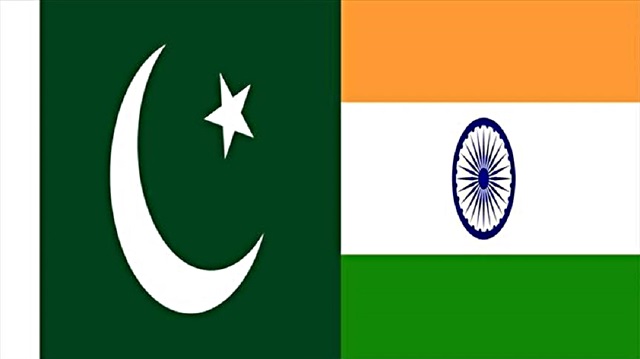
Jammu and Kashmir, a Muslim-majority Himalayan region, is held by India and Pakistan in parts and claimed by both in full. A small sliver of Kashmir is also held by China.
Since they were partitioned in 1947, the two countries have fought three wars -- in 1948, 1965 and 1971 -- two of them over Kashmir.
Also, in Siachen glacier in northern Kashmir, Indian and Pakistani troops have fought intermittently since 1984. A cease-fire came into effect in 2003.
Some Kashmiri groups in Jammu and Kashmir have been fighting against Indian rule for independence, or for unification with neighboring Pakistan.
According to several human rights organizations, thousands of people have reportedly been killed in the conflict in the region since 1989.
Five Kashmiri civilians and three militants were killed in southern Kashmir, police said Sunday.The militants were killed in a gunbattle with the Indian forces and a civilian was also shot dead in Kulgam area, police spokesman Manoj Pandita said.Four more civilians were killed in a blast soon after the gunbattle ended when they entered the house from where the militants had been fighting.Indian forces use explosives to blow up the houses from which the militants fight during the gunbattles.Hospital authorities confirmed the death of five people.Over 43 civilians have been reportedly wounded in the protests and clashes between people and the Indian forces that are being reported from several areas across the south.The pro-independence leadership called for a complete shutdown to be observed on Monday against the killings.Kashmir, a Muslim-majority Himalayan region, is held by India and Pakistan in parts and claimed by both in full. A small sliver of Kashmir is also held by China.Since they were partitioned in 1947, the two countries have fought three wars -- in 1948, 1965 and 1971 -- two of them over Kashmir.Also, in Siachen glacier in northern Kashmir, Indian and Pakistani troops have fought intermittently since 1984. A cease-fire came into effect in 2003.Some Kashmiri groups in Jammu and Kashmir have been fighting against Indian rule for independence, or for unification with neighboring Pakistan.According to several human rights organizations, thousands of people have reportedly been killed in the conflict in the region since 1989.
Three militants, five civilians killed in Kashmir