

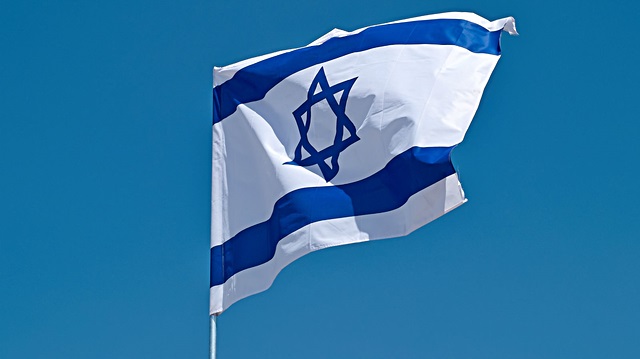
File photo
Israel’s espionage industry aids repressive regimes around the world, including some Muslim and Arab states, according to an extensive investigation carried out by Israeli daily Haaretz, findings of which were published Friday.
According to the newspaper, the investigation was based on 100 separate sources in 15 countries.
“Findings show that Israeli industry has not hesitated to sell offensive capabilities to many countries that lack a strong democratic tradition -- even when they have no way to ascertain whether the items sold were being used to violate the rights of civilians,” Haaretz reported.
According to testimony gathered during the investigation, Israeli surveillance equipment has been used to find and detain activists and dissidents in several countries.
Israel has deployed fresh troops and tanks to the Gaza-Israel buffer zone in anticipation of weekly Friday protests against its 12-year blockade of the Palestinian enclave.The Israeli Broadcasting Authority (IBA) reported Friday that the army had deployed “large numbers in south”, referring to the region of Israel that borders Gaza.“The nature of the Israeli army's response to violence along the fence [i.e., buffer zone] is expected to change with the deployment of armor and engineering and artillery forces around Gaza,” the IBA reported.On Thursday, Israel’s Security Cabinet ordered the military to step up its response to ongoing Palestinian demonstrations -- now in their seventh month -- along the buffer zone.Since the demonstrations began on March 30, more than 200 Palestinians have been martyred near the buffer zone -- and thousands more injured -- by Israeli army gunfire.Protesters demand the right to return to their homes and villages in historical Palestine, from which they were driven in 1948 to make way for the new state of Israel.They also demand an end to Israel’s 12-year blockade of the Gaza Strip, which has gutted the coastal enclave’s economy and deprived its roughly two million inhabitants of many basic commodities.Israeli army to step up response to Gaza demonstrationsUN signs agreements with Israeli security firms: ReportIsraeli Knesset rebukes Lieberman over ‘terrorist’ jibePalestinian gov’t condemns Israeli attacks in Gaza
Israel deploys fresh troops, tanks on Gaza’s outskirts
The investigation also found that Israeli firms had sold espionage equipment to buyers who were publicly known to be using them for malicious purposes.
Israeli companies, the probe found, had sold spying and intelligence-gathering software to more than 25 countries in Asia, Europe, Africa, Latin America and the Arab world.
These countries, according to Haartetz, include Bahrain, Indonesia, Angola, Mozambique, the Dominican Republic, Azerbaijan, Swaziland, Botswana, Bangladesh, El Salvador, Panama and Nicaragua.
The newspaper went on to say that the probe had corroborated earlier reports of Israeli sales to Mexico, Uzbekistan, Kazakhstan, South Sudan, Honduras, Peru, Colombia, Uganda, Nigeria, Ecuador and the United Arab Emirates, among others.
The United States will merge the U.S. Consulate General, which serves Palestinians, with its new embassy into a single diplomatic mission in Jerusalem, Secretary of State Mike Pompeo said on Thursday."This decision is driven by our global efforts to improve the efficiency and effectiveness of our operations," Pompeo said in a statement. "It does not signal a change of U.S. policy on Jerusalem, the West Bank, or the Gaza Strip."The consulate-general in Jerusalem is the top mission for Palestinians, who want East Jerusalem for their capital."We will continue to conduct a full range of reporting, outreach, and programming in the West Bank and Gaza as well as with Palestinians in Jerusalem through a new Palestinian Affairs Unit inside U.S. Embassy Jerusalem," Pompeo said.UN signs agreements with Israeli security firms: ReportHe said the Trump administration was committed to a peace effort between Israel and the Palestinians.U.S. President Donald Trump outraged the Arab world and stoked international concern by recognizing Jerusalem as Israel’s capital in December and moving the U.S. Embassy from Tel Aviv to Jerusalem in May.The status of Jerusalem is one of the thorniest disputes between Israel and the Palestinians and Palestinian leaders accused Trump of sowing instability by overturning decades of U.S. policy.Palestinians, with broad international backing, seek East Jerusalem as the capital of a state they want to establish in the occupied West Bank and the Gaza Strip.Israel regards all of the city, including the eastern sector it captured in the 1967 Middle East war and annexed, as its "eternal and indivisible capital," but that is not recognized internationally. The Trump administration has avoided that description, and noted that the city’s final borders should be decided by the parties. The ongoing Gaza rallies and Palestine’s unsung heroes
US to merge Jerusalem consulate in to new embassy
According to Haaretz, most of the employees with whom the newspaper spoke declined to have their testimonies appear in the report, mainly because they had signed strict non-disclosure agreements.
Those who agreed to discuss their role in the industry, meanwhile, appear in the report under false names.
“While some CEOs spoke, others preferred to toe the secrecy line and spout the usual response,” the paper asserted.
The Israeli Defense Ministry, for its part, said in a statement: “The Defense Exports Control Agency operates under the aegis of the Supervision Law to safeguard Israel’s strategic interests. The supervision is carried out according to [international] conventions and is applied in the light of international standards.”
It added: “The supervision policy is examined frequently in accordance with diverse considerations, including considerations of upholding human rights. The Foreign Ministry, which also attaches great importance to human rights, takes part in the decision-making process.”