

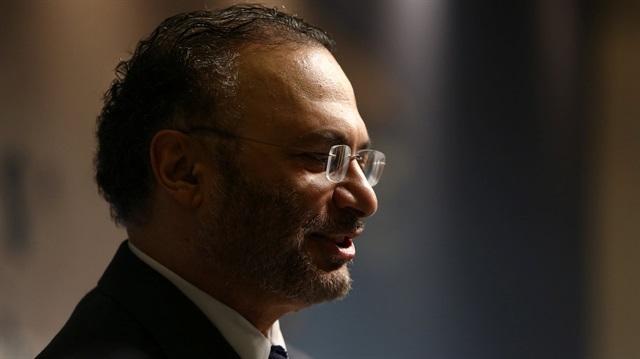
Minister of State for Foreign Affairs for the United Arab Emirates, Anwar Gargash
Washington's Gulf Arab allies should be included in proposed treaty negotiations with Iran over its ballistic missile programme and regional behaviour, a senior Emiriati official said on Thursday.
Brian Hook, U.S. special envoy for Iran, said on Wednesday the United States is seeking to negotiate a treaty with Iran to include Tehran's ballistic missiles and its regional behaviour.
Iran has rejected U.S. attempts to hold high-level talks since President Donald Trump tore up a nuclear deal between Tehran and six world powers earlier this year.
Anwar Gargash, United Arab Emirates Minister of State for Foreign Affairs, described Hook's comments as "important".
Iran's ambassador to the United Nations has asked in letters to its secretary-general and Security Council for condemnation of Israeli threats against Tehran and to bring Israel's nuclear programme under its supervision.Iranian state television said Gholamali Khoshrou has asked the United Nation to force Israel to join the Nuclear Non-Proliferation Treaty and bring its nuclear programme under supervision of the International Atomic Energy Agency (IAEA), a UN atomic watchdog.Israel bombs Iranian weapons-loaded aircraft in SyriaIran accuses French police of slow reaction to attack on Paris embassyEurope must offset US pullout from nuclear deal, says Iranian ministerPompeo rips Kerry for seeking to salvage Iran deal
Iran asks UN to condemn Israeli threats
"It is essential that the Gulf Arab states be a party to the proposed negotiations. It is prudent for Tehran to avoid sanctions and to take these proposals seriously," he tweeted.
The UAE, Saudi Arabia and Bahrain swiftly backed Trump's decision in May to withdraw from the nuclear accord and reimpose sanctions on Tehran. The Sunni Muslim-ruled states are at loggerheads with Shi'ite Iran, fighting a proxy war that has influenced conflicts in Iraq, Syria, Lebanon and Yemen.
The Gulf Arab states were not party to the nuclear accord, and while they were consulted by Western powers during the talks that led up to it, they played no direct role in those negotiations.
Secretary of State Mike Pompeo listed a dozen demands in May that he said could make up a new agreement, although Hook referred to a treaty, which would have to be approved by the U.S. Senate.
The United States is seeking to negotiate a treaty with Iran that will cover both its ballistic missile and nuclear programs, U.S. special envoy for Iran Brian Hook said on Wednesday ahead of UN meetings in New York next week."The new deal that we hope to be able to sign with Iran, and it will not be a personal agreement between two governments like the last one, we seek a treaty," he told an audience at the Hudson Institute.He said Iranian leaders were not interested in talking despite statements by President Donald Trump and Secretary of State Mike Pompeo that they would be willing to meet with officials. 
US seeks to negotiate a treaty with Iran