

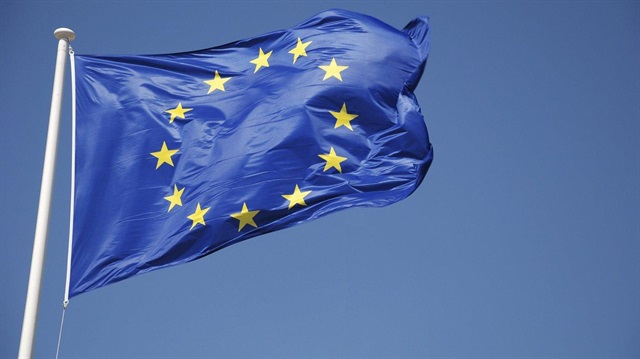
File photo
The European Union on Monday adopted a new sanction regime on individuals and entities that contribute to the development and use of chemical weapons.
The European Council adopted the new system of sanctions against the spread of chemical weapons during the EU Foreign Affairs Council in Luxembourg.
"The restrictive measures target persons and entities who are directly responsible for the development and use of chemical weapons as well as those who provide financial, technical or material support, and those who assist, encourage or are associated with them," said a written European Council statement.
The statement added that the EU will be able to impose the sanctions on persons and entities "regardless of their nationality and location."
"Sanctions consist of a travel ban to the EU and an asset freeze for persons, and an asset freeze for entities. In addition, EU persons and entities are forbidden from making funds available to those listed," it added.
Italy is resisting a European Union push to impose sanctions on states who carry out cyberattacks, a move that appears in line with Rome's calls to de-escalate tensions with Russia but that could alienate Italy from its EU allies.Diplomats said the sanctions plan is meant to strengthen EU defences and deterrence against cyberattacks, in particular from Russia, which has been in recent months at the centre of allegations of elections meddling in various Western states as well as security breaches conducted through electronic means.But Italy has opposed the idea of a new penalty regime, a confidential EU document seen by Reuters shows. The plan has broad support among EU states except for Italy, according to the document.Italian officials were not immediately available for comment.Italy has repeatedly urged a relaxation of the sanctions against Russia, which has been the target of a wide range of EU economic penalties since the 2014 Ukraine crisis.This position has been opposed by the large majority of EU states that have regularly renewed the sanctions regime against Moscow because of its annexation of Ukraine's Crimea region and continuing support for pro-Russian separatist rebels there.Slain Salvadoran bishop Romero and Pope Paul VI become saintsItalian, Ethiopian premiers discuss migration issueThe proposals for sanctioning cyberattacks were discussed in meetings this week in preparation for an EU summit that will take place next week in Brussels."Responding to large-scale cyberattacks from foreign actors, in particular when they are aimed at our elections, is vital," EU Security Commissioner Julian King told Reuters, adding that sanctions should be considered "where appropriate".Britain, France, Estonia, the Netherlands, Romania, Slovakia, Latvia, Lithuania and Poland called for the introduction of sanctions, the document shows.Belgium, Finland and Sweden support a "gradual response" to future attacks that could include a number of measures before sanctions, the document shows.Rome has long said that existing sanctions are damaging Italian firms trading with Moscow, and calls for de-escalating tensions with Moscow have grown louder since a new anti-establishment government took office in Italy in June.Matteo Salvini, leader of Italy's co-ruling far-right League, is an admirer of Russian President Vladimir Putin and has rejected allegations of Russian meddling in Western elections.EU diplomats said the plan was also aimed at preventing cyber-attacks from China and North Korea.UK Brexit minister to hold talks with EU on SundayDUP leader prefers no Brexit deal to EU 'annexation' of Northern Ireland
Italy resisting EU push to impose sanctions over cyberattacks