

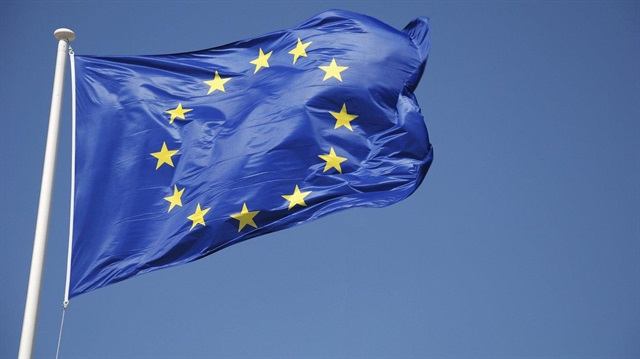
File photo
European Union leaders will discuss when they meet in Austria next week whether to hold a special summit on Brexit in November, a senior EU diplomat said on Thursday.
He also said, when asked by reporters, that the EU was continuing contingency preparations in the event there is no deal before Britain leaves next March.
Diplomats and EU officials say that governments have been discussing holding a special Brexit summit in Brussels around Nov. 13-15 on the assumption that a regular meeting on Oct. 18 will be too early to approve a potential deal with Britain on a withdrawal treaty.
The diplomat, briefing reporters, said further discussion on a November meeting would take place among heads of state and government when they meet in Salzburg next Wednesday and Thursday.
Uncertainty over drug regulation and a reluctance by Britain's health service to use certain pricey modern medicines pose a threat to the country's respected life sciences sector, the head Swiss drugmaker Roche said on Thursday.With only six months to go until the United Kingdom is due to leave the European Union, the highly regulated pharmaceuticals industry still does not know exactly how medicines oversight will function.Severin Schwan, chief executive of the world's biggest maker of cancer drugs, said in an interview that Europe was already slower than the United States to approve new medicines and there are fears the UK might fall further behind, jeopardising investment."The UK would get markedly less competitive and less interesting for the industry as a life science hub," he told Reuters. "For us, this is a very relevant question and if the regulatory system should not keep up with Europe, then this would be a big issue for us."Roche employs 2,100 staff in Britain and has been in the country since 1908. Staff work not only in the commercial business but also in a substantial drug development operation."It goes without saying that we give preference in research and development activities where we bring the medicines to patients first," Schwan said."Even though we very much appreciate the science and capabilities in the UK, it is not possible to disconnect that from access to innovative medicines."Schwan noted that the UK could, in theory, use Brexit to create an independent drugs regulator that was faster than the European Medicines Agency. However, he also said this would require large government investment in both staff and resources.In addition to uncertainty over the licensing of medicines, Schwan is also frustrated by curbs on access to some treatments within Britain's National Health Service.His company is in a bitter row over the health service's refusal to approve Ocrevus, the company's new drug for treating a highly disabling form of multiple sclerosis."We now have a situation where patients in need don't get the medicine. It's as simple as that," Schwan said.In preparation for potential supply disruption in the event of Britain leaving the EU without a deal with Brussels, the government has told drugmakers to build an additional six weeks of medicine stockpiles.Schwan said that Roche is increasing its stocks in line with peers and would be able to continue to supply patients in the event of a no-deal Brexit.EU tells Britain it won't renegotiate Brexit divorce bill
Roche boss says Brexit and curbs on drug use pose threat to UK science
Asked whether the Salzburg summit would give EU negotiator Michel Barnier a new mandate to discuss terms for Britain's future trade relationship with the Union, the diplomat said Barnier did not need such a formal mandate. He might, however, seek further guidance from leaders during the meeting.
He was asked about comments from British Brexit Secretary Dominic Raab that a failure to reach a deal on the withdrawal treaty would mean Britain not paying tens of billions of euros it has so far agreed to send to Brussels.
He said that if there were no treaty, many of the agreed terms would lapse. However, he said, there was a legal argument that Britain would still owe money to the EU under the terms of its existing membership obligations.
The European Union will not reconsider parts of the Brexit agreement with Britain that have already been agreed on, like the divorce bill London will have to pay, a spokesman for the bloc's executive said on Thursday.Prime Minister Theresa May suggested on Wednesday London could refuse to pay a financial settlement to the bloc if the sides fail to reach a comprehensive agreement on Britain's withdrawal from the EU."We will not be revisiting those areas of the withdrawal agreement that are now settled, including the financial settlement," the European Commission spokesman told a regular news conference.UK PM May says 'position change' on divorce payment if no Brexit dealBrexit rebels make proposals on Irish border issueRejecting Brexit plan is not a confidence vote on UK PM May: Conservative lawmaker
EU tells Britain it won't renegotiate Brexit divorce bill