

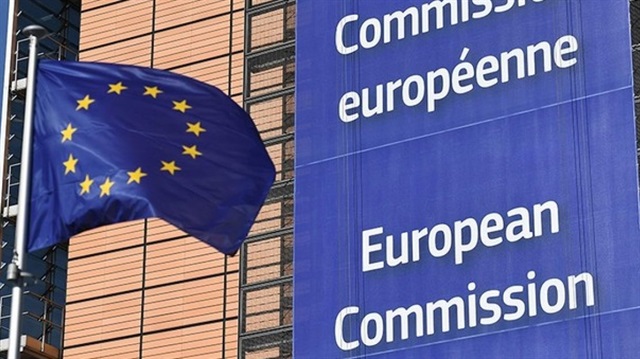
File photo
The European Union's executive in Brussels will hold a meeting this week with the authors of the U.N. report on Myanmar, which said on Monday that the southeast Asian state's military had "genocidal intent" in action against the Rohingya.
"Those responsible for alleged serious and systemic human rights violation must be held to account," said a spokeswoman for the European Commission. "Any further EU steps is something that would have to be discussed with the member states."
The spokeswoman said the U.N. report was timely as the situation in Myanmar was still "extremely serious".
Facebook said on Monday it was removing several Myanmar military officials from the social media website and an Instagram account to prevent the spread of "hate and misinformation" after reviewing the content.Facebook's action means an essential blackout of the military's main channel of public communication, with pages followed by millions of people in a country where the social media giant is virtually synonymous with the internet.The move places further pressure on the generals, coming hours after United Nations investigators said the army carried out mass killings and gang rapes of Muslim Rohingya with "genocidal intent". Their report said the commander-in-chief of Myanmar's armed forces and five generals should be prosecuted for orchestrating the gravest crimes under law."Specifically, we are banning 20 Burmese individuals and organizations from Facebook — including Senior General Min Aung Hlaing, commander-in-chief of the armed forces, and the military's Myawady television network," Facebook said in a blog post.Myanmar generals had 'genocidal intent' against Rohingya, must face justice: UN"We're removing a total of 18 Facebook accounts, one Instagram account and 52 Facebook Pages, followed by almost 12 million people," the Menlo Park, California-based company added.It is the first time Facebook has imposed such a ban on a country's military or political leaders, the company later said it response to a query from Reuters.Facebook spokeswoman Clare Wareing said by email that the social media site took this step, "since international experts, including a UN-commissioned report, have found evidence that many of these officials committed serious human rights abuses in the country."Colonel Zaw Min Tun, an official in the military's public information unit, told Reuters he was not aware the pages had been removed. He declined to comment further. Government spokesman Zaw Htay was not immediately available for comment.EU executive to hold meeting this week on UN Myanmar reportA preview of Min Aung Hlaing's Facebook page was still accessible immediately after the announcement and showed it had been "liked" by 1.3 million people. When Reuters attempted to return to it later it had been removed.HATE SPEECHEarlier this month, Reuters published an investigative report about how Facebook had failed to combat a campaign of hate speech against the Rohingya and other Muslims.The piece, which found more than 1,000 posts, comments and images attacking Muslims on the platform, demonstrated that Facebook, despite repeated warnings, had devoted scant resources to controlling the problem in Myanmar, where it is the dominant social media force. (For the Reuters investigation on 'Why Facebook is losing the war on hate speech in Myanmar' click, https://www.reuters.com/investigates/special-report/myanmar-facebook-hate/)Facebook said a day after publication of the investigation it had been "too slow" to address hate speech in the Southeast Asian country and it was acting to remedy the problem by hiring more Burmese speakers and investing in technology to identify problematic content.The U.N. investigators highlighted the role of social media in Myanmar in Monday's report. "Facebook has been a useful instrument for those seeking to spread hate, in a context where for most users Facebook is the Internet," said the report.Min Aung Hlaing has built a substantial social media profile in Myanmar, with the commander-in-chief's page sometimes updated several times a day.Some of the military's Facebook posts from last year included detailed accounts of clashes with Rohingya militants, often accompanied by pictures.A year ago, government troops led a crackdown in Myanmar's Rakhine State in response to attacks by Rohingya insurgents on 30 police posts and a military base.As a result, some 700,000 Rohingya fled to neighbouring Bangladesh, according to U.N. agencies, bringing stories of rape, arson and arbitrary killings.Myanmar has denied allegations made by refugees, saying its troops engaged in lawful counterinsurgency operations against Muslim militants. 
Facebook removes top Myanmar military official, others from website
The EU has sanctions on Myanmar but has shied away from targeting the commander-in-chief so far. The U.N. investigators said in their report the commander-in-chief and five generals should be prosecuted for orchestrating the gravest crimes under law.
The Myanmar government, which was sent an advance copy of the U.N. report in line with standard practice, has not commented.
Myanmar's military carried out mass killings and gang rapes of Muslim Rohingya with "genocidal intent" and the commander-in-chief and five generals should be prosecuted for the gravest crimes under international law, U.N. investigators said.In a report, they called for the U.N. Security Council to set up an ad hoc tribunal to try suspects or refer them to the International Criminal Court in the Hague. The Security Council should also impose an arms embargo on Myanmar and targeted sanctions against individuals most responsible for crimes.They blamed the country's de facto civilian leader, Nobel Peace Prize winner Aung San Suu Kyi, for failing to use her "moral authority" to protect civilians. Her government "contributed to the commission of atrocity crimes" by letting hate speech thrive, destroying documents and failing to shield minorities from crimes against humanity and war crimes.Verdict on Myanmar’s Reuters journalists postponedThe report also criticised Facebook for allowing the world's biggest social media network to be used to incite violence and hatred. Facebook responded on Monday by announcing that it was blocking 20 Myanmar officials and organisations found by the U.N. panel to have "committed or enabled serious human rights abuses".Contacted by phone, Myanmar military spokesman Major General Tun Tun Nyi said he could not immediately comment. The Myanmar government was sent an advance copy of the U.N. report in line with standard practice.Zaw Htay, spokesman for Suu Kyi's government, could not immediately be reached for comment. Reuters was also unable to contact the six generals named in the report.A year ago, government troops led a brutal crackdown in Myanmar's Rakhine state in response to attacks by the Arakan Rohingya Salvation Army (ARSA) on 30 Myanmar police posts and a military base. Some 700,000 Rohingya fled the crackdown and most are now living in refugee camps in neighbouring Bangladesh.Pompeo decries 'abhorrent ethnic cleansing' in Myanmar on anniversaryThe U.N. report said the military action, which included the torching of villages, was "grossly disproportionate to actual security threats"."The crimes in Rakhine State, and the manner in which they were perpetrated, are similar in nature, gravity and scope to those that have allowed genocidal intent to be established in other contexts," said the U.N. panel, known as the Independent International Fact-Finding Mission on Myanmar.Suu Kyi's government has rejected most allegations of atrocities made against the security forces by refugees. It has built transit centres for refugees to return, but U.N. aid agencies say it is not yet safe for them to do so.Solidarity groups mark first year of Rakhine massacreMORAL AUTHORITYSuu Kyi "has not used her de facto position as Head of Government, nor her moral authority, to stem or prevent the unfolding events, or seek alternative avenues to meet a responsibility to protect the civilian population", the report said.The United Nations defines genocide as acts meant to destroy a national, ethnic, racial or religious group in whole or in part. Such a designation is rare, but has been used in countries including Bosnia, Rwanda and Sudan.In the final 20-page report, the panel said: "There is sufficient information to warrant the investigation and prosecution of senior officials in the Tatmadaw (army) chain of command, so that a competent court can determine their liability for genocide in relation to the situation in Rakhine state."Marzuki Darusman, chair of the panel, said commander-in-chief Min Aung Hlaing should step down pending investigation.One year since exodus, Rohingya in Bangladesh on the edge"Accountability can only take place both from the point of view of the international community but also from the people of Myanmar if the single most significant factor is addressed. And that is the role of the commander-in-chief, Min Aung Hlaing."The list of generals also included Brigadier-General Aung Aung, commander of the 33rd Light Infantry Division, which oversaw operations in the coastal village of Inn Din where 10 Rohingya captive boys and men were killed.That massacre was uncovered by two Reuters journalists - Wa Lone, 32, and Kyaw Soe Oo, 28 - who were arrested last December and are being tried on charges of violating Myanmar's Official Secrets Act. The court had been due to deliver a verdict on Monday, but at a brief hearing postponed the hearings until Sept. 3.In April, seven soldiers were sentenced to 10 years in prison for participating in the Inn Din killings.Video: Turkish foundation distributes meat to Rohingya refugees in BangladeshOther generals named in the report included army deputy commander-in-chief Vice Senior-General Soe Win; the commander of the Bureau of Special Operations-3, Lieutenant-General Aung Kyaw Zaw; the commander of Western Regional Military Command, Major-General Maung Maung Soe; and the commander of 99th Light Infantry Division, Brigadier-General Than Oo.Panel member Christopher Sidoti said "the clarity of the chain of command in Myanmar" meant the six generals must be prosecuted, even in the absence of a "smoking gun" piece of evidence to prove who had ordered the crimes."We do not have a copy of a direct order that says 'undertake genocide tomorrow please'. But that is the case almost universally when cases of genocide have gone before the courts," Sidoti said.Darusman said a wider confidential list of suspects included civilians and insurgents as well as members of the military.Video: Rohingya sufferings know no end as flooded camps add to misery"OPPRESSION FROM BIRTH TO DEATH"The U.N. panel, set up last year, interviewed 875 victims and witnesses in Bangladesh and other countries, and analysed documents, videos, photographs and satellite images.Decades of state-sponsored stigmatisation against Rohingya had resulted in "institutionalised oppression from birth to death", the report said.The Rohingya, who regard themselves as native to Rakhine state, are widely considered as interlopers by Myanmar's Buddhist majority and are denied citizenship."The Tatmadaw acts with complete impunity and has never been held accountable. Its standard response is to deny, dismiss and obstruct," the U.N. report said.EU executive to hold meeting this week on UN Myanmar reportMembers of the panel had accused Facebook in March of allowing its platform to be used to incite violence. The report said the social media company should have acted quicker."Although improved in recent months, Facebook's response has been slow and ineffective. The extent to which Facebook posts and messages have led to real-world discrimination and violence must be independently and thoroughly examined," it said.In a statement announcing its action on Monday, Facebook said it was removing 18 Facebook accounts, one Instagram account and 52 Facebook pages."The ethnic violence in Myanmar has been truly horrific. Earlier this month, we shared an update on the steps we’re taking to prevent the spread of hate and misinformation on Facebook. While we were too slow to act, we’re now making progress – with better technology to identify hate speech, improved reporting tools, and more people to review content."Facebook had acknowledged in a statement issued 10 days ago following a Reuters investigative report into its failure to combat hate speech against the Rohingya and other Muslims in Myanmar that it had been "too slow" to address the problem.Facebook removes top Myanmar military official, others from website
Myanmar generals had 'genocidal intent' against Rohingya, must face justice: UN