

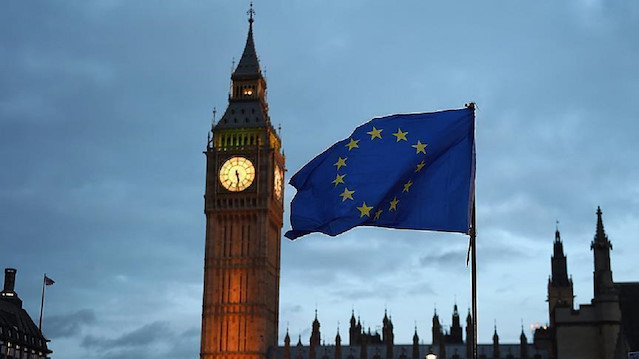
File photo
The European Union wants Britain to stick to the bloc's rules on state aid, environment and workers' rights after Brexit to prevent it from gaining unfair access to the Europeans' single market, diplomatic sources and officials told Reuters.
The EU sees this as key to ensuring a "level playing field" should the so-called Irish border backstop kick in after Brexit, tying all of the United Kingdom in a customs zone with the bloc.
"It is important that Britain would not undercut our own products on our own market in the all-UK Irish backstop," one source said of the EU demand that comes as the two sides are seeking a Brexit deal as soon as this month.
The EU has made concessions on the biggest hurdle in the talks - the Irish border backstop or an emergency fix to ensure the frontier there stays open regardless of how Brexit goes - but there are still differences on the life span of such a solution, a review mechanism or the depth of regulatory alliance under the all-UK backstop, which has been sought by London.
The EU has presented the three areas as the bare minimum it deems necessary, complemented by no internal trade tariffs or quotas and the same external tariff.
It does not want to allow Britain to be able to pull out unilaterally but proposes that any such decision could be done by a joint committee.
The bloc is now waiting on whether British Prime Minister Theresa May can get her cabinet and parliament behind that.
Should that be possible, EU and British Brexit negotiators would recommend that "decisive progress" has been achieved in Brexit talks and the EU would call a special summit of its 27 national leaders to endorse it.
While it is still possible later in November, Irish Prime Minister Leo Varadkar warned on Wednesday that chances for a deal this month were fading.
For Britain, it is important to lock a deal before the turn of the year to give businesses the clarity they need to plan for the first quarter of 2019 when Britain is due to become the first country ever to leave the EU.
The European Union would have to see a breakthrough on Brexit within a week if its leaders are to endorse any deal with Britain in November, several official and diplomatic sources in Brussels said on Wednesday.An EU summit tentatively scheduled for Nov. 17-18, is no longer on the cards due to a lack of the "decisive progress" towards a final deal on the Irish border, the sources told Reuters on a day when EU summit chair Donald Tusk spoke to Prime Minister Theresa May to discuss how to proceed.An update of EU national envoys in Brussels from the bloc's negotiators was delayed from Wednesday to Friday - an indication that EU negotiator Michel Barnier's team is still waiting for a response from London on proposed compromises on a mechanism to avoid Brexit disrupting the sensitive Irish border.Some diplomats have speculated that May could use her visit to Belgium for World War One commemorations on Friday to make a dash to Brussels to lock in an agreement, if she gets her cabinet behind it by then.Leaked British memo gives a taste of PM May's possible Brexit finaleBarnier needs to see "decisive progress" in the talks to recommend to Tusk that a summit should be called.Irish Prime Minister Leo Varadkar said on Wednesday that as the days went by a summit in November was getting less likely.He noted that the EU will hold a regular summit on Dec. 13-14, though EU officials say it might still be worthwhile holding a special summit earlier in December.For now, EU sources said the bloc was waiting for a response from London on whether it would accept the proposed compromise solutions worked out between British and EU negotiators on the emergency fix to ensure the Irish border stays open.A meeting of May's cabinet on Brexit on Tuesday had not produced enough clarity, they said.EU's Tusk, Britain's May discuss 'way ahead' on BrexitIRISH BORDEROne thing they are looking at is linking a possible extension of a status-quo transition period after Brexit next March with the backstop to make the latter more palatable to London, the sources said.The post-Brexit transition period is due to end at the end of 2020. Should no deal on EU-UK ties be ready to regulate their relationship and maintain the invisible border between EU state Ireland and Britain's province of Northern Ireland from then on, the border backstop would kick in.In an earlier compromise, the EU negotiators tentatively agreed to have a joint customs zone with all of the United Kingdom in such a scenario, complemented by keeping Northern Ireland inside the full EU customs union to prevent extensive checks on what will become the only EU-UK land border.EU court sets Nov. 27 hearing on Brexit reversal caseLondon opposes the specific Northern Ireland element, saying it would pull the province away from mainland Britain. If the sides agree an extension of the transition period, it would delay in time any prospect of the backstop being activated.It would also give the EU and UK more time to negotiate the all-UK customs arrangement, which has been sought by London but which the bloc says would likely take more time to work out.As well as a review mechanism for the backstop - which London wants to be able to get out of and the EU insists must be permanently available or else is no real insurance policy - a decision mechanism for extending the transition period is under discussion.The EU rejects Britain's push to be able to walk away from these unilaterally, sources in Brussels said. Barnier's team is due to update EU ministers from the 27 member states on Monday.We're not afraid of UK election if Brexit deal falls short: N.Irish DUP
November Brexit summit requires deal breakthrough in days: EU sources
A memorandum leaked from within the British government gives a taste of a possible finale to the Brexit drama: Prime Minister Theresa May hails a deal in just over 10 days, supporters cheer as arranged, and the pact is put to a vote in parliament on Nov. 27.May's office dismissed the document, which was published on Tuesday by the BBC, and said the poor spelling and childish language indicated it did not represent government thinking, though a spokesman did not explicitly deny the document was genuine.Less than five months before the United Kingdom is due to leave the European Union on March 29, a deal is nearly done, but officials have repeatedly cautioned they are still haggling over the Irish border issue.EU's Tusk, Britain's May discuss 'way ahead' on BrexitAccording to the communications memorandum, headed "Brexit Communications Grid Summary", May's cabinet was to review the deal on Nov. 6, with Brexit Secretary Dominic Raab announcing decisive progress on Nov. 8.After a deal was clinched, leaders such as Japan's prime minister would tweet in support. Irish Prime Minister Leo Varadkar's name was spelled incorrectly."The big picture is that a deal is close," said Anand Menon, professor of European politics at King's College.EU court sets Nov. 27 hearing on Brexit reversal caseLike others named in the document as figures who should publicly back the deal, Menon said he had not been contacted about giving choreographed support."The big unknown is we don't know how parliament will respond to the deal," he said.It is unclear whether May can get the British parliament to support a Brexit deal: About 320 votes are needed to win, but May's 315 Conservative lawmakers are not united behind her plans.We're not afraid of UK election if Brexit deal falls short: N.Irish DUPThe memo said the vote would take place on Nov. 27:"Evening is the vote. HISTORIC MOMENT, PUT YOUR OWN INTERESTS ASIDE, PUT THE COUNTRY’S INTERESTS FIRST AND BACK THIS DEAL," the leaked document said.If May fails to clinch a Brexit deal with the EU, or parliament votes down her deal, then the United Kingdom would face leaving the EU without a divorce deal, and thus without a transition period.Many business chiefs and investors fear a "no-deal" Brexit would weaken the West, panic financial markets and block the arteries of trade. 
Leaked British memo gives a taste of PM May's possible Brexit finale
European Council President Donald Tusk said he discussed the "way ahead" on Brexit negotiations with British Prime Minister Theresa May on Tuesday."Phone call with PM Theresa May this morning to take stock of progress in Brexit talks and discuss way ahead," said Tusk, whose task it will be to decide whether and when to call a summit of EU leaders to endorse any deal that is reached.EU court sets Nov. 27 hearing on Brexit reversal caseWe're not afraid of UK election if Brexit deal falls short: N.Irish DUP
EU's Tusk, Britain's May discuss 'way ahead' on Brexit
Judges at the European Union's highest court will hear a case on the Brexit process on Nov. 27, reviewing whether Britain could unilaterally withdraw its decision to leave the EU, the Court of Justice said in a statement on Wednesday.The case was raised to the Luxembourg justices by a Scottish court, where politicians opposed to Brexit asked for a ruling to clarify the interpretation of Article 50 of the EU treaty, under which London last year gave two years' notice of its departure.No other member state has ever left the 60-year-old bloc.Establishing that reversing the Brexit process can be done without the approval of other EU states would, argue those who brought the case, boost their argument that British lawmakers should block the withdrawal before it happens on March 29.Leaked British memo gives a taste of PM May's possible Brexit finaleIt is not clear when the ECJ might rule on the issue, known as the Wightman Case after Andy Wightman, a member of the Scottish parliament from the Green party, who led the action.A court official said that typically, under the court's "expedited procedure" for urgent matters, a ruling would be made three to six months after such a hearing. However, the ECJ noted in an order last month that there was "undeniably" a need for an urgent ruling before the British parliament votes on whether or not to accept a treaty with the EU setting out divorce terms.British Prime Minister Theresa May insists that Britain will leave the EU in March. But she faces a battle in parliament to approve any potential treaty, on which negotiations are deadlocked over how to manage the Irish border. In principle, she could seek a parliamentary vote as early as this month.A leaked government memo published by the BBC on Tuesday suggested that the date of the Luxembourg hearing, Nov. 27, could be exactly the day that May asks lawmakers to vote -- leaving the ECJ's opinion in the matter moot.We're not afraid of UK election if Brexit deal falls short: N.Irish DUPA spokeswoman for May's government said that it was seeking to appeal the decision by Scotland's Court of Session to go to the ECJ at Britain's Supreme Court. "It remains a matter of firm policy that we will not be revoking the Article 50 notice, and we will not comment further on ongoing litigation," she added.On Tuesday, the government said it had submitted written observations to the ECJ, restating its position that the court should dismiss the case as it has long refused to rule on hypothetical questions or provide advisory opinions.Article 50 of the EU's Lisbon Treaty sets a two-year limit for a state to negotiate a withdrawal treaty with the EU. That treaty must be approved by a specially calculated majority of the other member states. The article also says the two-year negotiation period can be extended if all other states agree.It does not address the issue of whether the country asking to leave can simply change its mind and retain membership without seeking the approval of the other EU countries.
EU court sets Nov. 27 hearing on Brexit reversal case