

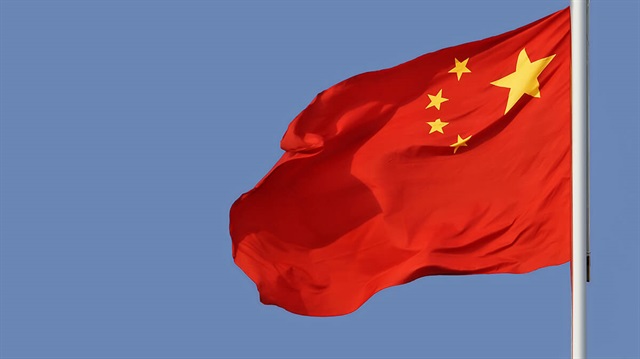
File photo
China said on Friday that it resolutely opposed Malaysia's decision to release 11 ethnic Uighur Muslims from detention and send them to Turkey, disregarding China's request to hand them to Beijing.
China was in the process of verifying details with Malaysia and hoped that the Southeast Asian nation would "attach great importance" to its concerns, China's Foreign Ministry said in a faxed statement to Reuters.
"These people are all Chinese nationals. We resolutely oppose them being deported to a third country," it said.
Prosecutors in Muslim-majority Malaysia dropped charges against the Uighurs on humanitarian grounds and they arrived in Turkey after flying out of Kuala Lumpur on Tuesday, their lawyer, Fahmi Moin, said on Thursday.
Chinese authorities are yet again targeting Muslims, with their latest venture raising eyebrows as to how far they will really go to suppress Islam in the country.Most recently, the administration changed the name of the Aiyi River, which flows through the Ningxia region of China, saying that it sounded too much like Ayesha, the name of one of Prophet Muhammad’s wives.The new, more Chinese and less “Arabic-sounding” name of the river is now “Diannong,” an old name for the capital of Ningxia, in an effort to reduce Islamic influence in the country.Previously mosques have been demolished, buildings have been stripped of their Islamic décor, and the Muslim Uighurs in the East Turkestan region have been persecuted by the government for years.Approximately 2 million Muslims live in the Ningxia region, while there are overall 23 million in China.
China changes river’s name for sounding too ‘Islamic’
The Malaysian government has yet to comment on the matter.
The Uighurs in Malaysia were part of a group of more than 200 detained in Thailand in 2014.
Although they identified themselves as Turkish citizens and asked to be sent to Turkey, more than 100 were forcibly returned to China in July 2015, sparking international condemnation.
The Uighurs were detained and charged with illegally entering Malaysia after breaking out of the Thai prison last November by punching holes in a prison wall and using blankets as ladders.
China is mounting an increasingly sophisticated counterattack to criticism of its policies in the restive, heavily Muslim region of Xinjiang, courting foreign media and running opinion pieces abroad as it seeks to spin a more positive message.Beijing has faced an outcry from activists, scholars, foreign governments and U.N. rights experts over mass detentions and strict surveillance of the mostly Muslim Uighur minority and other Muslim groups who call Xinjiang home.The United States is even looking at sanctions on senior Chinese officials and companies linked to allegations of human rights abuses there, which would further ratchet up tension amid their blistering trade war.China says Xinjiang faces a serious threat from militants and separatists and has rejected all accusations of mistreatment in an area where hundreds have been killed in recent years in unrest between Uighurs and members of the ethnic Han Chinese majority.Video: China continues to persecute Uyghur Muslims, demolish mosquesOfficials say they are putting some people through "vocational" style courses to rein in extremism, and have denounced hostile foreign forces for sowing misinformation.In an opinion piece last week in the Jakarta Post entitled "Xinjiang, what a wonderful place," China's ambassador to Indonesia, Xiao Qian, wrote that religious rights were respected and protected there and attacks were "anti-religion in nature".He added, "But regrettably, a few institutions and people from the West pursue double standards, deliberately distorting the facts, speculating on the so-called 're-education camps' and misrepresenting (the) Chinese government's efforts to prevent religious extremism and promote deradicalisation."China's ambassador to Britain, Liu Xiaoming, has also written to the Financial Times and the Economist to defend its policy on Xinjiang.Chinese bishops to attend Vatican synod for first timePrivately, however, China has not been so willing to discuss Xinjiang with foreign diplomats, say two diplomats who have attended meetings with Chinese officials."They just shut you down," said one of the diplomats.PUTTING ITS SIDELast month, the Chinese government invited a small group of foreign reporters to a briefing on the sidelines of a U.N. human rights meeting in Geneva, to put its side of the story in unusually strong and outspoken terms.Li Xiaojun, publicity director at the Bureau of Human Rights Affairs of the State Council Information Office, which is the office of the Chinese cabinet's spokesman, denied mistreating Muslims in Xinjiang, and said China was trying to avoid the problems of radicalisation Europe had experienced."Look at Belgium, look at Paris, look at some other European countries," Li said, referring to recent terror attacks in these locations blamed on extremists. "You have failed."Video: China brutally tortures Uyghur MuslimsGovernment officials at the Geneva event were accompanied by five Chinese academic experts, who all remained silent when asked if they had any criticism of China's human rights record.The five said they had not been to Xinjiang recently.Asked how they knew about conditions there, Wang Xiaolin, a professor at Shanghai's Fudan University, said there were a lot of information channels, such as television broadcasts, social media, and information shared by business people, tourists and academics and friends who travelled there.It is hard to quantify whether anyone is paying attention to what China has been saying on Xinjiang. Ambassador Xiao's piece for the Jakarta Post was roasted by followers of the paper's Facebook and Twitter pages as Chinese "propaganda".Asked about China's efforts to put its side of the story and whether its messaging had been effective, the Foreign Ministry said the region was stable and prosperous, with no attacks for more than a year."On Xinjiang matters, the Chinese people have the most right to speak," it said in a short statement sent to Reuters.Foreign human rights groups and exiles have been unimpressed with China's defence, and held their own panel in Geneva."What we are seeing now in East Turkestan is more than just repression: it is an intentional campaign of assimilation by the Chinese government targeting the Uighur identity," said Dolkun Isa, president of the exiled World Uyghur Congress, using the term the community employs to refer to Xinjiang.China has sought to cast its security crackdown in resource-rich Xinjiang - strategically located on the borders of Afghanistan, central Asia, India and Pakistan - as part of the wider global "war on terror".All countries have a responsibility to protect their security and that of their citizens, Vice Foreign Minister Le Yucheng told the Financial Times in an interview published last week, whose transcript was released by the foreign ministry."The Chinese government will not permit Xinjiang to become a second Syria, Libya or Iraq," said Le, an increasingly influential voice in China's diplomacy, whom diplomatic sources in Beijing say is tipped as a possible future foreign minister."If upheaval in Xinjiang spreads outside the borders, it will affect the stability of central Asia and the Middle East, and maybe spread to Europe." 
China mounts publicity campaign to counter criticism on Xinjiang
Malaysia's move is likely to strain ties with China, already tested since Mahathir Mohamad became prime minister after a stunning election victory in May and cancelled more than $20 billion worth of projects awarded to Chinese companies.
In February, Reuters reported that Malaysia was under great pressure from China to deport the men there, citing sources. Some Western missions sought to dissuade it from sending them to China, which has been accused of persecuting Uighurs.
Beijing accuses separatist extremists among the Uighur minority of plotting attacks on China's Han majority in the restive far western region of Xinjiang and elsewhere.
China has been accused of rights abuses in Xinjiang, torture of Uighur detainees and tight controls on their religion and culture. It denies wrongdoing.
In February, Malaysia said it was considering China's request to extradite the 11 men. In the past, it has sent some detained Uighurs to China.
Their detention came as Malaysia drew closer to China under former prime minister Najib Razak, but 93-year-old Mahathir, in his second stint as premier, has been vocal in backing Muslim communities against persecution.
In its statement on Friday, China's Foreign Ministry said it was against illegal immigration in any form.