

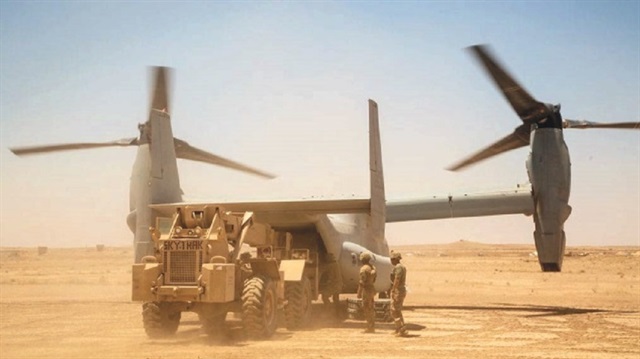
File photo
The Washington administration, which intends to maintain a permanent presence in Syria, has completed the construction of three advanced radar systems in Syria’s Hasakah-Tal Baidar countryside along with the Ayn al-Arab and Sarrin regions, and has set up 13 portable and fixed observation-intelligence radar systems.
Speaking to Yeni Şafak daily, former Commander of Syria's Deir Ezzor Military Assembly Fayez al-Esmer evaluated the U.S.’s latest moves in Syria and said that in an addition to all attempts to protect Kurdistan Workers’ Party (PKK) terrorists in the region, Pentagon is in preparation to set up a missile defense shield in Syria’s Hasakah and Rmeilan.
“The U.S.’s next step is to build a missile defense shield in the region which must be considered as a part of Washington’s long-term plan for chaos in the region,” he said.
The U.S. has already begun to create a new no-fly-zone in northern Syria, the same tactic used in the 1991 occupation of Iraq, and started to install advanced radar systems in a 26,000 square kilometer area occupied by the Syrian affiliate of the Kurdistan Workers’ Party (PKK), the PYD, east of the Euphrates.
The U.S. is in preparation to create a new no-fly-zone in northern Syria, the same tactic used in the 1991 occupation of Iraq, and has already started to install advanced radar systems in Kobani and Hasakah, areas occupied by the Syrian affiliate of the Kurdistan Workers’ Party (PKK), the PYD, east of the Euphrates.The advanced radar installation has been established at U.S. bases at the Ayn al-Arab military airport and the town of Rumeilan in Hasakah Province, according to sources.Pentagon’s preparation for a no-fly-zone indicates that the U.S. administration also wants to interfere in Turkey’s military operations to ensure the safety of PKK terrorists after Ankara’s successful ops conducted in Syria’s Hasakah, Qarrah Chouk Mountains and Iraq’s Sinjar.'Issue not about myself, but Turkey, Islam': ErdoğanTurkey, US conduct 35th round of patrols in ManbijUS wants to protect terrorists against TurkeySpeaking to Yeni Şafak daily, Prof Dr. Mahir Nakip, head of international relations at Çankaya University and originally from Kirkuk, stressed that the “no fly zone” strategy, which will be used in Syria, is the same one used to divide Iraq and is an attempt to protect terrorists from Turkish aerial elements.Turkey launched Operation Olive Branch on Jan. 20, 2018 in Syria’s northwestern region of Afrin to eradicate the area of terrorists belonging to the Kurdistan Workers’ Party (PKK)’s Syrian offshoot, the Democratic Union Party (PYD), following Turkey’s seven-month Euphrates Shield Operation which succeeded in clearing large swathes of Syrian territory from Daesh. “The U.S. was the only actor in Iraq in the entire process. In Syria, things will not proceed as the U.S. wants. The regional actors’ determination and influence, notably Turkey’s, will negate the U.S. plan,” he stated.Two separate no-fly zones in Iraq were proclaimed by the United States, United Kingdom, and France after the Gulf War of 1991 to protect PKK terrorists in northern Iraq.Nakip also stated that the U.S. is aiming to extend the scope of this strategy implemented in northern Syria to Iraq’s Sinjar. “Terrorists deployed in Hasakah, Qarrah Chouk and the Sinjar Mountain area have been hit by Turkish warplanes and will continue to be. The U.S. is clearly trying to ensure safety of the area it designated to the PKK.”The PKK is listed as a terrorist organization by Turkey, the European Union and the United States.No chance of success“The U.S. has no chance of success because Syria is not Iraq. Turkey-Russia-Iran continue to collaborate on peace-oriented initiatives.”The Astana peace talks were launched on Jan. 23-24, 2017 by Turkey, Iran and Russia with the aim of putting an end to violence and improving the humanitarian situation in war-torn Syria.Syria has been locked in a vicious civil war since early 2011 when the Assad regime cracked down on pro-democracy protests with unexpected ferocity.Turkish army destroys PKK weapons cache in northern IraqTurkish operation in Syria foiled PKK/YPG terror plotsNorthwest Syria returns to normal after Turkish operation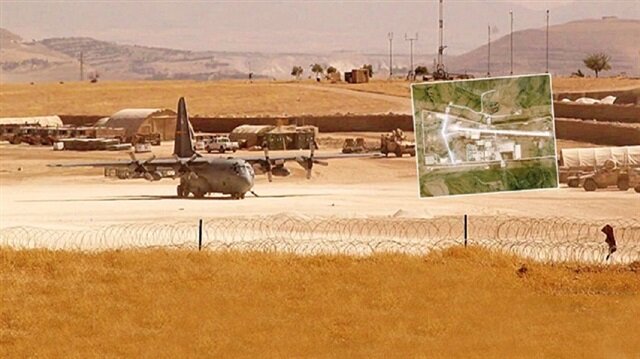
US sets up radars in northern Syria to ‘protect PKK terrorists’
Alternatives to Incirlik Air Base
Additionally, the U.S administration is looking for alternatives to Incirlik Air Base because of its current strained relationship with Turkey.
Incirlik Air base was used during the defeated 15 July coup attempt to aid terrorists of the Fetullah Terrorist Organization (FETÖ) as well as to provide logistics support to Kurdistan Workers’ Party (PKK) in Syria.
U.S. warplanes at Incirlik Air Base were moved to other bases, and only cargo planes, refueling aircraft, and scout planes remain.
Lately, the U.S. is converting its bases into aerial operation centers in Iraq’s Al Asad, Ayn al-Asad, Qayyarah, as well as those in Rimeylan, Ayn el Arab, Tal Baidar and Sarrin in Syria.
Turkey and the U.S. are currently experiencing rocky relations following Washington’s imposition of sanctions on Interior Minister Süleyman Soylu and Justice Minister Abdülhamit Gül for not releasing American Pastor Andrew Brunson, who faces terrorism charges in Turkey.
U.S. President Donald Trump ramped up his attack on Turkey by doubling U.S. tariffs on Turkish aluminum and steel imports to 20 percent and 50 percent, respectively.
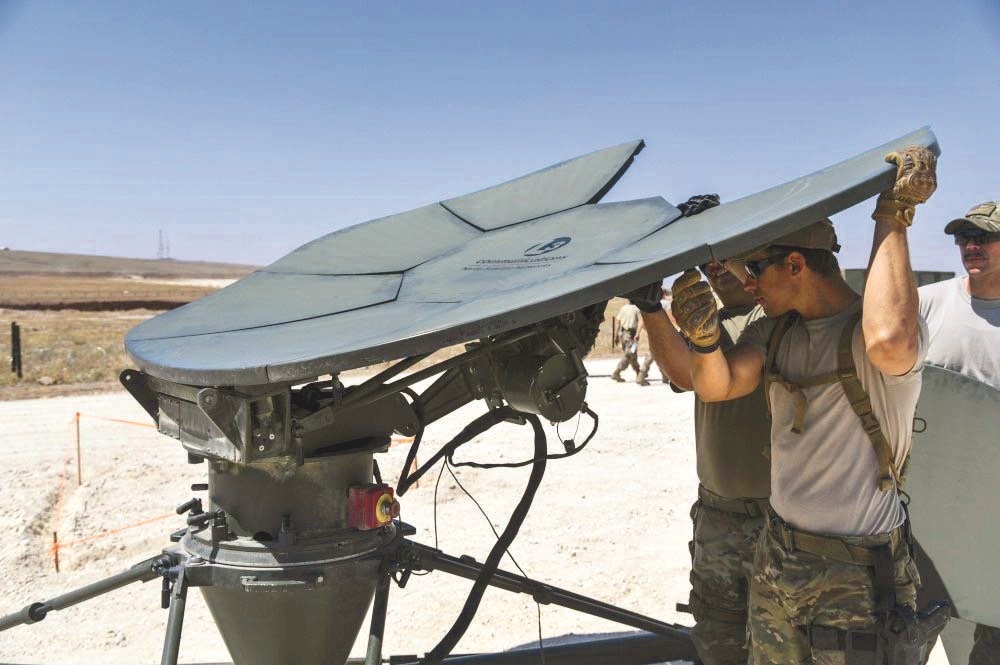
They will monitor Turkey from the border
Stressing Pentagon’s lengthy plan for chaos in the region, al-Esmer said that all these steps indicate that the U.S. administration intends to strengthen its presence in Syria while providing support to PKK terrorists.
The advanced radar systems will especially be used to monitor Turkey’s air and ground operations at the border, he added.
Esmer also said that U.S. warplanes will be more active in the regions of Hasakah, Raqqa and Deir ez-zor and that information received from these points will be transferred to the air forces to create a protection shield.
He stressed that all these initiatives must be considered as moves to “intimidate” Turkey, Russia and Iran.
Russia and Turkey, along with Iran are sponsoring the Astana peace talks, which focuses on a cease-fire and ending the seven-year civil war in Syria.
“The Washington administration has realized that the PKK is insufficient regarding its plans related to east of the Euphrates. Therefore, it will further fortify its military presence in the region. On the other hand, U.S. activities carried out in Syria and Iraq is due to its determination to exploit underground resources,” Esmer added.
The U.S has supplied the PYD terror organization and its armed wing, the YPG, with more than 5,000 truckloads of weapons to allegedly use in the fight against Daesh, despite Ankara’s warnings that the fact they are the Syrian offshoots of the PKK terror organization.
The Russian Ministry of Defence said on Monday it had noticed Washington was building up its military forces in the Middle East in preparation for what Moscow feared was a possible strike on Syrian government forces, Russian news agencies reported.Major-General Igor Konashenkov was quoted by agencies as saying that the USS Ross, a guided-missile destroyer, had entered the Mediterranean on Aug. 25 armed with 28 Tomahawk cruise missiles capable of hitting any target in Syria. Russia, Tajikistan deny any air attack in Afghan border clash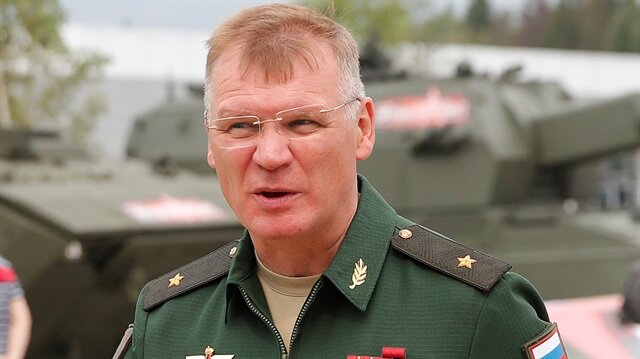
Russia says sees signs US preparing for possible strike on Syria
A total of 836 detainees have died in Syrian regime prisons, according to a Syrian NGO on Monday.In a statement, the Syrian Network for Human Rights (SNHR) said it has documented the forcible disappearance of around 82,000 civilians in Syria.“Some 14,000 people have been tortured to death by the regime,” the NGO said."Tens of thousands of Syrians have been subject to systematic arrests and Syrian authorities deny responsibility for these arrests,” the SNHR said.Syria has been locked in a vicious civil war since 2011 when the Bashar al-Assad regime cracked down on pro-democracy protests with unexpected ferocity.Since then, hundreds of thousands of people have been killed and millions displaced in the conflict, according to the UN.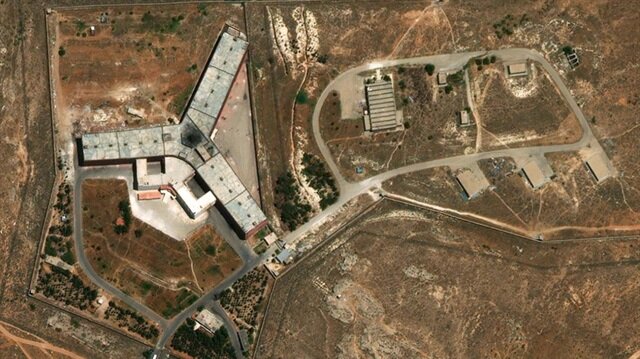
836 detainees die in Syrian regime prisons: NGO
Syrian rescue worker Samir Salim found his mother's body under their collapsed house, but there was no time for a funeral."We buried her and went back to work. There were a lot of people under the rubble," he said. Months later, he can no longer even visit her grave.When Syrian government forces clawed back his eastern Ghouta hometown, near the capital Damascus, Salim followed hundreds of thousands of others who had fled to the northwest under opposition surrender deals.Now, he and "White Helmet" workers driven from different parts of Syria have come together in the opposition-controlled town of Azaz to try to rebuild their lives near the Turkish border.Iran and Syria sign deal for military cooperationTheir work has changed drastically: with no warplanes cruising overhead, they help the opposition authorities put out fires, clean the streets, and plant trees.Azaz falls within a de facto buffer zone which Turkey has carved out since 2016. The northwest corner remains Syria's last major opposition stronghold and is now in President Bashar al-Assad's crosshairs.The White Helmets have often said they worried about reprisals as government forces defeated opposition enclaves with Russian and Iranian help.The civil defence service, which receives funding from Western governments, pulls people from the rubble of air strikes in opposition territory. Assad has accused it of being a Western-sponsored front for al Qaeda's branch in Syria.Russia says US, UK, France preparing to strike Syria again"NEW LIFE, FOREIGN PLACE"Salim said many comrades stayed behind in eastern Ghouta.Before leaving, he helped burn down the emergency centre he had once helped establish in his town, where his three brothers also worked.As buses shuttled evacuees out through government territory, including Salim's wife, five children, and relatives, some people cursed and threw stones at them, he added."We arrived with great misery," said Salim, 45. "Our peers gave us an exceptional welcome."Military solution in Syria’s Idlib would be ‘disaster’: Turkish FMAzaz is worlds apart from Ghouta, which lived through years of bitter siege and air strikes - far from the Turkish influence of the northwest.Salim recalled a sarin gas attack that killed hundreds of people in 2013 in the opposition enclave. "People were running down the streets screaming 'chemicals' and there were a lot of civilians lying in the streets foaming at the mouth."He said he injured his spleen during an air strike on a market in 2016 and had part of his intestines removed.The White Helmet first responders say Damascus has specifically targeted them during the more than seven-year conflict. UN invites Iran, Russia, Turkey to talks on Syria next month"We fear building a new life in a foreign place and then having to leave once again," Salim said. "I fear northern Syria will face what we did in Ghouta."His family now lives in the nearby Afrin region, where a Turkish operation earlier this year cleared terror elements. "HARSHER TIMES"Salim's new team includes Ahmed Rashid, 30, who was bussed out of eastern Aleppo two years ago after fighter jets levelled entire districts.The bloody battle for Aleppo in northern Syria marked a turning point in the war as pro-government forces swept through the opposition half of the city. Rashid said 12 friends from his centre in Aleppo were killed.Video: Tragedy rages on in Syria's Idlib as civilians continue to suffer "Nobody expected me to persevere, especially since my parents are in Turkey. But I cannot leave the civil defence," the former shoe designer said."In Aleppo, the bombing was so heavy we couldn't sleep. "Here (in Azaz), there is no such pressure."Nayef al-Aboud, also part of the same team, said they largely work on services like helping with car accidents."Today, our centre has workers from the displaced populations," said Aboud, 22, who is from Azaz. "Our strength has grown because they are here, we learn from their experiences, they lived through harsher times." 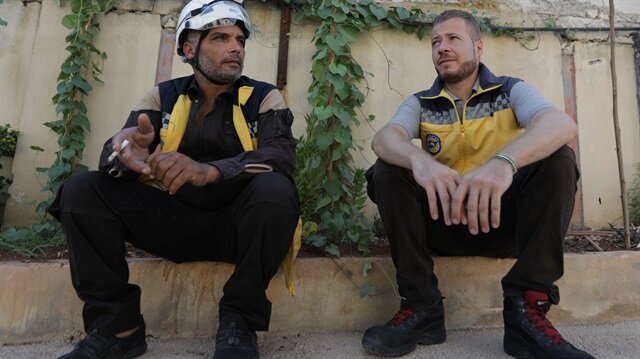
Driven from home, White Helmet rescuers start over in north Syria
Iran and Syria signed a deal for military cooperation in a meeting between the defence ministers of the two countries in Damascus, the Tasnim news agency reported on Monday.Iranian Defence Minister Amir Hatami travelled to Damascus on Sunday for a two-day visit, meeting Syrian President Bashar al-Assad and senior military officials, Tasnim reported.Iran foreign minister hails relations with TurkeyIran defence minister Amir Hatami arrives in SyriaIranian forces have backed Assad in the country’s civil war.Tasnim did not provide any details about the military cooperation deal.U.S. National Security Adviser John Bolton said last week that Iran should remove its forces from Syria.Senior Iranian officials have said their military presence in Syria is at the invitation of the Assad regime and they have no immediate plans to withdraw.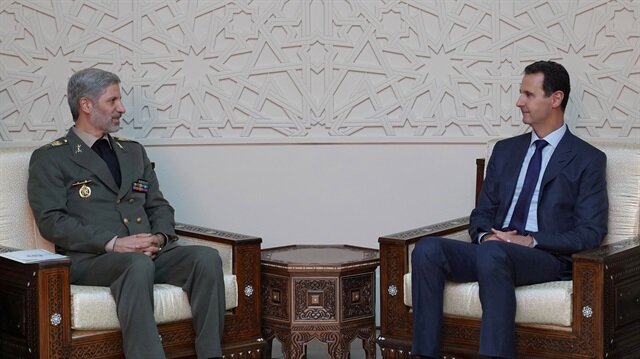
Iran and Syria sign deal for military cooperation