

Mevlüt Çavuşoğlu
Mevlüt Çavuşoğlu
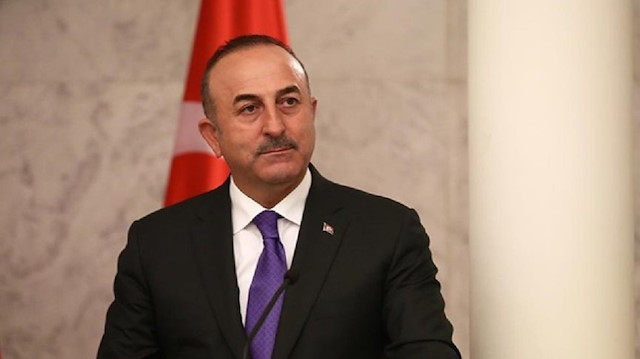
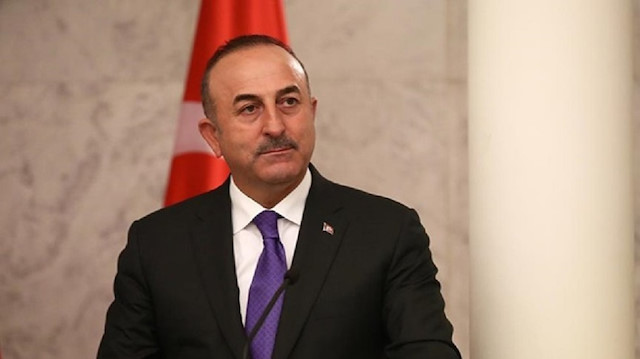
Ankara does not believe that those who murdered Jamal Khashoggi acted alone, Turkey’s foreign minister told a German daily Monday.
In an interview with Suddeutsche Zeitung, Mevlut Çavuşoğlu assessed Khashoggi’s killing and relations between Turkey and the European Union.
Khashoggi, a Saudi journalist and columnist for The Washington Post, went missing after entering the Saudi Consulate in Istanbul on Oct. 2.
After initially saying he had left the consulate alive, the Saudi administration admitted weeks later that he was killed there.
While underscoring that definitive evidence was required before making accusations, Çavuşoğlu said many held Saudi Crown Prince Mohammed bin Salman responsible for the murder.
Noting that bin Salman had requested an audience with Turkish President Recep Tayyip Erdogan at the two-day G20 summit in Argentina, which begins this Friday, Çavuşoğlu said Erdogan would consider such a meeting.
"At this point, there is no reason not to meet the crown prince," he said.
Tunisian rights groups on Monday will stage a protest against a visit of Saudi Arabia's Crown Prince Mohammed bin Salman over the killing of Saudi journalist Jamal Khashoggi, activists said.Tunisia is one of the few Arab states where demonstrations are allowed, following a 2011 uprising that toppled the president and gave its once-staid media a new lease of life.The Saudi crown prince is expected to arrive on Tuesday, part of a tour of several Arab countries on his first trip abroad since Khashoggi's murder, which has strained Saudi Arabia's ties with the West and battered his image abroad.Public anger greets bin Salman’s Arab tourA total of 13 Tunisian civic and rights groups, among them the journalists' union, will hold a protest in the afternoon at the central Habib Bourguiba avenue in Tunis, the venue of mass protests against the rule of Zine el-Abidine Ben Al in 2011."The Tunisian revolution.. cannot accept to receive him (bin Salman) and allow himself to clean himself (with his visit) of a murder," said Soukaina Abdessamad of the journalist' union told reporters. "We will stage protests on Monday and Tuesday."Saudi Arabia has said the crown prince had no prior knowledge of the killing of the Washington Post columnist at Riyadh's consulate in Istanbul last month.After offering numerous contradictory explanations, Riyadh said Khashoggi had been killed and his body dismembered when negotiations to persuade him to return to Saudi Arabia failed.Since the 2011 uprising that ended the rule of Ben Ali and triggered the Arab Spring protests that convulsed the region, Tunisia has become one of the few Arab countries where protests are permitted. 
Tunisia activists to protest against Saudi Crown prince visit
Turkey-EU relations
Asked about last week’s visit to Ankara by EU foreign policy chief Federica Mogherini and Johannes Hahn, the bloc’s commissioner for enlargement negotiations and neighborhood policy, Çavuşoğlu said it had been the "best and most productive" meeting with EU representatives in several years.
Citing recent protests in France over rising fuel taxes, Çavuşoğlu said the EU regarded the French government’s reaction to demonstrators as "unacceptable”.
"However, Europeans in the past tried to school us during the Gezi incidents,” he added, referring to a nationwide wave of protests against the Turkish government in the summer of 2013.
He reiterated that Turkey continues to aim to be a full member of the bloc while noting that the EU did not hold up its side of the 2016 refugee deal with Ankara by failing to open negotiations regarding any of the five chapters for accession to which it had vowed.
Çavuşoğlu also highlighted the "fallacy" of the EU in seeking to school Turkey in judicial independence, citing the case of Can Dundar, a former editor-in-chief of a Turkish daily who was convicted of espionage charges.
Dundar was arrested in November 2015 following the publication of images purporting to show arms being transported to Syria in trucks belonging to Turkey’s National Intelligence Organization, also known as the MIT.
He was held in prison until Feb. 26, 2016, when Turkey's Constitutional Court ruled that his rights had been violated and ordered his release.
Turkey’s Supreme Court of Appeals ruled on March 9 that Dundar should be convicted and handed down a prison sentence of 15 to 20 years on a charge of "espionage".
In May 2016, the 14th High Criminal Court in Istanbul convicted Dundar.
Saudi Arabia's Crown Prince Mohammed bin Salman arrived in Bahrain on Sunday, continuing his first trip abroad since the killing of journalist Jamal Khashoggi in Istanbul drew global condemnation.The prince landed in Bahraini capital Manama on Sunday for the second leg of his Arab tour and was later received by King Hamad bin Isa Al Khalifa in Sakhir Palace, Bahraini state television reported.Saudi Arabia's de facto ruler is also expected to participate in a G20 meeting in Buenos Aires at the end of the month, which will be attended by leaders from the United States, Turkey and other European countries.The killing of Khashoggi, a Washington Post columnist and a critic of the crown prince, has strained Saudi Arabia's ties with the West and battered Prince Mohammed's image abroad.He is expected to visit Tunisia on Tuesday as part of his tour of several Arab states.Tunisian activists have called for protests in front of the presidential palace in Carthage and are trying to mount a legal challenge to stop the visit.
Saudi crown prince begins second leg of Arab tour
ECHR ruling
On a recent ruling by the European Court of Human Rights (ECHR) ordering the release of a Turkish opposition leader facing terror charges, Çavuşoğlu said there are "many EU countries that do not execute ECHR decisions".
He added that Turkey would apply to the grand chamber of the ECHR to appeal against the ruling.
YPG/PKK terror group
Referring to a recent decision by the U.S. to place bounties on the heads of senior figures in the PKK, Çavuşoğlu said that while recognizing the YPG as a direct affiliate of the PKK, Washington continued to work with the group in Syria.
"The Europeans know this as well. These are double standards,” he said.
The YPG is the Syrian offshoot of the PKK, a terrorist group recognized by Turkey, the U.S. and the EU, which in its 30-year terror campaign has taken some 40,000 lives.
The U.S. has claimed that the YPG/PKK is an “ally” in the fight against Daesh over Turkey’s objections that one cannot use a terrorist group to fight another.
Turkey has repeatedly cited evidence that the YPG is no different from the PKK.
The PKK terrorist organization is not only known for its activities against civilians but also for molestation and rape scandals within the group.According to testimonies obtained by Anadolu Agency, the PKK terror group does not only destroy social structures, but it also corrupts and degenerates structures that undermines the identity of women in their own ranks.The testimonies of women terrorists, who have been captured by Turkish security forces or escaped from the terrorist organization, revealed the use of sexual abuse and rape by the PKK terrorists on fellow female members and children.In the testimony to the judicial authorities, a female member of the PKK, identified by the initials A.L., said a male PKK terrorist abused her physically and verbally and tried to rape her.She noted that not only her but other women in the organization were also subjected to abuses and harassment, saying that’s the reason she decided to leave the terror ranks.Another female member, identified by the initials B.B., said in her testimony that not only women but also nearly 30 children -- including girls and boys -- between the ages of 9 and 14 at the youth battalion of the PKK were sexually abused.She said she had witnessed some girls were brought to local hospitals for abortion.In another testimony, a female terrorist, identified by the initials M.T., said the “high-ranking” terrorists had raped and sexually assaulted female members of the PKK.The incidents were covered up due to the involvement of the “high-ranking” members of the terrorist group.Another female insider, identified by initial, K.A., also said that the terrorist members in commanding positions sexually abuse the female terrorists of the organization."There is no power to prevent this," she said.Turkey remands 12 PKK terrorists plotting Istanbul attack'Ugly face'She said that she knows many women, who fled the terrorist organization after seeing its "ugly face.”Another terrorist, identified by the initials Y.S., said women are used as sexual objects by the male terrorist members.She said that the sexual abuses are not only limited to women, adding: "They even rape little children abducted from Syria," she added.Earlier, a PKK terrorist, who surrendered to Turkish security forces on Sept. 9, confessed that the group would give drugs to minors, especially young girls, and then sexually abuse them.In August, Anadolu Agency also compiled information about a number of young people who were subjected to such abuse and ended up committing suicide. Moreover, those who resisted sexual abuse were executed by the terrorist group.In one case, a young woman, named Dilan, committed suicide using a hand grenade after being abused by PKK ringleader Murat Karayilan.In another case, a 19-year-old terrorist, identified by the initials S.A., was executed by the PKK after she complained of rape. She is said to have been gang raped by 12 PKK members in a cell.The PKK is listed as a terrorist organization by Turkey as well as the U.S. and EU.In its more than 30-year terror campaign against Turkey, the PKK has been responsible for the death of some 40,000 people, including women and children.PKK terror group increases presence in Iraq’s Kirkuk with Israeli support16 PKK/KCK suspects arrested in southern Turkey
PKK terrorists abuse, rape female members