

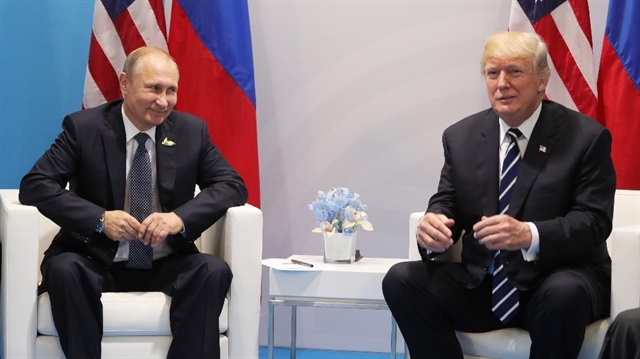
File Photo
Donald Trump and Vladimir Putin will sit down in a room together in the Finnish capital on July 16 for their first summit meeting.
The U.S. president's spontaneous approach to negotiations, and the inscrutable style of the Kremlin leader, make predicting the outcome of the summit with any accuracy close to impossible.
We do however, have a reasonable idea of the issues the two leaders and their aides will have mapped out before the meeting: the areas where they each want something from their counterpart, and the places they are willing to give ground.
Below are the issues likely to figure:
ARMS RACE RHETORIC
Both Trump and Putin have been using bellicose rhetoric about their nuclear arsenals, drawing their countries closer to a new arms race. Trump has said the U.S. nuclear capability needs renewing. He told Reuters last year, "if countries are going to have nukes, we’re going to be at the top of the pack." Putin in March this year unveiled an array of new nuclear weapons, and warned Western governments "now they need to take account of a new reality." An arms race would be dangerous and expensive for both sides. An agreement to scale back the rhetoric would be a win for both Putin and Trump. Progress towards extending the New Start arms treaty, which expires in 2021, would give substance to that agreement.
The U.S. government has officially begun implementing tariffs worth $34 billion on Chinese imports signaling the start of a trade war. Tariffs worth $34 billion on Chinese goods took effect at 12:01 a.m. EST (0400GMT).The White House initially announced in April that it was planning to slap China with $50 billion in tariffs, and added in June they could "contain industrially significant technologies".The new tariffs come "in light of China’s theft of intellectual property and technology and its other unfair trade practices," the White House said in a statement on June 15.As a response, Beijing is expected to impose retaliatory tariffs on Friday against the U.S., which could escalate the trade war between the world's two biggest economies and have a spillover effect on other regions.On Thursday, Gao Feng, Chinese Commerce Ministry spokesman said China would not “fire the first shot”. “However, if the United States adopts taxation measures, China will be forced to fight back to defend the core interests of the nation and the interests of the people,” Gao said.Tariffs on other $16 billion of products are scheduled for a later date. After the Trump administration announced imposing tariffs of 25 percent on steel and 10 percent on aluminum imports in March, China said it would impose $3 billion worth of tariffs, between 15 to 25 percent, on 128 American goods.After Washington's plan to impose 25 percent tariffs on 1,300 Chinese goods that are worth $50 billion in April, Beijing immediately said it will place 25 percent tariffs on 106 American goods worth $50 billion. The U.S.'s trade deficit with China was $347 billion in 2016.
US begins implementing tariffs on China
SANCTIONS RELIEF
Putin would like Trump to soften sanctions that Washington imposed over the annexation of Ukraine's Crimea region and backing for separatists in eastern Ukraine, involvement in the Syrian civil war and allegations of Russian meddling in the U.S. elections in 2016. While a 2017 law bars Trump from easing many sanctions without Congress’ approval, he can offer some relief without a nod from Congress. The Republican president, who did not want to sign the law and has missed several deadlines for imposing sanctions included in it, could send a signal that the administration does not plan to expand the list of Russian firms and individuals subject to economic and travel restrictions. That would unfreeze much-needed investment and lending from international investors who, at the moment, are reluctant to commit to Russia for fear of the sanctions’ impact.
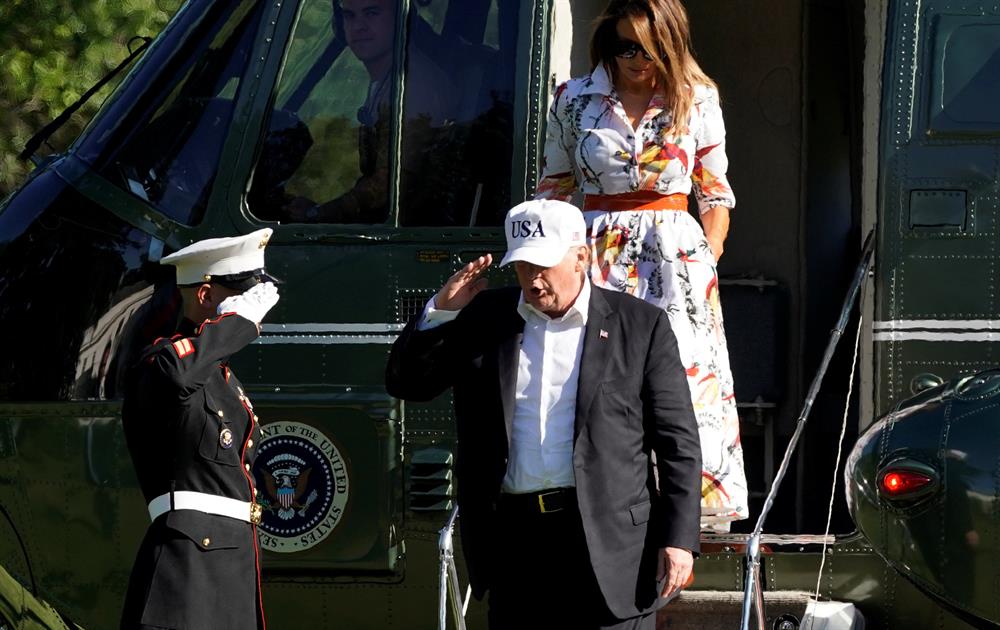
US President Donald Trump
SYRIAN DEAL
Washington ally Israel is anxious that, with the conflict in Syria entering its end game, Iranian and Iran-backed forces will be left gathered around Israel's borders. At the summit, Trump may ask Putin, the most powerful outside player in Syria since Russia's military intervention there, to use his influence with Tehran to curb Iran's military presence. This would be tough to deliver for Putin: it would risk a rupture with his allies in Tehran, and could leave Russian forces having to do the lion's share of the remaining fighting in Syria, a burden that Moscow does not want to shoulder.
Iran will maintain its military presence in Syria after the defeat of the Daesh terrorist organization, according to an Iranian official on Sunday.“The Zionist regime (Israel) is trying to dominate Syria after (fall of) the Daesh terrorist group, but the Resistance forces and the military advisers of the Islamic Republic of Iran will continue their presence in Syria to counter terrorism,” Senior adviser to the Iranian parliament speaker for international affairs Hossein Amir Abdollahian told a meeting in Tehran with Palestinian Ambassador Salah al-Zawawi.People of Manbij long for Turkey's intervention“Syrians will not allow the country to once again become a safe haven for Zionist terrorists,” he added in statements carried by local media.In recent months, Israel has carried out several air attacks on Iranian targets inside Syria that reportedly left a number of Iranian military personnel dead.Israeli officials have repeatedly said they would not allow Iran to maintain a long-term military presence in Syria.Iran and Hezbollah are strong allies of Syria’s Bashar al-Assad regime, the forces of which have been fighting opposition groups in a deadly civil war since 2011.Since then, hundreds of thousands of people are believed to have been killed and millions more displaced by the conflict.
Iran to maintain military presence in Syria
DIPLOMATIC TIT-FOR-TAT
Russia's diplomatic presence in the United States, and the U.S. missions in Russia, are depleted after two rounds of tit-for-tat diplomatic expulsions in the past two years. The first was over alleged Russian meddling in the U.S. election, and the second, this year, was in response to the poisoning in England of former Russian spy Sergei Skripal and his daughter. Putin and Trump could agree in Helsinki to restore the full complement of diplomatic staff. That would not change the substance of the U.S.-Russia relationship, but it would be a symbol of a new start.
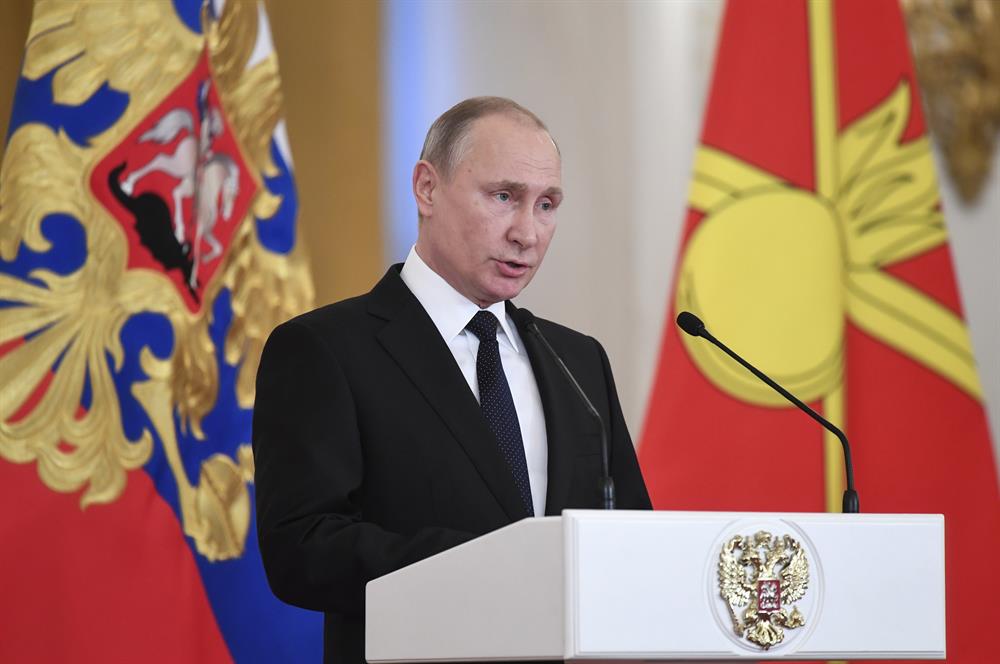
Russian President Vladimir Putin
RUSSIA'S BACKYARD
Since Russia's annexation of Crimea in 2014, the NATO alliance has stepped up military exercises in eastern Europe. The aim, according to NATO leaders, is to reassure alliance members who fear a Russian incursion. That has angered Russia. It says NATO is bearing down on its backyard. The Kremlin has likened it to Russia stationing missiles in Mexico. If Trump scaled back the exercises, that would be a big win for Putin. Two senior NATO diplomats told Reuters they are prepared for a worst-case scenario that Trump would announce a freeze on U.S. military exercises or withdraw troops from the Baltics in a gesture to Putin. At the NATO summit in Brussels that precedes Helsinki, NATO states will seek Trump's assurances that he will stand firm on the exercises.
President Recep Tayyip Erdoğan will attend his first major international summit since getting reelected on Wednesday when he attends the NATO heads of state and government meeting in Brussels.The NATO meeting will take place for the first time at the new alliance headquarters.Video: Anti-Trump protest in BrusselsAt the meeting, Erdoğan will meet and hold bilateral meetings with a number of world leaders, including American President Donal Trump, French President Emmanuel Macron and British Prime Minister Theresa May.It is expected that Erdoğan and other leaders will discuss the support YPG/PKK terror group receives from some NATO member countries and the S-400 missile system that Turkey is getting from Russia.People of Manbij long for Turkey's interventionErdoğan is also expected to meet European Council head Donald Tusk, European Commission President Jean-Claude Juncker and European Parliament President Antonio Tajani.First Lady Emine Erdoğan is expected to accompany her husband during the visit to Brussels.
Erdoğan to attend NATO meeting in Brussels
UKRAINIAN ALLY
Washington has stood by Ukraine's pro-Western leaders in their stand-off with Russia. That has included the United States providing Kiev with hundreds of millions of dollars worth of military aid. Helsinki would be a triumph for Putin if he persuaded Trump to drop that military aid. Ukrainian officials say they have assurances from Trump aides he won't do this, but acknowledge anything can happen when Trump and Putin are in a room together. In return, the Russian leader could make concessions over eastern Ukraine, where pro-Moscow separatists control swathes of territory. Diplomats say there is a deal to be done allowing armed international peacekeepers to patrol the area. However, Putin will not contemplate any concessions over Crimea.