

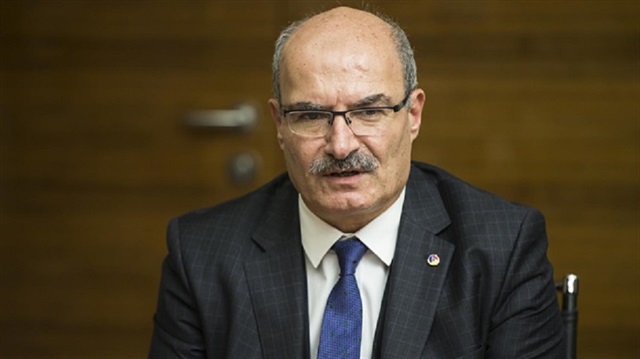
President of the Ankara Chamber of Commerce Gürsel Baran
The Turkish public, institutions and organizations have rallied behind Turkey’s economy to counter the economic war initiated by the United States which sparked speculative rises in currency. As the government takes the necessary steps, citizens have exchanged their foreign currency holdings into the Turkish lira. A slew of support messages streamed in from the business community, calling the Turkish economy strong and durable.
“Today is the day to unite and work in solidarity for the future of a strong Turkey. We are answering President Erdoğan’s call for currency mobilization as a single entity, and we say that we are behind him! We owe it to our nation to work harder. The Ankara Chamber of Commerce is resolute,” said President of the Ankara Chamber of Commerce Gürsel Baran.
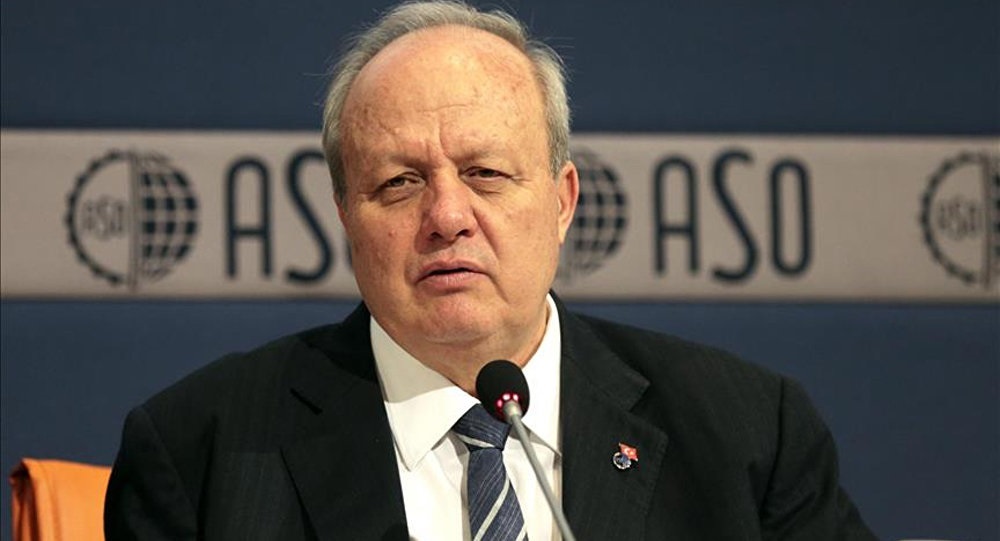
Ankara Chamber of Commerce President Nurettin Özdebir
“Our people will not be brought to their knees through economic attacks. We have no doubt that these attacks will be dispersed. We will continue to produce more and work harder. Every penny in our pocket is for this country. We as the business community will always stand beside our country and people,” said Ankara Chamber of Industry President Nurettin Özdebir.
The lira firmed as far as 5.75 against the dollar on Wednesday and stood at 5.9350 at 0745 GMT.
Turkey-U.S. row
Turkey and the U.S. are currently experiencing rocky relations following Washington’s imposition of sanctions on Interior Minister Süleyman Soylu and Justice Minister Abdulhamit Gül for not releasing American Pastor Andrew Brunson, who faces terrorism charges in Turkey.
Turkish banks’ foreign currency swap transactions cannot pass over 25 percent of their equities, Turkey’s Banking Regulation and Supervision Agency (BDDK) announced on Tuesday."Total notional principle amount of banks' currency swaps and other similar products (spot forward FX transactions) with foreign counterparties where at the initial date local banks pay Turkish lira and receive FX should not exceed 25 percent of the bank’s regulatory capital," the agency said."In this regard, unless current excess is eliminated, no further transactions of these types could be executed and maturing transaction should not be renewed," it added.On Monday, the agency had put a limit to these transactions at 50 percent of the bank’s equities.Trump’s global policy a string of abandoned commitmentsTurkey raises tariffs on US-origin products
Banking watchdog puts new limits on FX swaps
U.S. President Donald Trump last week ramped up his attack on Turkey by doubling U.S. tariffs on Turkish aluminum and steel imports to 20 percent and 50 percent, respectively, causing the lira to lose value against the dollar.
Turkey imposed tariffs on several U.S.-origin products, including alcohol and tobacco products and cars, according to a new presidential decree published early Wednesday in the official gazette.
Turkish President Recep Tayyip Erdoğan in his turn said Turkey would turn toward new markets, new partners and alternative financial tools, and said that the country would boycott U.S. electronic products.
A Turkish court on Wednesday rejected the second appeal to release U.S. Pastor Andrew Craig Brunson.Brunson’s lawyer, Ismail Cem Halavurt, said a higher court was yet to rule on the appeal.Halavurt lodged the second appeal document to court on Tuesday, asking for the pastor to be released from house arrest and have his travel ban lifted.Turkey raises tariffs on US-origin productsThe appeal was rejected by the 2nd Penal Court in İzmir, and referred to a higher court.Recently, the court had allowed Brunson to be moved from jail and placed him under house arrest in view of his "health problems".Brunson's charges include spying for the PKK -- listed as a terrorist group by both the U.S. and Turkey -- and the Fetullah Terrorist Organization (FETÖ), the group behind the defeated coup attempt in Turkey of July 2016.US dollar has lost its credibility: Turkish FinMinTurkey and the U.S. are currently experiencing rocky relations following Washington’s imposition of sanctions on Interior Minister Süleyman Soylu and Justice Minister Abdulhamit Gül for not releasing Brunson.The two NATO allies have been at odds since the defeated coup, which Ankara says U.S.-based Fetullah Gülen, the ringleader of FETÖ, is behind.Brunson's next hearing as part of the trial is scheduled for October 12.US pastor in Turkey appeals for release, lifting of travel ban
Turkish court rejects US pastor’s appeal for release for second time
“If you pressure us through the dollar, we will look for other ways to carry out our works,” he said.
Terming the recent U.S. tariffs on Turkey as an “economic war,” the Turkish president said: “We’ve seen your game and we challenge it.”
The aim of the recent U.S. pressure is “to ensnare Turkey in every field from finance to politics,” the president noted.
“We will not surrender,” Erdoğan asserted.
The rationale of U.S. tariffs is very weak, and the decision conflicts with the Trump administration's other policies, said a Harvard economics professor. Since earlier this year, the U.S. has imposed tariffs on imports from countries including China, European Union members, Canada and Mexico, which has raised concerns across the world over the tariffs' impact on global economy.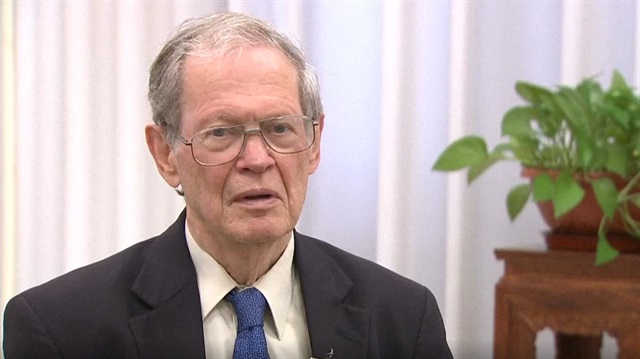
Rationale of US tariffs very weak: Harvard economics professor
Raising tariffs on imports from Turkey “poses serious risks” for the United States, an official at the U.S. Chamber of Commerce said Tuesday.In a statement, Myron Brilliant, executive vice president and head of international affairs, said the Chamber of Commerce has warned for months that “alienating our allies in a tit-for-tat trade war would harm the U.S. economy and undermine American global leadership, and evidence of that harm to U.S. workers, farmers, and businesses is mounting”.President Donald Trump announced on Twitter last Friday that he would double the tariffs on steel and aluminum imports from Turkey.The two countries have been close allies for more than 60 years while Turkey has been a strong member of NATO.Turkey raises tariffs on US-origin products"Recent developments in the U.S.-Turkey relationship threaten both countries' economic interests and put at risk an alliance that has proven its value over decades," Brilliant said."Actions that heighten these tensions risk spreading today's financial challenges to other emerging markets, to European banks, and, ultimately, to the U.S. economy.” The U.S. Chamber of Commerce has been home since 2013 to the U.S.-Turkey Business Council, which represents more than 60 of the largest American companies doing business in Turkey, according to the statement.
Tariffs on Turkish imports ‘pose serious risks’ for US
Turkey has increased tariffs on several U.S.-origin products, including alcohol and tobacco products and cars, according to a new presidential decree published early Wednesday in the official gazette.Under the decree, Turkey will raise tariffs to 100 percent on imports of the products.The new decree amends a presidential decree on July 11."Tax rates on imports of some products have been increased on a reciprocal basis against the U.S. administration's deliberate attacks on our economy," Vice President Fuat Oktay said on Twitter.Turkey to boycott US construction materialsAmong the products are cars, rice, some alcohol and tobacco products and some cosmetic products like sun creams.On Friday, Turkey’s Foreign Ministry said Turkey would retaliate against the raising of steel and aluminum tariffs by the U.S. administration.Foreign Ministry Spokesman Hami Aksoy said on Twitter that President Donald Trump's decision, which also violates World Trade Organization rules, does not comply with "state seriousness".Trump ramped up his attack on Turkey by raising steel and aluminum tariffs to 50 percent and 20 percent respectively.Chinese firm to buy raisins from Turkey rather than USThe U.S. decision is another salvo in the growing dispute between Turkey and the U.S.Last week, a Turkish delegation returned from Washington with no movement on the detention of American pastor Andrew Brunson, who is under house arrest in Turkey over terrorism charges.Brunson's charges include spying for the PKK -- listed as a terrorist group by both the U.S. and Turkey -- and the Fetullah Terrorist Organization (FETÖ), the group behind the defeated coup attempt in Turkey of July 2016.Turkey to boycott US construction materialsTurkey and the U.S. are currently experiencing rocky relations following Washington’s imposition of sanctions on Interior Minister Suleyman Soylu and Justice Minister Abdulhamit Gul for not releasing Brunson.The two NATO allies have been at odds since the defeated coup, which Ankara accused U.S.-based Fetullah Gülen and FETÖ of masterminding.Video: Erdoğan: Turkey will boycott US electronic products
Turkey raises tariffs on US-origin products